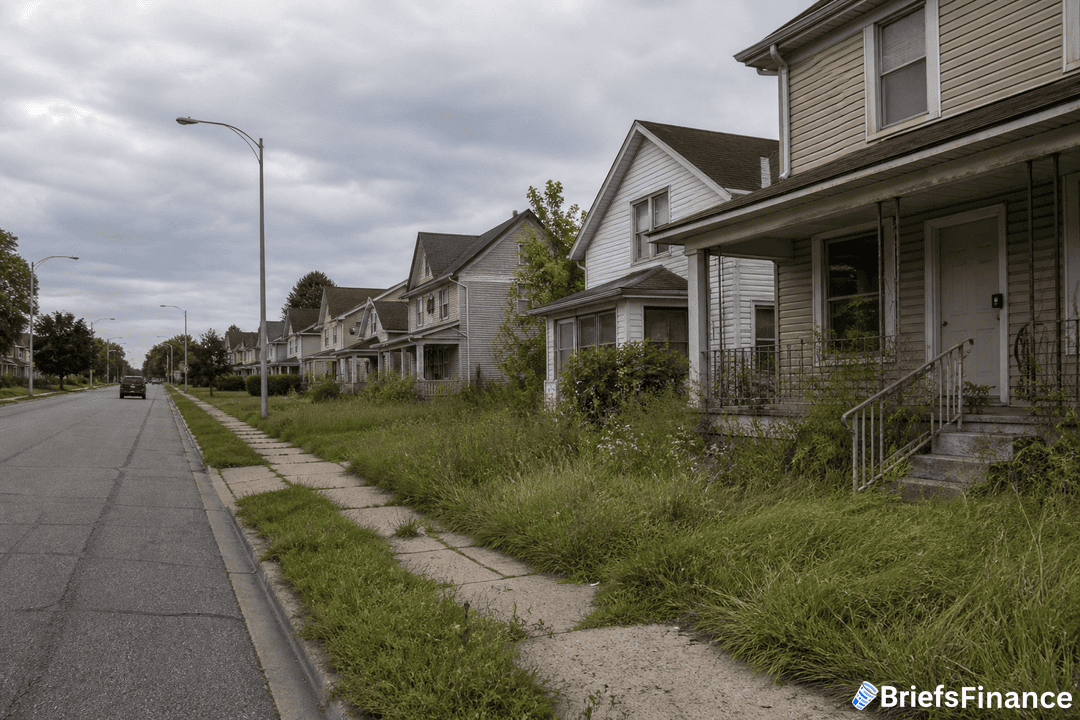
Sales Are Headed for Their Slowest Year in More Than a Decade
The housing market is about to get a lot quieter. Capital Economics, a research firm that tracks the broad economy, expects annual home sales to fall to about 4.7 million by the end of 2026.
That would be the weakest year for sales since 2011.
The slowdown is already visible. Sales picked up only modestly in 2025, then lost steam this year when borrowing costs rose.
The firm's economists say the market is stuck in what they call a structural malaise, meaning a long, sluggish stretch.
"Strengthening economic growth will not provide much of a lift to the housing market, which we expect to remain in its structural malaise," they wrote.
The forecast runs through 2028. Slow is the expectation.
Mortgage Rates Are the Reason Buyers Are Standing Still
Mortgage rates are the main factor here. Borrowing costs have climbed again as inflation worries spread and expectations build for tighter monetary policy.
That sets up a strange standoff. Homeowners with cheaper mortgages do not want to give them up, and buyers are watching monthly payments climb.
The pressure is easy to measure. On Tuesday, the 10-year Treasury yield hit 4.74%, a more-than-one-year high.
The 10-year Treasury yield is the return the government pays investors who lend it money for a decade. It is an important benchmark for mortgage pricing.
The latest weekly reading from Freddie Mac put the average 30-year fixed mortgage rate at 6.67%.
A few minutes a day is enough to stay genuinely informed about your money. Join Market Briefs free and start tomorrow.
Capital Economics projects that mortgage rates will remain above the 6% mark for a minimum of two additional years. That keeps the cost of moving high.
Plenty of current owners have mortgages below 6%. They have little reason to trade those loans in.
Home-loan rates have spent most of the past five years above that same 6% line. The jump after the Iran war pushed them back up.
The firm expects policymakers to raise rates by 75 basis points before early 2027. Central bankers use basis points to describe small rate moves.
If that happens, the 30-year mortgage would end 2026 near 6.5%. By 2028, the firm sees it easing to about 6.25%.
Prices Look Flat Before a Slow Turn Higher
The same slowdown is showing up in prices. The Case-Shiller US National Home Price Index, a widely watched measure of home values, was up 1.1% compared with a year earlier in May.
Capital Economics thinks the next step is no growth at all. It expects home prices to post a 0% annual change in 2026, the weakest yearly showing in 15 years.
After this year, the firm sees prices rising 2.5% in 2027.
It expects a 4% gain in 2028.
Together, that three-year stretch would be the weakest run for price growth since 2011.
The stock market complicates the picture. Capital Economics also predicts the S&P 500, the widely followed stock market index, will fall 20% by late next year.
A drop that steep could weaken housing demand and push prices down more than expected. But the firm says a stock slump and a housing slump do not always move together.
"However, the 2022 experience, when the S&P 500 fell by around 25%, shows that house prices can remain resilient during a major equity sell-off, particularly if monetary policy were loosened in response," the economists wrote.
A much bigger housing downturn would probably require a recession. Capital Economics expects the labor market and the economy to stay resilient, so that is not what the firm expects.
What the Forecast Means for Your Money
For investors, this is a patience story. The housing market is not falling apart, but it is not going to produce outsized gains anytime soon.
Capital Economics expects home prices to sit flat in 2026, then climb slowly. For your money, the bigger cost story is mortgage rates, which it sees staying above 6% for a while.
The next couple of years look less like a crash and more like a slow stall. If the economy holds up, sales stay low, prices hold steady, and rates stay stubborn.
If stocks fall hard, housing could weaken even more.
Either way, the market is probably not going to make anyone rich fast. It might, however, give buyers a little more time to breathe.
Rates, prices and policy all end up in your budget eventually. Get the free Market Briefs daily newsletter and see it coming.