Free NewsletterPro Login
S&P 500 6,287 +0.42%
DOW 44,521 -0.18%
NASDAQ 21,103 +0.71%

Warning: Undefined variable $funds in /var/www/briefs.co/htdocs/wp-content/plugins/oxygen/component-framework/components/classes/code-block.class.php(133) : eval()'d code on line 491

Warning: foreach() argument must be of type array|object, null given in /var/www/briefs.co/htdocs/wp-content/plugins/oxygen/component-framework/components/classes/code-block.class.php(133) : eval()'d code on line 491
/* the link was here */

Plastic Prices May Rise as Ethane Demand Peaks

Published Aug 17, 2026
[tts_player]
Share:
Summary:
  • US spot ethylene is 25.5 cents per pound, below its wartime high of 34.5 cents.
  • US ethane exports hit a record 800,000 barrels per day in June, with 62% going to China.
  • Polymer-grade propylene rose 1 cent to 42 cents per pound, signaling higher plastic costs ahead.

Plastic wrap, food containers, car parts. If you have bought any of these lately, you have been touching the quiet corner of the energy market that is about to get less.

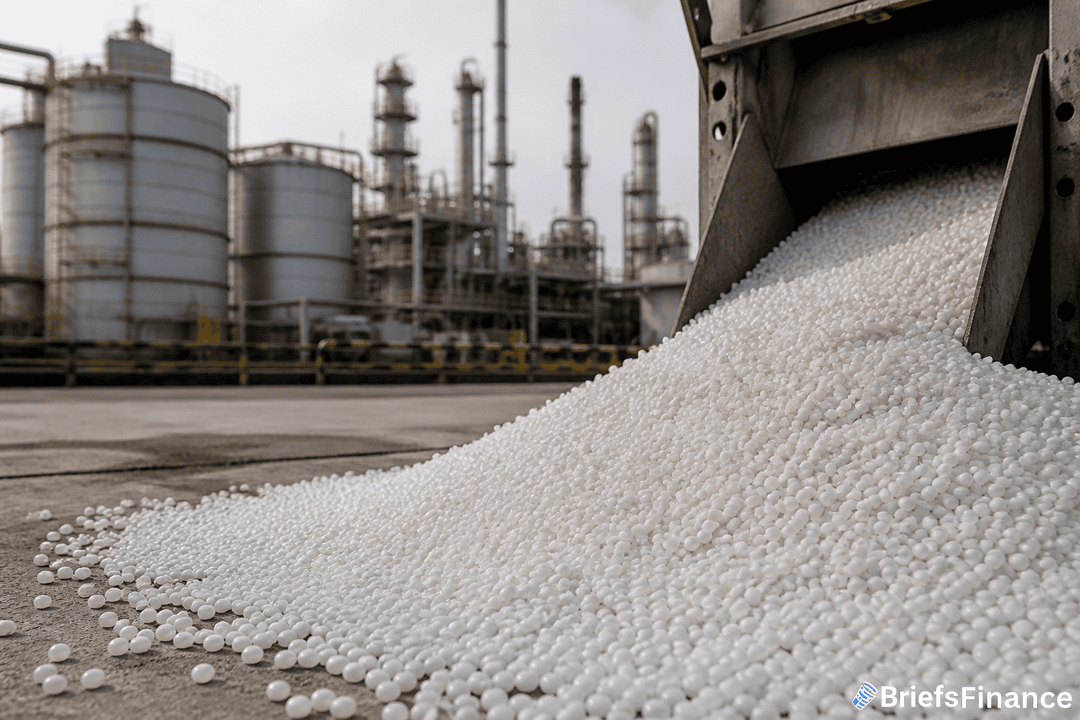
Ethane, a gas that comes out of shale drilling, is the raw ingredient for a lot of everyday plastics. And for the past year, it has been cheap and plentiful. That may be changing.

Flat Prices Hide a Coming Squeeze

Last week, US Gulf Coast petrochemical prices barely moved. But underneath that calm, a supply problem is building.

Ethane gets turned into ethylene, which then becomes polyethylene, the stuff used in packaging and food containers. The current spot price still has room before its wartime high, but that gap could close quickly if the cost of ethane gets.

The reason is demand. Overseas buyers, especially in China and other Asian markets, are placing bigger orders. If that keeps up, ethylene prices rise, and so does plastic in the price of everyday materials.

If rising plastic prices have you watching your wallet, grab the free Always Be Buying eBook to build wealth on any income.

However, producers are holding off on major decisions until the ongoing trade negotiations are resolved. Until there is a clearer picture of how export demand will should look for the rest of the year, no one is making big moves.

China Is Back, and It Wants US Ethane

The demand lead is being led by China, which is buying US ethane again after a rough 2025. Last year, tariffs from the Trump administration and retribution from China crushed the US-China be. The trade has not regained its former strength.

The big rebound is stalling. So far this year, about 62% of all US shipments have gone to China, but the current pipelines are not large enough for direct to fill the next wave of foreign and domestic Chinese market would need. East Daley Analytics said, "current production and storage will not be enough to keep across the as demand (but) not export."

US produces about 3 million barrels per day of ethane, so there is plenty. The problem is not today's supply. It is exactly the pipeline in the necessary place.

US ethane has been cheap because it abundant in the natural gas stream. That abundance all strength. If that gas gets pump from home "use" and overseas buyers, the price of supplies shrinks.

What It Means for Your Wallet

Higher ethane costs do not stay in the pipeline. They show up in polymer-grade propylene, or PGP. PGP is the key ingredient for polypropylene used in automotive and industrial packaging.

A penny doesn't sound much. But when a material goes into everything from bumpers to food tubs, small moves add up across the supply chain.

The other picture is a shift in the way. For much, the US manufactures had first pick of cheap ethane. Now is competing with overseas buyers who are willing to pay for it. That competition is not going away, and by August 17, 2026, the market could look very differently.

For investors, the takeaway is simple. The era of rock-bottom plastic prices may be ending, not because of a sudden shock, but because demand finally eventually catches up. Companies that use these materials will feel the pinch pull. Companies that produce the ethane may find themselves in a stronger position than they have sent in years.

When market shifts like this hit everyday costs, a consistent investing plan helps, so get the free Always Be Buying eBook.

Disclosure

Recent News

1 2 3 56

Get Market Briefs delivered to your inbox every morning for free!

No fluff. No noise. No politics. Just finance news you can read in 5 minutes.

Blogs

June 29, 2026
Portfolio Diversification: Why Putting All Your Eggs in One Basket Destroys Wealth
  • Real diversification means spreading investments across all 11 economic sectors plus bonds, alternatives, and cash so no single bet can sink the portfolio.
  • Different sectors perform at different times, so a diversified portfolio captures upswings while smoothing the brutal drawdowns that wipe out concentrated bets.
  • Total market index funds offer the simplest path to diversification, and annual rebalancing is what keeps the structure working over time.
Read More
June 29, 2026
Non Taxable Income: What It Is and Why It Matters
  • Non taxable income is money you receive that you don't owe income tax on.
  • The tax code treats workers, investors, and business owners very differently, and investors often come out ahead.
  • Learning how income is taxed is a quiet superpower for keeping more of what you earn.
Read More
June 29, 2026
Semiconductor Stocks: A Simple Guide for Investors
  • Semiconductor stocks are companies that design and make computer chips, the brains inside nearly every modern device.
  • The AI boom has turned chips into one of the market's most important and most watched groups.
  • They offer big growth potential, but come with high valuations and a notoriously cyclical history.
Read More
June 25, 2026
How Stocks Work: A Simple Guide for Beginners
  • A stock is a slice of ownership in a company - buy one, and you own a piece of the business.
  • You make money two ways: the share price rising over time, and dividends paid to shareholders.
  • The simplest path for most beginners is buying into the whole market through a low-cost index fund.
Read More
June 25, 2026
Stop Loss vs Stop Limit: What's the Difference?
  • A stop loss order sells your stock once it hits a trigger price, prioritizing getting you out.
  • A stop limit order only sells within a price range you set, prioritizing price over a guaranteed exit.
  • The trade-off: a stop loss almost always executes; a stop limit might not if the price moves too fast.
Read More
June 25, 2026
Energy Stocks: A Simple Guide for Investors
  • Energy stocks are companies that produce and supply the power the world runs on, from oil and gas to newer sources.
  • They make up one of the 11 sectors of the market and tend to move with energy prices and big-picture shifts.
  • Like any sector, the key is diversification and understanding the forces driving demand.
Read More
June 18, 2026
What Is a Stop Loss Order? A Simple Guide
  • A stop loss order automatically sells a stock once it falls to a price you set.
  • It's a tool to cap losses or lock in gains without watching the market all day.
  • It works best for active strategies, and can backfire if used carelessly on long-term holdings.
Read More
June 18, 2026
Best S&P 500 Index Fund: How to Choose One
  • The best S&P 500 index fund for most investors is simply the cheapest, most established one that tracks the index well.
  • Funds like VOO, IVV, and SPY all hold the same 500 companies, so the biggest difference is the fee.
  • Pick one, automate your buys, and let time do the heavy lifting.
Read More
June 17, 2026
What Are Penny Stocks? Risks and Rewards Explained
  • Penny stocks are very low-priced shares of very small companies, often trading for just a few dollars or less.
  • They promise huge gains but carry huge risks: low liquidity, high failure rates, and wild price swings.
  • Most investors are better served by quality companies and funds than by chasing cheap shares.
Read More
June 17, 2026
Best Stocks for Beginners With Little Money
  • The best stocks for beginners with little money usually aren't individual stocks at all - they're low-cost index funds.
  • You can start with $100 or less and use small, regular investments to build wealth over time.
  • Focus on diversification and consistency, not on picking the next big winner.
Read More
1 2 3 24
Share via
Copy link