The US economy is growing at the fastest rate since 2021, right after the pandemic. At least, that's the verdict of a new S&P Global report on US economic growth, which describes a boom built on surging corporate profits.
The stock market hasn't felt much of it. Stocks have been swinging around because three other things happened at the same time:
- The Federal Reserve, the central bank that sets interest rates, raised them.
- Treasury yields, the interest the US government pays to borrow money, hit their highest level in more than two decades.
- Gas prices are up almost 30% from a year ago.
So corporate America is having a field day while some investors feel the gain and others feel the pain.
That gap is what Briefs Finance CEO Jaspreet Singh is unpacking in his free live investor workshop on September 29. He's covering how investors can profit from the dollar losing value, and where the opportunities are moving in this shifting economy.
Corporate Profits Are Growing Four Times Faster Than Normal
Corporate profits, the money companies keep after paying their bills, are up 28.9% from one year ago. In a normal year they grow 7% to 8%, so this is almost four times the historical average, and it's the main reason S&P Global calls this a boom.
Profits are also growing almost two and a half times faster than revenue, so companies aren't just selling more, they're keeping more of every sale. There are only two ways that happens.
Either companies got more efficient and now keep a higher margin, the slice of each sale that ends up as profit, or they raised prices faster than their own costs went up. Both are happening at once.
AI is changing how companies make money, because running one AI agent, or ten, or a hundred, costs less than one human. Plenty of companies have been working to transition people out in favor of AI agents.
On the pricing side, high inflation, the pace at which prices rise across the economy, has been pushing the price of almost everything up.
The Boom Is Skewed Toward AI and Data Centers
Money is also flowing unusually fast into AI and data centers. S&P Global measures growth the same way whether it comes from a data center or a grocery store.
If your money is in the AI industry, you're feeling the boom. If it isn't, you may not see the boom at all, because the growth is that skewed.
Prices Are Rising More Than 50% Faster Than the Fed Wants
Meanwhile, prices across the board have gotten expensive over the last 12 months. Gas is the loudest example, but energy prices overall are up more than 16%, and reported inflation is 3.4%, meaning the average price of things rose 3.4%.
The Fed's target is 2%, so prices are climbing more than 50% faster than it wants. That gap is why the Fed went out and started raising interest rates.
This is the version of the boom most investors live in: prices rising fast, and the average person struggling to keep up.
The Fed's Rate Hikes Hit Corporate Profits Too
Higher rates cool an economy by making it more expensive to borrow money. Most investors hear that and think about their own bills, mortgages and credit cards, and they're right.
Business loans get more expensive too, and that's the part that matters for corporate profits. Corporations lean on debt, borrowing heavily to reinvest in the company so profits grow a whole lot faster.
When rates go up, that borrowing costs more, so companies borrow less and reinvest less. They also need bigger returns just to justify the loans they do take, and that's how higher rates tame a profit boom.
The side effect is hiring. A company that isn't reinvesting in growth may need fewer people, so the job market can get hurt right alongside profits.
Stocks and Bonds Usually Move in Opposite Directions
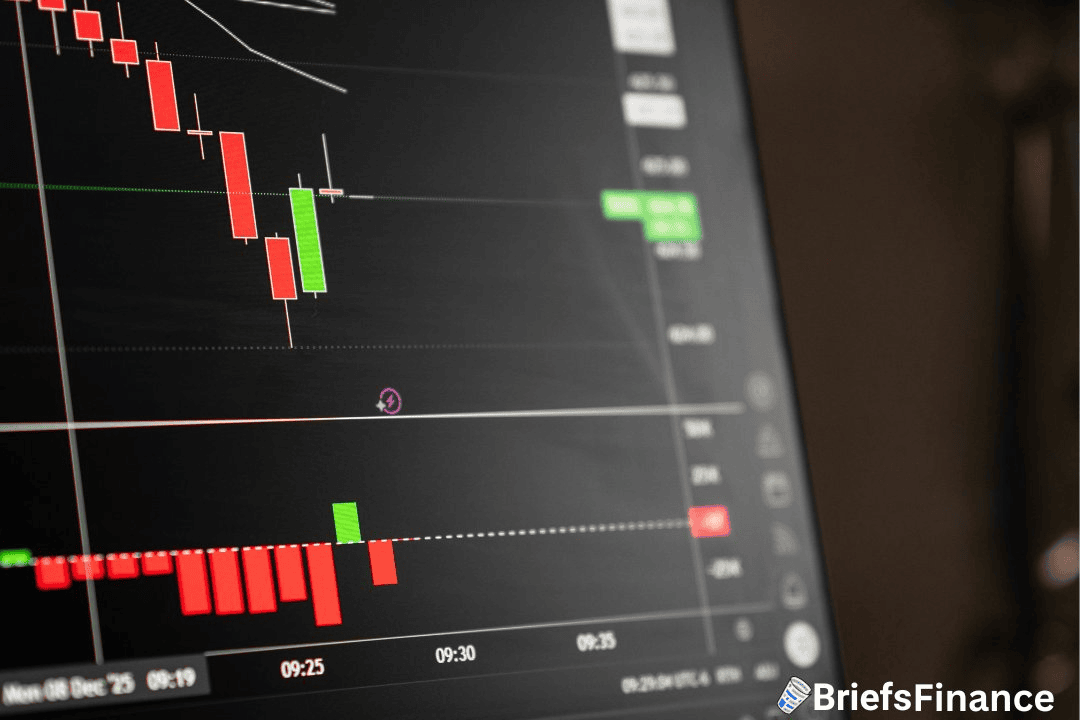
Now for the markets, where volatility, the size of the swings from day to day, has investors worried. Stocks fell over the past few days, then talk of a peace deal between the United States and Iran raised hopes that prices would fall, and stocks started climbing again.
The bigger issue is that investors are worried about the stock market and the bond market at the same time, and normally the two take turns.
When investors feel good about the economy, they sell bonds and buy stocks, because they want to own a piece of an economy that's moving. When they get worried, they sell stocks and buy bonds, which are generally considered the safer investment.
| How investors feel | What they sell | What they buy |
|---|---|---|
| Confident about the economy | Bonds | Stocks |
| Worried about the economy | Stocks | Bonds |
So stocks and bonds normally move in opposite directions: when stocks go up, bonds go down, and when bonds go up, stocks go down.
"Bonds" here mostly means Treasury bonds, which are loans you make to the United States government. They're considered a risk-free investment because the government can always pay its bills, either by raising taxes or by working with the Fed to print money.
If the bills get paid with printed money, the next question is what each of those dollars is worth. That question is the subject of Jaspreet Singh's free workshop on September 29, where he covers how investors can profit from the dollar losing value.
This Time, Stocks and Bonds Fell Together
What just happened breaks that pattern: the stock market fell, and the bond market fell with it.
Treasury yields have been rising because the government has been struggling to find lenders. The United States now owes more than $40 trillion in national debt, so as it goes out to borrow even more, fewer lenders are lining up.
To keep the money coming in, the government had to offer higher interest rates. Yields went up at the same moment stocks were going down.
Treasury Bonds Are Now Competing With Stocks
Money isn't flowing into bonds because investors are scared, or into stocks because they're excited. The bond market is now competing with the stock market for the same dollars.
A 10-year Treasury pays over 5.1%, or at least it did recently, and a 30-year Treasury pays even more. So investors are doing the math.
They can put money into Treasuries and collect 5% to 6% in guaranteed interest, or put it in the stock market, where nothing is guaranteed and the hope is simply to make more. Some are choosing the bonds.
That competition is why the stock market and the bond market fell at the same time. Jaspreet describes the whole sequence as a supply chain:
- The economy booms, and corporate profits grow at the fastest rate since the pandemic.
- Inflation reaches 3.4%, well above what the Fed wants.
- The Fed raises interest rates to fight inflation and slow the growth.
- Investors ask why they'd stay in a stock market the Fed is fighting when Treasuries pay 5% to 6%.
- Bonds win, because the interest on Treasuries keeps going up.
Emotions Are the Enemy of Profits
Headlines about stocks falling or bonds falling make a lot of investors panic, and panic is expensive. Jaspreet's rule is that emotions are the enemy of profits, so the job is to cut through the noise and find where the opportunity is.
He breaks that job into three ways to invest.
1. Always Be Buying
You buy into the markets whether they're up, down, or sideways. Because you're always buying, timing doesn't really matter, and it's a strategy that has been proven to work.
2. Buy the Crash
The second way is to be an opportunist: wait for market crashes, then buy aggressively while prices are down.
Jaspreet's view is that market crashes and recessions create more millionaires than any other time, because great investments go on sale. Buying while prices are still falling also means you can get hurt before you get paid.
3. Follow the Market Shift
A market shift is understanding where the money is moving, then investing there. This is the one most investors try, usually by opening Reddit or asking an AI chatbot where the hot stocks are.
An AI chatbot can only show you what's already popular on the internet, so you end up chasing whatever everyone else is buying.
The real work is finding where the money is moving before it hits the headlines. By the time a shift is on the news, a lot of the real money has already been made.
That takes more time, more work, and more risk than reading a headline, but that's where the opportunities are.
Are Bonds a Good Investment Right Now?
The economy is booming and the Fed is raising rates, and all that really means is money is moving and changing where it goes. Investors are moving money into bonds, and watching where else it goes is what creates opportunities.
One of the investment analysts on Jaspreet's team told him recently that he's seen the bond market chaos too, and he isn't buying many Treasuries. He's been buying Polish bonds instead.
They're backed by the EU, and they pay almost double what US Treasuries pay, around 8% to 9% in interest. That's one analyst's position, not a recommendation, and a bond paying twice as much carries its own risks that can hurt you.
The lesson is the habit: study how money is moving so you can find opportunities of your own.
Jaspreet goes deeper on that habit in his free investor workshop on September 29, where he shows how investors can profit from the dollar losing value and find opportunities in this shifting economy. It's live and virtual, and it runs twice that day, at 10:30 a.m. Eastern and again at 8 p.m. Eastern.
Your job as an investor isn't to chase the news. It's to find the opportunity before it becomes news.