Free NewsletterPro Login
S&P 500 6,287 +0.42%
DOW 44,521 -0.18%
NASDAQ 21,103 +0.71%

Warning: Undefined variable $funds in /var/www/briefs.co/htdocs/wp-content/plugins/oxygen/component-framework/components/classes/code-block.class.php(133) : eval()'d code on line 491

Warning: foreach() argument must be of type array|object, null given in /var/www/briefs.co/htdocs/wp-content/plugins/oxygen/component-framework/components/classes/code-block.class.php(133) : eval()'d code on line 491
/* the link was here */

AI Buildout Gains $500 Billion Backing as Nvidia Recruits Finance Giants

Published Aug 10, 2026
[tts_player]
Share:
Summary:
  • Nvidia has lined up six major financial firms to steer over $500 billion into AI data center infrastructure.
  • Under the plan, AI chips serve as collateral, allowing customers to borrow instead of paying upfront.
  • Skeptics worry that rapid chip obsolescence could weaken the value of that collateral.

The Big Idea

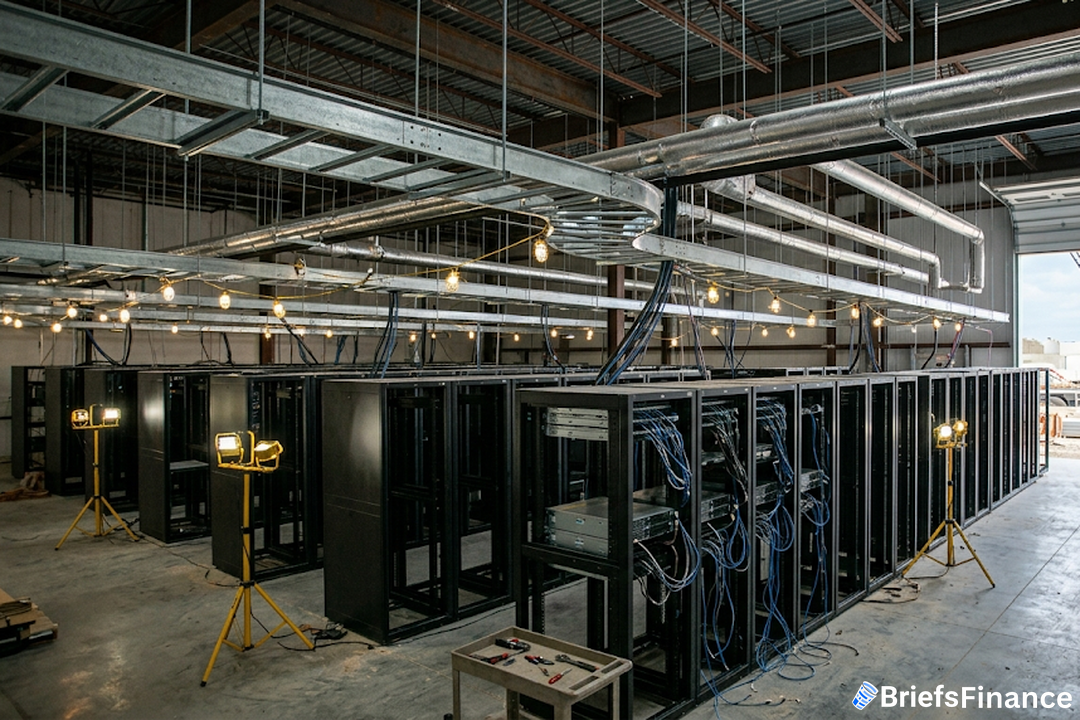
The pitch is simple if you think of a warehouse packed with AI processors as the equivalent of a family home. When someone buys a house, the property secures the mortgage. Nvidia wants its customers' hardware purchases to work the same way.

Right now, a cloud provider or an AI startup that wants Nvidia's chips usually has to pay for them out of its own pocket. Under this new setup, customers could tap institutional credit, insurance money, and private investment to cover those purchases instead.

The key shift is how Nvidia wants Wall Street to view its chips. Historically, GPUs were seen as gear that loses value fast, like a new car rolling off the lot. Nvidia is arguing that its chips are more like commercial real estate or toll roads - assets that generate income for years and hold their worth.

CEO Jensen Huang told CNBC, "This is the first time that technology chips have become an investable asset class." He argued that the chips generate income, have long useful lives, and can be moved from one customer to another, which makes them dependable collateral. Collateral, in plain terms, is the thing a lender can take if you fail to pay back a loan.

Huang framed the shift in bigger terms, too. "The computer is now part of the infrastructure, like electricity, like the internet," he said.

Get the free Always Be Buying eBook and learn the simple system for building wealth on any income

Why Now

The announcement landed Monday, Aug 10, 2026, with executives from all seven companies sitting down together for an unusual joint interview with CNBC's Becky Quick. Just a year earlier, a global market slump in July made investors question whether Big Tech's massive AI spending was getting out of hand. Large cloud providers are still planning to spend hundreds of billions on data centers and hardware. Moody's has warned that this level of spending is starting to squeeze free cash flow/) and push companies deeper into debt.

That is where the financing push comes in. If Nvidia's customers can borrow against their hardware instead of paying upfront, they can keep building without draining their own balance sheets. Goldman Sachs CEO David Solomon called it "a pivotal moment of a historic AI investment cycle."

Blackstone President Jon Gray said, "AI usage among the firm's portfolio companies has grown sevenfold this year, and demand is outpacing supply." Apollo and Blackstone have already arranged debt and equity financing for Anthropic, the AI company behind the Claude chatbot.

The catch: not everyone is convinced chips will hold their value once newer, faster generations arrive. If a data center full of last year's GPUs is suddenly obsolete, the collateral behind these loans gets shakier.

What It Means for Your Portfolio

BlackRock CEO Larry Fink drew a parallel between this initiative and the mortgage-backed securities market that emerged in the 1970s, which unlocked widespread home lending. He called it "the next future for financial engineering" and said BlackRock is already planning to raise more money on top of what has been collected so far.

"We need to raise this money as fast as possible and put this to work, because I think it's really imperative that the United States is the leader in AI in the world," he said.

For everyday investors, this is a sign that the AI boom is moving into a new phase. At first, investors focused on the companies making the chips. Now the spotlight is on the data centers that house them and on who finances the buildout.

If Nvidia succeeds in turning its hardware into a financeable asset class, it could unlock a steady stream of capital that keeps the AI buildout going for years. That would be good news for anyone holding Nvidia stock or funds tied to the broader tech sector. It could also mean the biggest AI players keep spending heavily, which is worth watching if you own shares in the cloud providers doing the buying.

More debt in the system, even backed by real hardware, can turn ugly if the value of that hardware drops faster than expected. The banks and asset managers involved are betting that AI computing is here to stay.

Download the free Always Be Buying eBook and start putting your money to work today
Disclosure

Recent News

1 2 3 52

Get Market Briefs delivered to your inbox every morning for free!

No fluff. No noise. No politics. Just finance news you can read in 5 minutes.

Blogs

June 29, 2026
Portfolio Diversification: Why Putting All Your Eggs in One Basket Destroys Wealth
  • Real diversification means spreading investments across all 11 economic sectors plus bonds, alternatives, and cash so no single bet can sink the portfolio.
  • Different sectors perform at different times, so a diversified portfolio captures upswings while smoothing the brutal drawdowns that wipe out concentrated bets.
  • Total market index funds offer the simplest path to diversification, and annual rebalancing is what keeps the structure working over time.
Read More
June 29, 2026
Non Taxable Income: What It Is and Why It Matters
  • Non taxable income is money you receive that you don't owe income tax on.
  • The tax code treats workers, investors, and business owners very differently, and investors often come out ahead.
  • Learning how income is taxed is a quiet superpower for keeping more of what you earn.
Read More
June 29, 2026
Semiconductor Stocks: A Simple Guide for Investors
  • Semiconductor stocks are companies that design and make computer chips, the brains inside nearly every modern device.
  • The AI boom has turned chips into one of the market's most important and most watched groups.
  • They offer big growth potential, but come with high valuations and a notoriously cyclical history.
Read More
June 25, 2026
How Stocks Work: A Simple Guide for Beginners
  • A stock is a slice of ownership in a company - buy one, and you own a piece of the business.
  • You make money two ways: the share price rising over time, and dividends paid to shareholders.
  • The simplest path for most beginners is buying into the whole market through a low-cost index fund.
Read More
June 25, 2026
Stop Loss vs Stop Limit: What's the Difference?
  • A stop loss order sells your stock once it hits a trigger price, prioritizing getting you out.
  • A stop limit order only sells within a price range you set, prioritizing price over a guaranteed exit.
  • The trade-off: a stop loss almost always executes; a stop limit might not if the price moves too fast.
Read More
June 25, 2026
Energy Stocks: A Simple Guide for Investors
  • Energy stocks are companies that produce and supply the power the world runs on, from oil and gas to newer sources.
  • They make up one of the 11 sectors of the market and tend to move with energy prices and big-picture shifts.
  • Like any sector, the key is diversification and understanding the forces driving demand.
Read More
June 18, 2026
What Is a Stop Loss Order? A Simple Guide
  • A stop loss order automatically sells a stock once it falls to a price you set.
  • It's a tool to cap losses or lock in gains without watching the market all day.
  • It works best for active strategies, and can backfire if used carelessly on long-term holdings.
Read More
June 18, 2026
Best S&P 500 Index Fund: How to Choose One
  • The best S&P 500 index fund for most investors is simply the cheapest, most established one that tracks the index well.
  • Funds like VOO, IVV, and SPY all hold the same 500 companies, so the biggest difference is the fee.
  • Pick one, automate your buys, and let time do the heavy lifting.
Read More
June 17, 2026
What Are Penny Stocks? Risks and Rewards Explained
  • Penny stocks are very low-priced shares of very small companies, often trading for just a few dollars or less.
  • They promise huge gains but carry huge risks: low liquidity, high failure rates, and wild price swings.
  • Most investors are better served by quality companies and funds than by chasing cheap shares.
Read More
June 17, 2026
Best Stocks for Beginners With Little Money
  • The best stocks for beginners with little money usually aren't individual stocks at all - they're low-cost index funds.
  • You can start with $100 or less and use small, regular investments to build wealth over time.
  • Focus on diversification and consistency, not on picking the next big winner.
Read More
1 2 3 24
Share via
Copy link












