What buyers and sellers are seeing
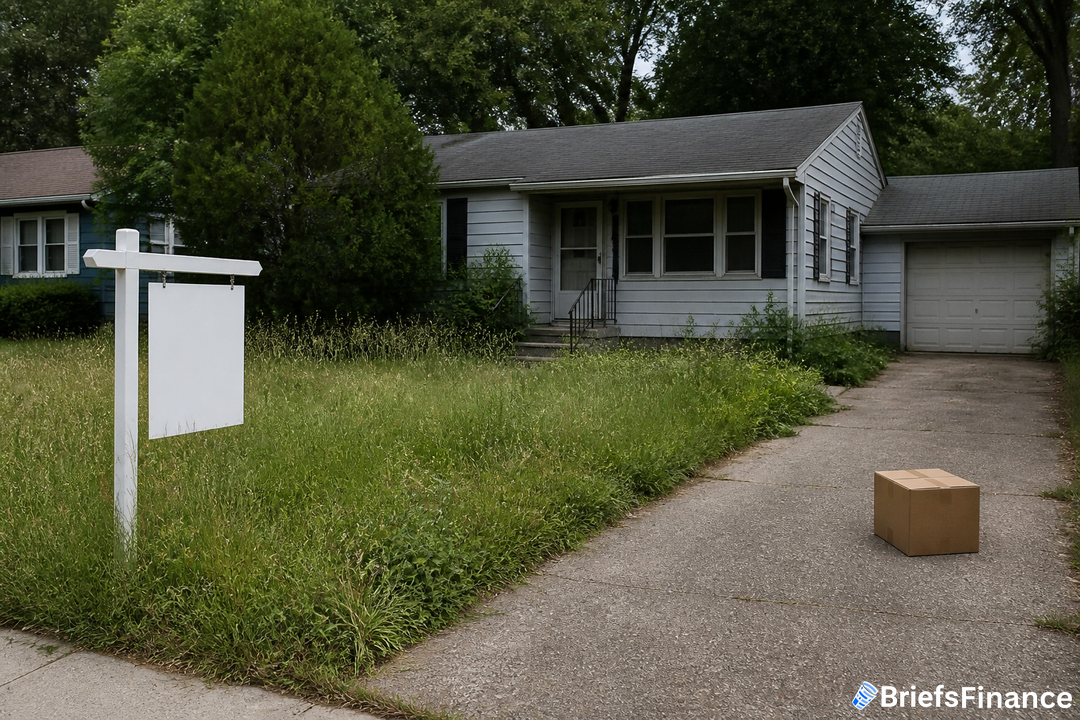
Alton Bradshaw put his Marlborough, Massachusetts, place on the market for $1.28 million and trimmed the price twice within days after a quiet first open house that drew two people, one a neighbor. A food scientist who already bought in Frisco, Texas, Bradshaw blames borrowing costs hovering near 7%. "I mean, the house is pristine," he said of the 4,300-square-foot contemporary colonial, which has about $250,000 in recent upgrades. By the end of a rainy Sunday showing during a New England Patriots game, roughly six parties had come through over the weekend, but offers were still a no-show.
The first cut was $76,000 after that sluggish debut. His agent, Nina Sable, said Boston's western suburbs were frenetic earlier in the summer - "I honestly couldn't breathe for a couple weeks" - then activity faded by late August. "I'm nervous going into the fall," she said. "We definitely are worried that there's gonna be a complete stall."
The bigger picture
Mortgage costs have been edging up since late August and moved back above 7% on Thursday, according to Freddie Mac. The benchmark 10-year Treasury yield jumped Wednesday to a level not seen in almost 20 years, and the Fed has indicated additional rate hikes are still on the table.
Sticker shock is colliding with other headwinds. Lawrence Yun, chief economist at the National Association of Realtors, said buyers and sellers should treat this as the "new normal."
Seller concessions were part of 45% of transactions. Homes typically took 50 days to sell, compared with 36 when mortgage rates were nearing 8% almost three years ago. Listings have swelled to about 1.5 million, up 46% from 2023, giving buyers more leverage.
When borrowing costs shift, steady planning helps protect what you've built over time. Join Briefs Finance CEO Jaspreet Singh on September 29th for a FREE live investor workshop, How to Profit From A Dollar That's Losing its Value, where he shows how we're spotting investment opportunities as the dollar falls. Save your spot.
Not all markets are softening the same way
Pandemic winners like Denver, Austin and Tampa, Florida, face slower in-migration and a wave of new builds that weigh on prices. Tight markets tell a different story: in Silicon Valley, helped by the AI boom, and in parts of the Northeast and Midwest, limited supply leaves buyers with less room to wait. Wealth helps too - about 30% of spring purchases around San Francisco were all-cash, near a Redfin record.
Scarsdale, New York, broker Cindy Schwall said higher financing costs are more nuisance than deal breaker for many of her clients. "At this point, I'm not super concerned," she said. "I had one last week for $1.425 million that needed a gut renovation and we had 10 offers."
Seattle is feeling the opposite. Redfin agent Chandra Gordon, in the business for 12 years, called this her toughest year as tech layoffs and new taxes on high earners compound the hit from rising rates. One of her sellers put about $10,000 into repairs, chopped a $1.6 million list price by $465,000 to land a buyer, then watched the deal collapse on the morning of closing when the buyers decided higher rates meant prices had further to fall. For the shoppers who can stomach today's payments, Gordon said they are "like sharks in the water looking for blood," pushing for concessions or deeper discounts.
In Houston, Compass agent Michael Brombacher is telling clients to get deals done by meeting buyers partway. That includes his client Alex Murphy, who is trying to sell a three-bedroom, two-bathroom investment property listed in August for $475,000. Murphy had two bidders at first, then one withdrew and the other trimmed its price by $5,000. "If rates were a little bit better, we would have probably tried to push back a bit more."
What it means for your money
The question has shifted from when rates fall to what happens if they climb more. On the ground, that looks like longer selling timelines, more back-and-forth on price, and a rising share of deals with concessions - along with a chunk of buyers paying cash or simply walking when they expect better terms later. If you own, are shopping, or are weighing an investment property, local inventory and buyer sentiment now matter more to how quickly you can transact and how much wiggle room you have on price.
Keeping a calm, long term focus is one of the best ways to grow savings. Our CEO Jaspreet Singh is hosting a FREE live investor workshop, How to Profit From A Dollar That's Losing its Value, on September 29th. Sign up free to join him live.