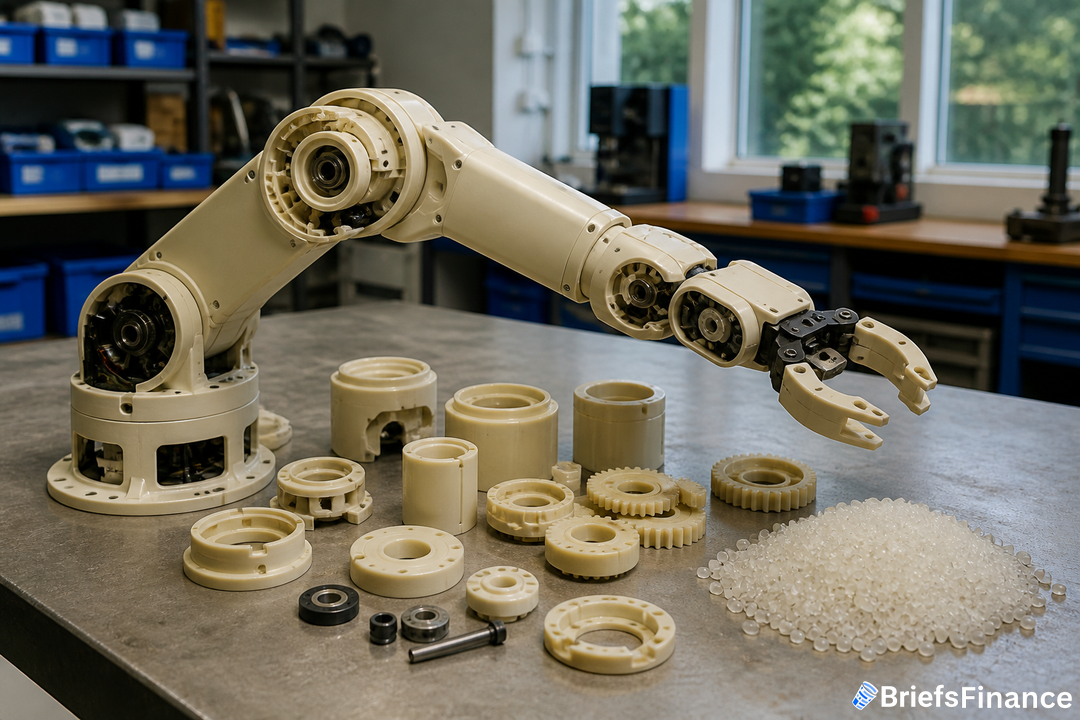
Why PEEK Matters for Humanoids
If robots are the next big manufacturing wave, PEEK is the under-the-hood stuff that helps them move. Short for polyether ether ketone, it shows up in limbs and joint components, including the actuator - the robot's muscle that converts energy into motion. With Tesla Inc., XPeng Inc. and Agility Robotics Inc. pouring money into humanoids, demand is set to climb. And yes, humanoids have been a hot topic since last year.
The market math and capacity picture
Prismane Consulting expects PEEK sales to more than double between 2025 and 2034 to $1.56 billion, with global capacity projected at 18,000 tons by 2034. Roughly half of today's capacity sits in the UK. Lancashire-based Victrex Plc is the largest producer globally and derives all of its revenue from PEEK.
Barclays analyst Katie Richards said that building one million humanoids by 2030 could require about 10,000 tons of additional PEEK, and that from there the opportunity gets "pretty exponential." She pointed out that Victrex, Germany's Evonik Industries AG and Belgium's Syensqo SA have kept a relatively low profile to date, with Syensqo limiting public signals to a handful of LinkedIn updates and Victrex merely mentioning robotics partnerships. Meanwhile, Chinese firms such as Jilin Joinature Polymer Co. are adding capacity. Richards said Chinese manufacturers intend to bring on 26,000 tons of PEEK capacity that begins ramping next year, and as that build-out progresses, they're likely to expand from domestic sales into Europe.
Industry dynamics, risks and regional factors
Who stands out in Europe may come down to geography. Syensqo is listed in Belgium and operates in the US, which could mean more tariff protection from Chinese products. It is also closer to the humanoid action led by US and Chinese companies.
On the robotics front, earlier this month Agility Robotics unveiled a new humanoid designed to work safely near people; XPeng expects to move into mass production of its humanoid robots before year-end; and Tesla has been reviewing Chinese suppliers to increase output of its Optimus model. Partnerships with leading European industrials could also matter, with the actuator - the part that uses PEEK - being a device where Germany's Schaeffler AG has particular expertise.
As robotics reshape industries, protecting and growing your savings calls for steady planning. Join Briefs Finance CEO Jaspreet Singh on September 29th for a FREE live investor workshop, How to Profit From A Dollar That's Losing its Value, where he shows how we're spotting investment opportunities as the dollar falls. Save your spot.
There are risks. Berenberg analyst Sebastian Bray flagged long term substitution by cheaper plastics, noting robotics is "an offshoot of consumer electronics" where costs are watched closely. He said tens of millions of humanoids would likely deliver only a "low single-digit percentage tailwind to demand" for many polymers. For high-performance materials like PEEK, if they become a staple in designers' toolkits, that could be "a bigger fraction of the total demand." Bray added, "I doubt it's a game changer for global polymers demand unless we move to a hundreds of millions of humanoids world," but he sees room for "small, good niche businesses" in PEEK as well as alternatives such as polyphthalamide or polyphenylene sulfide.
European chemical makers face elevated natural gas prices, US tariffs, and wider competitive pressure from China. Bray added that if the conflict in Iran were resolved, feedstock supplies could loosen and competitive intensity from China's polymers sector could rise. Even so, he expects Western producers to claim at least some of the opportunity.
What this could mean for your portfolio
PEEK sits where two big currents meet: a surge in humanoid projects and a capacity race between established European suppliers and Chinese challengers. The markers to watch are clear: a $1.56 billion market by 2034, capacity at 18,000 tons, Chinese announcements totaling 26,000 tons that start ramping next year, and a scenario where one million robots by 2030 would add about 10,000 tons of demand. If you are tracking the robot story, these numbers tell you whether materials makers are heading for steady growth or a tougher price fight.
New technologies can change investment landscapes, so keeping your financial plan resilient matters. Our CEO Jaspreet Singh is hosting a FREE live investor workshop, How to Profit From A Dollar That's Losing its Value, on September 29th. Sign up free to join him live.