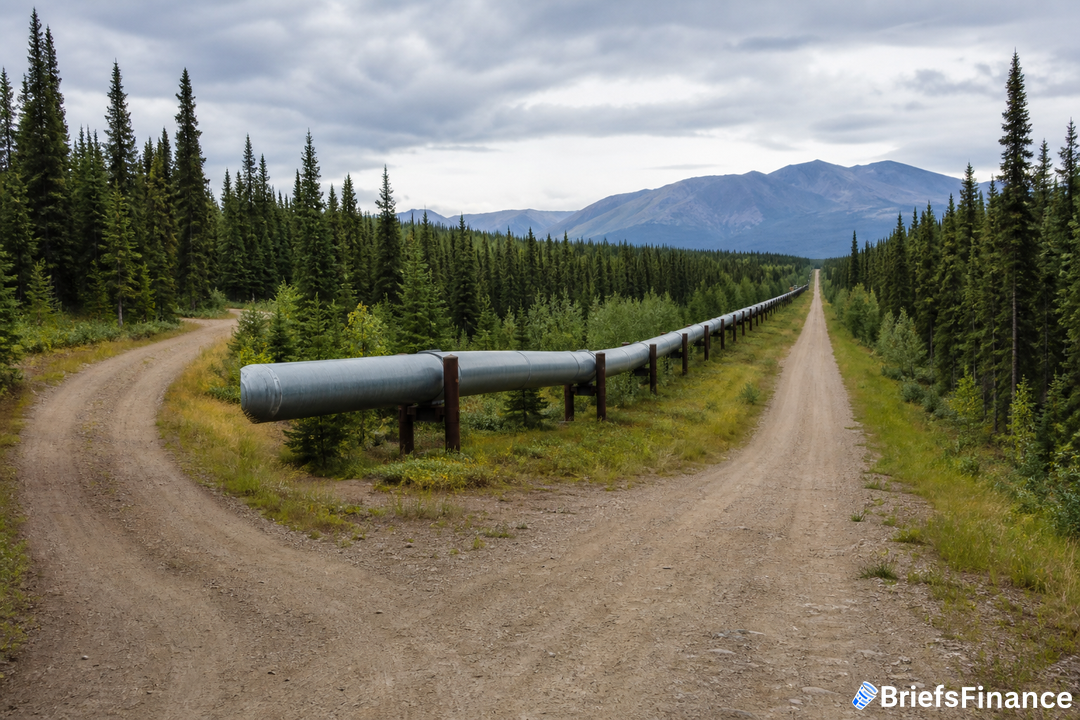
What Ottawa put on the table
In a recent letter, the federal government proposed transferring a 15% ownership interest in Trans Mountain to Indigenous communities, according to Finance Minister François-Philippe Champagne's office. Champagne called it "a very meaningful offer," adding, "You're talking about an existing asset, which has been de-risked very much in line with market practice." He also said the government included a C$2.5 million lump sum as a goodwill gesture at a Tuesday news conference.
This is not the first outreach. Three years ago, Ottawa wrote to dozens of communities along or near the route about an undefined stake. Officials have further indicated that Ottawa does not plan to keep Trans Mountain in federal hands permanently.
Why some want a bigger stake
Critics argue 15% falls short of genuine economic participation. Stephen Buffalo, who leads the Alberta-based Indian Resource Council, called the figure "somewhat a feeble attempt at economic reconciliation" and said, "They should at least put 50% on the table."
Groups formed soon after Canada bought Trans Mountain Corp. from Kinder Morgan Inc. eight years ago, seeking ownership in the only oil pipeline that runs from Alberta to the British Columbia coast. During former Prime Minister Justin Trudeau's tenure, the federal government began moving toward a partial sale to Indigenous communities, yet it never finished the transaction. Mark Carney's government is making another attempt now.
Project Reconciliation's plan called for First Nations to ultimately own 100% of the asset, directing the earnings to a community-focused sovereign wealth fund. Its top executive, Steve Mason, said First Nations "should own a material piece," setting the floor at "a minimum of 30%." He developed a financing plan built around a bond issuance supported by pipeline toll revenues.
When big proposals surface, investors benefit from steady principles and careful planning. Join Briefs Finance CEO Jaspreet Singh on September 29th for a FREE live investor workshop, How to Profit From A Dollar That's Losing its Value, where he shows how we're spotting investment opportunities as the dollar falls. Save your spot.
What's drawing support
Other leaders are open to the 15% proposal as a way to gain a seat at the table. "It's a great offer," said Dale Swampy, CEO of the pro-development National Coalition of Chiefs. "I think 15% allows you to gain some control over environmental monitoring, over who gets hired."
While many Indigenous communities in the west opposed the expansion, others pushed to participate. The Western Indigenous Pipeline Group in British Columbia partnered with Pembina Pipeline Corp., arguing that ownership can deliver revenue and oversight for infrastructure affecting traditional territories.
The bigger picture: capacity, cash flows and the next build
Completed in 2024 after significant delays, the Trans Mountain expansion raised capacity to 890,000 barrels per day, with the price tag coming in near C$35 billion (US$24.8 billion). The added throughput has opened more routes to Asia for Canadian barrels, trimming dependence on US buyers and improving price realizations. The system is paying dividends to taxpayers, with a further 300,000 barrels a day of capacity in the works.
Looking ahead, Trans Mountain was recently tasked with leading a new 1 million barrel a day line along a similar corridor, ending at a new deep-water terminal designed to accommodate the world's largest tankers.
What this means for your money
The ownership question has been simmering for years. Ottawa explored a sale under Justin Trudeau, but it fizzled. In 2024, Alberta Premier Danielle Smith said the federal government had been interested in a roughly 30% divestment, though that push stalled. With Mark Carney's government back at it, the debate over 15% versus something closer to 30% or 50% will shape who benefits from the cash flows, who influences environmental monitoring, and how the next phases get financed.
For your wallet, the through-line is simple: an essential energy asset is throwing off dividends, scaling up again, and potentially changing hands in part. Ownership structure, expansion timelines, and community partnerships will influence risk and returns on a piece of Canada's energy backbone you feel every time you fill up.
Protecting and growing your savings starts with patience, clarity and a long view. Our CEO Jaspreet Singh is hosting a FREE live investor workshop, How to Profit From A Dollar That's Losing its Value, on September 29th. Sign up free to join him live.