What the bill does
Prime Minister Mark Carney's government introduced legislation Monday aimed at speeding project approvals so federal assessments finish within 12 months. The proposal would also let the government formally designate national trade corridors and track their performance to cut bottlenecks and lift efficiency.
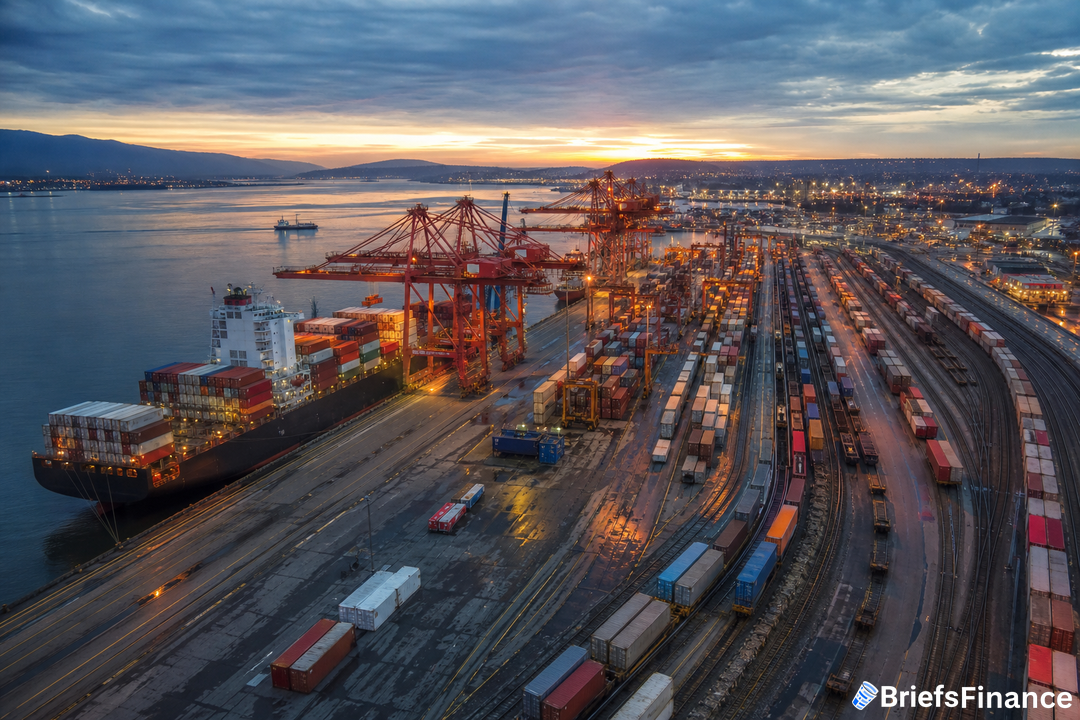
It packages a wide slate of transportation-specific changes, trimming construction red tape. It would revamp how Canada's ports are governed so they can seek more private investment and modernize with better technology. The bill also targets faster approvals for lower-risk infrastructure, including smaller bridges and rail connections.
Why this is happening
Transport Minister Steven MacKinnon said the reforms are driven by a push to broaden overseas sales, adding they are "really inspired by this imperative to diversify our overseas markets, to diversify away from the United States." He linked the urgency to tariffs and other disruptions under US President Donald Trump and noted "a very discernible east-west pattern in this, when we talk about corridors."
MacKinnon underscored western Canada as a focal point to move resources like critical minerals, food and energy to Pacific Ocean ports in Vancouver and Prince Rupert. "We spend a lot of time considering that corridor because of its centrality in any kind of export development with respect to Asia," he said.
As trade and transport evolve, steady investors look to protect and grow savings. Join Briefs Finance CEO Jaspreet Singh on September 29th for a FREE live investor workshop, How to Profit From A Dollar That's Losing its Value, where he shows how we're spotting investment opportunities as the dollar falls. Save your spot.
Ports, seaway and northern prospects
MacKinnon pointed to the St. Lawrence Seaway - an interconnected system linking the Great Lakes to the Atlantic Ocean via rivers, canals and locks - as a springboard for deeper trade with Europe. The route spans 2,300 miles, and four of the five Great Lakes share maritime borders between the US and Canada. "We have a seaway that is not running at capacity," he said. Ottawa is also advancing new container facilities in Hamilton, Ontario, and addressing congestion on rail and highway networks throughout the Great Lakes area.
Further north, there is room for more shipping, though timelines are longer and certain routes require ice-breaking. Much of the current attention is on the small port of Churchill, Manitoba, on Hudson Bay, which now moves some grain and zinc concentrate. "We're very intrigued by the potential there," MacKinnon said. "Churchill absolutely can become a place with real potential as the prairies' own Atlantic port." He also cited prospects in critical minerals and energy, while cautioning that the area faces substantial infrastructure and geological challenges, including the need to reinforce the rail line to handle heavy loads over muskeg.
What this means for your portfolio
These are proposals for now. The legislation still has to clear Parliament. If it passes, faster reviews, upgraded ports, designated trade corridors and targeted fixes could influence firms tied to construction and logistics, and shift how resources move through Pacific and Great Lakes routes. For households watching shipping lanes as much as stock tickers, the payoff to keep an eye on is whether projects actually break ground and unclog the routes Canadian goods need to reach higher-margin markets.
Long term financial health comes from planning calmly to preserve and increase wealth. Our CEO Jaspreet Singh is hosting a FREE live investor workshop, How to Profit From A Dollar That's Losing its Value, on September 29th. Sign up free to join him live.