Market moves and the China question
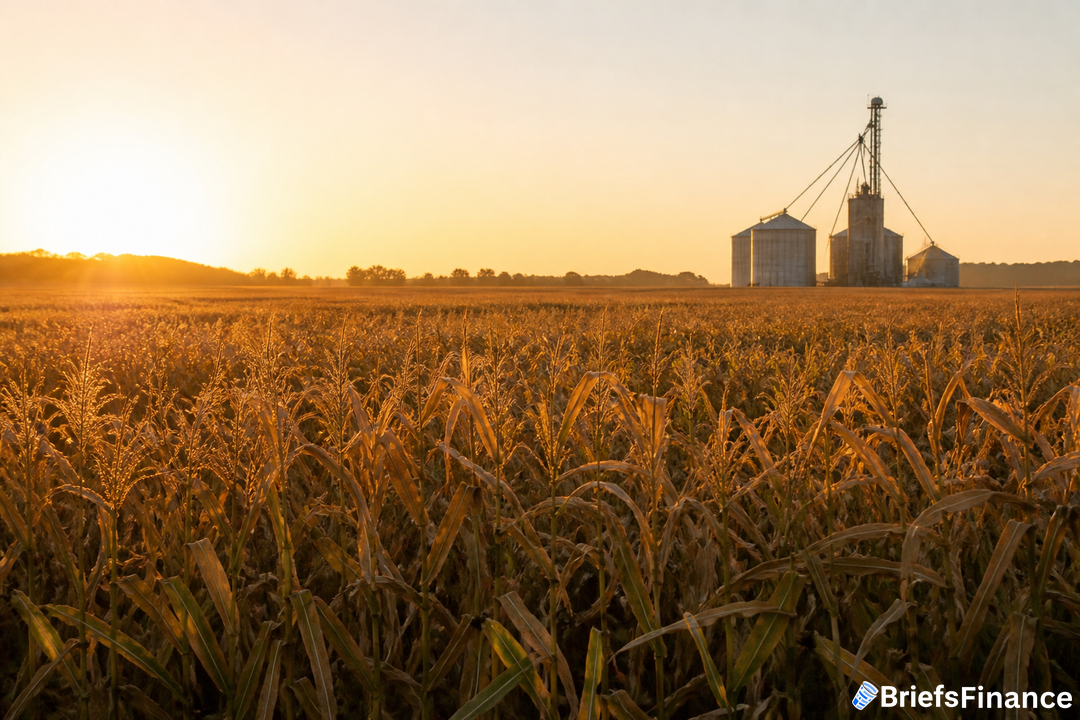
Corn eased on Tuesday, giving back a slice of Monday's sharp gains, with Chicago contracts down as much as 1.4%. Monday's jump reflected speculation that China might start advancing a White House-detailed commitment to buy $17 billion of farm goods on top of an earlier soybean agreement. The focus now is whether Thursday's Washington summit brings any concrete US grain orders.
So far, there is little sign of buying ahead of the meeting, aside from China having recently crossed the halfway mark toward a 25-million-ton soybean target.
Demand signals, prices and global drivers
China bought more than $5 billion of US corn as recently as 2022, which is why many expect corn would need to be part of any serious attempt to hit that purchase goal. Matt Campbell, a risk management consultant at StoneX, wrote in an email that "Corn would likely be a large portion of these import targets based on historical Chinese import data," but he also noted that domestic prices in China are cheaper than US offers, making imports tough to justify. As he put it, "The US is not competitive price-wise today."
After a hot summer clipped yields, crop prices remain parked close to multi-year peaks. On the supply side, the Russia-Ukraine conflict has snarled Black Sea grain flows, and the US-Iran war has kept oil markets firm.
When prices shift, steady planning helps protect and grow your savings. Join Briefs Finance CEO Jaspreet Singh on September 29th for a FREE live investor workshop, How to Profit From A Dollar That's Losing its Value, where he shows how we're spotting investment opportunities as the dollar falls. Save your spot.
Harvest pace, farmer stress and what to watch next
Forecasts call for relatively dry conditions across the eastern half of the Midwestern belt, which should help fieldwork, while the northwest faces wetter weather.
Even with recent price gains, farm finances are tight. A report from the National Corn Growers Association and the American Soybean Association said many producers are still getting less for their crops than what it costs to raise them, noting that many producers are still paid less for their crops than what it costs to grow them, with expenses spanning land, equipment, seed, fertilizer, fuel and chemicals. "Many growers are still managing financial pressure that has built over multiple crop cycles," said Krista Swanson, the NCGA's chief economist and an Illinois farmer.
The pressure has intensified because of the war in Iran, a factor that has driven diesel to record levels right as heavy equipment is logging long hours for the fall harvest. For your wallet, the near-term setup hinges on the summit's outcome and harvest speed: solid prices, but gains capped until buyers show up or weather blinks.
Keeping a long term perspective can turn uncertainty into financial opportunity and security. Our CEO Jaspreet Singh is hosting a FREE live investor workshop, How to Profit From A Dollar That's Losing its Value, on September 29th. Sign up free to join him live.