Free NewsletterPro Login
Free Live Investors Workshop
Seats limited
Tue, Sep 29.
The dollar is losing value.
Here’s how investors can still profit.
Hosted By
Jaspreet Singh
Founder, Briefs Finance
X

Warning: Undefined variable $stocks in /var/www/briefs.co/htdocs/wp-content/plugins/oxygen/component-framework/components/classes/code-block.class.php(133) : eval()'d code on line 448

Warning: foreach() argument must be of type array|object, null given in /var/www/briefs.co/htdocs/wp-content/plugins/oxygen/component-framework/components/classes/code-block.class.php(133) : eval()'d code on line 448

Warning: Undefined variable $funds in /var/www/briefs.co/htdocs/wp-content/plugins/oxygen/component-framework/components/classes/code-block.class.php(133) : eval()'d code on line 472

Warning: foreach() argument must be of type array|object, null given in /var/www/briefs.co/htdocs/wp-content/plugins/oxygen/component-framework/components/classes/code-block.class.php(133) : eval()'d code on line 472
/* the link was here */

Saudi Crude Exports Surge as Riyadh Reroutes Barrels Through Hormuz

Published Sep 24, 2026
Share:
Summary:
  • Saudi oil shipments in September jumped to their highest since the Iran war began after an attack crippled the East-West pipeline and Riyadh pivoted back to the Strait of Hormuz.
  • According to Bloomberg's tanker tracking, shipments this month are averaging 5.28 million barrels a day to date, the quickest rate since February.
  • Traders report the OPEC leader has sold nearly 100 million barrels for October and November delivery to Asian buyers via Hormuz since the middle of last week, with Brent near $105 and diesel even stronger.

What happened

A drone strike disabled a pump station on Saudi Arabia's East-West pipeline earlier this month, so the kingdom ramped up traffic through the Strait of Hormuz instead of relying on its Red Sea outlets. That pivot picked up speed after the attack, which took place two weeks ago, reversing months in which Saudi Arabia largely held back on Persian Gulf exports even as neighbors shipped more.

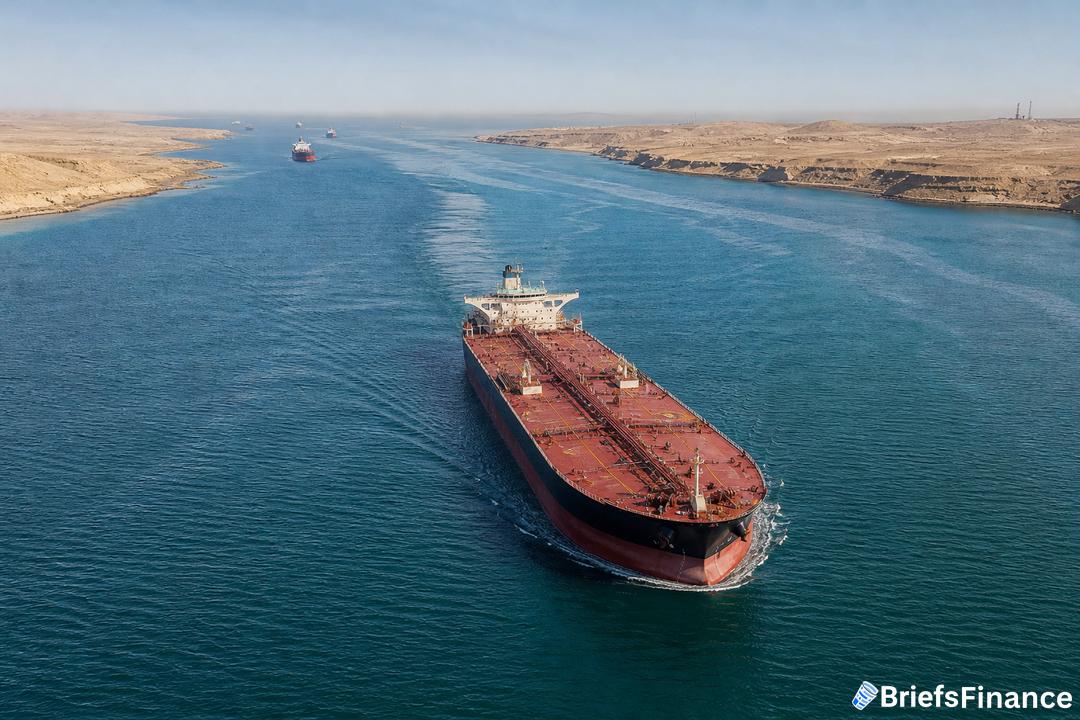
Fresh EU Copernicus imagery compiled by Bloomberg shows the main Persian Gulf terminal as busy as any time since the war with Iran began. Three images over four days capture multiple tankers alongside, with some appearing on consecutive days. Were every vessel visible in the latest image to sail by Thursday, average throughput would exceed 5 million barrels a day. Saudi Aramco declined to comment.

How flows and routes shifted

Drawing on ship signals and satellite data, Bloomberg pegs Saudi exports at 5.28 million barrels a day to this point in September, well above August when heightened risks at both eastern and western facilities snarled loadings. Before the conflict, roughly 90% of Saudi crude departed through the Persian Gulf, yet in April and May that portion dropped to zero.

To offset the Hormuz squeeze, Riyadh leaned on the East-West line to push barrels to the Red Sea, keeping more than half of pre-war exports moving and outpacing peers without that option, like Iraq and Kuwait. The pipeline, which can move up to 7 million barrels a day, came to a standstill after the strike crippled a pump station. Work to bypass the damaged facility appears to have restored flows, and shipments from Yanbu resumed after almost two weeks offline.

Ship tracking compiled by Bloomberg indicates that from Sept. 10 through Sept. 21 no tankers left the Red Sea export terminals. The picture is murky because many ships had their AIS transponders off for much of that stretch, and there were no clear satellite shots of the Red Sea loading sites from Sept. 10 to Sept. 20.

When global supply routes shift, steady planning helps protect and grow your savings. Join Briefs Finance CEO Jaspreet Singh on September 29th for a FREE live investor workshop, How to Profit From A Dollar That's Losing its Value, where he shows how we're spotting investment opportunities as the dollar falls. Save your spot.

The knock-on effects

With Red Sea flows paused, at least 18 tankers have gathered off Egypt's Sidi Kerir. The port lies at the Mediterranean terminus of the Sumed pipeline that connects to the Red Sea, a pathway that gained prominence following a July warning by Yemen-based Houthi rebels that they would attack ships making calls at Saudi ports.

With the narrow Bab el-Mandeb Strait effectively out of play, buyers in South Korea, Japan, China and elsewhere in Asia lifted cargoes in the Mediterranean and shipped them around Africa. As at Yanbu, Sidi Kerir loadings paused shortly after the East-West pipeline went down, and Bloomberg's tracking suggests those shipments should resume a few days after Yanbu's restart. Bloomberg's September export calculations reflect the first 23 days of the month, while its Sidi Kerir chart covers the first 13 days.

Why it matters for your money

Saudi Arabia is the heavyweight in seaborne oil, so when it switches routes or suffers a pipeline outage, supplies tighten and prices react. The war has already choked off chunks of crude and fuel, lifting Brent to about $105 and pushing diesel up even more. Since the middle of last week, traders say the kingdom has sold almost 100 million barrels for October and November delivery to Asian customers via Hormuz, a sign of strong demand and a rapid move to keep the region supplied.

Bottom line: watch the flow data, not just the headlines. Where Saudi barrels load and how quickly they sail is a real-time read on supply, freight costs and, ultimately, what you pay at the pump or for anything moved by truck.

Staying calm and prepared lets your financial plan weather uncertainty and prosper. Our CEO Jaspreet Singh is hosting a FREE live investor workshop, How to Profit From A Dollar That's Losing its Value, on September 29th. Sign up free to join him live.

Disclosure

Recent News

1 2 3 … 85

Get Market Briefs delivered to your inbox every morning for free!

No fluff. No noise. No politics. Just finance news you can read in 5 minutes.

Blogs

September 23, 2026
Are We in a Recession? Without AI, America Might Already Be in One - and Washington Knows It
  • The White House attributes about three quarters of U.S. economic growth to AI, and many believe the economy would already be in a recession without it.
  • Washington has three reasons it cannot let the AI boom slow down: staying the world's superpower, outgrowing $40 trillion in national debt, and protecting a government stock portfolio worth billions.
  • Every market goes through booms and busts, and investors who understand the cycle get to buy the downturn instead of panic-selling with the crowd.
Read More
September 22, 2026
Will Interest Rates Go Down in 2026? Where the Money Moves Either Way
  • The Fed is leaning toward higher rates to fight 4% inflation, while the White House and a cracking job market push the other way.
  • If rates rise, money has tended to move toward short-term Treasuries, floating-rate loans, energy, banks and dividend payers.
  • If rates fall, it has tended to move toward gold, silver and Bitcoin, real estate, small caps, the S&P 500 and speculative bets.
Read More
September 21, 2026
How the Federal Reserve Makes Money - and Why It Just Posted Its Biggest Loss Ever
  • For 109 years the Federal Reserve created money, lent it to the U.S. government and handed the interest it collected back to Washington - almost $1 trillion in the decade starting in 2011.
  • Pandemic-era lending locked the Fed into earning about 2% on trillions of dollars while it now pays banks around 4%, producing a record loss of hundreds of billions in 2026.
  • The Fed covers its losses by creating money and the government covers its lost revenue by borrowing, and both feed the inflation that eats at the dollars in your account.
Read More
September 18, 2026
Kevin Warsh Just Defied Trump: What the Fed Rate Hike Means for Your Money
  • The Fed raised rates for the first time since 2023 in a unanimous vote led by Kevin Warsh, the chairman President Trump appointed to cut them.
  • Higher rates make the $40 trillion national debt, business loan resets and mortgages more expensive, but they strengthen the dollar and pay investors holding cash.
  • The war with Iran is pushing up oil, grocery and chip prices, another hike is likely in 2026, and recession talk is about to get louder.
Read More
September 17, 2026
Why America Bailed Out the Yen: The Japan Carry Trade, the Dollar and Your Mortgage Rate
  • In July 2026 the US sent money to steady the yen because Japan is the largest foreign owner of US debt, and Washington needs Japan to keep lending.
  • For decades the Japan carry trade let Wall Street borrow yen at essentially 0% and pour it into US stocks, real estate and Treasuries, and rising Japanese rates are shutting that off.
  • A weaker yen means fewer buyers for the dollar and for US debt, which pushes Treasury rates up and drags mortgage, car loan and credit card rates up with them.
Read More
September 16, 2026
Treasury Yields Are Spiking Because Lenders Are Backing Away From U.S. Debt
  • The U.S. is paying its highest 30-year borrowing rate in about two decades because its biggest lenders, the Fed, foreign governments, and banks, are all pulling back from Treasuries.
  • Every mortgage, car loan, credit card, and business loan is priced off the 10-year Treasury yield, so when Washington pays more to borrow, so do you.
  • With about $40 trillion of debt against a $32 trillion economy, the country either outgrows its debt or slides into a doom loop, and investors need a plan for both.
Read More
September 15, 2026
Fiat Currency Runs on Trust, and the World Just Stopped Trusting the Dollar
  • Gold has overtaken US treasuries as the world's top reserve asset, and central banks are now buying less US debt and more gold.
  • The US dollar is a fiat currency, meaning it's backed by a promise rather than gold, so it loses value when fewer countries want to hold it.
  • Whether the US economy or its national debt grows faster from here decides which assets stand to benefit next.
Read More
September 14, 2026
Why RAM Prices Are Soaring - and Where the Money Is Moving
  • Memory chips - the RAM inside phones, laptops, fridges, and trucks - are in a shortage Tim Cook called a 100-year flood, and some memory prices have climbed about 90% in a single quarter.
  • Four forces hit at once: AI demand, a production shutdown in 2023, build times that push any fix to 2028 at the earliest, and a bombed helium plant in Qatar.
  • The last two supply shocks ended in aggressive Fed rate hikes and market drops of around 45% and 20%, and this time Washington is spending heavily to bring memory production home.
Read More
September 11, 2026
How Is the Economy Doing? Washington Says It's Fixed, but the Numbers Don't Agree
  • Treasury Secretary Scott Bessent says the economy is fixed because lower earners' incomes are now rising faster than top earners'.
  • The Atlanta Fed and Bank of America show different numbers, and Hilton, Marriott, and McDonald's can't agree on what they're seeing either.
  • Whichever side is right, the economy is built to make investors rich, and inflation is how it does it.
Read More
September 10, 2026
US National Debt Hits $40 Trillion: Why the Economy Hasn't Collapsed Yet
  • The US national debt crossed $40 trillion in 2026 and is growing faster than the economy. The debt to GDP ratio now sits at 125%, the highest outside the pandemic and higher than World War II.
  • On September 9, 2026, Treasury Secretary Scott Bessent rolled out an emergency plan for the government to lend money to itself. Ray Dalio now says the dollar has roughly three years before real pain.
  • Empires rarely default. They debase. Since 1971, median household income grew about 8x while houses grew 17x and the S&P 500 grew 360x, so investors got richer while workers fell behind.
Read More
1 2 3 … 27
Share via
Copy link











