Credit Stress Jumps for CoreWeave
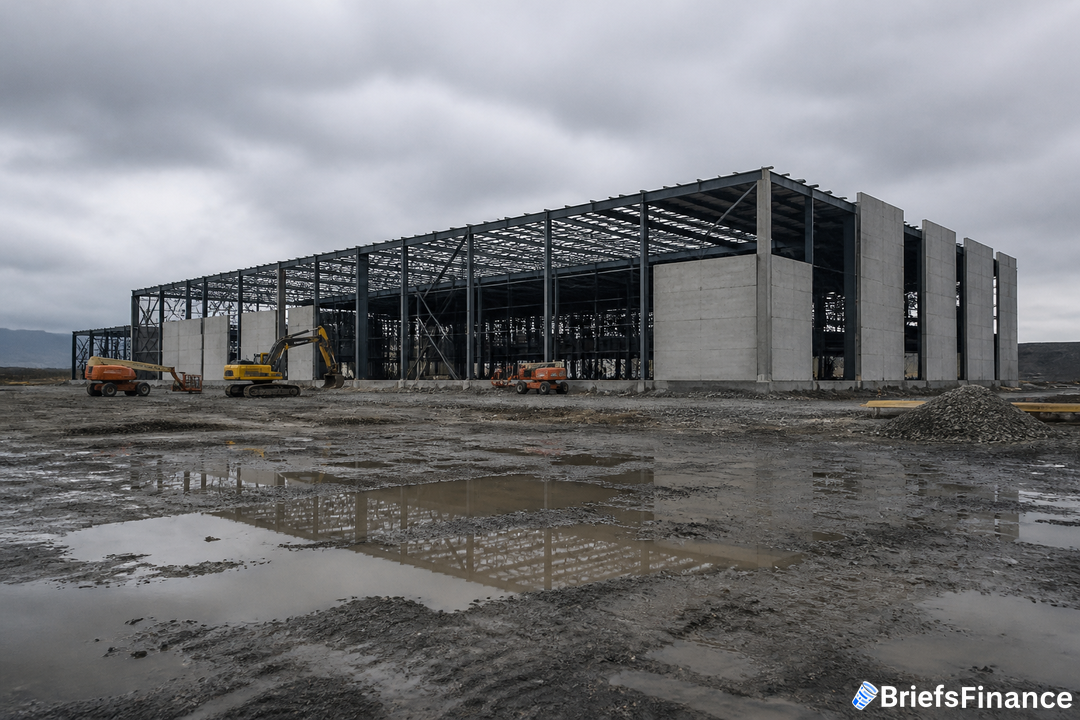
CoreWeave, a neocloud player, has piled up more than $51 billion in debt and obligations to expand its AI infrastructure. Both stock and bond investors are rebelling as worries mount over rising leverage and spending.
Following price declines, the 9.75% notes maturing in 2031 are yielding 15.78%. Protection costs also surged: CoreWeave's five-year credit default swap spread spiked above 1,140 basis points at one point and was most recently 1,088 bps, up 33% in a week and 177% from a year ago. CDS are essentially insurance on a borrower's debt, and wider spreads signal higher perceived risk.
Gavan Nolan of S&P Global Market Intelligence, who runs fixed-income pricing, said levels around 1,000 bps are commonly viewed as distressed. Nolan noted that demand for CoreWeave's services is not in question given contracts with major hyperscalers, but the open issue is whether the cash inflows will show up in time. "It's obviously heavily negative free cash flow at the moment, and it needs that cash flow to arrive really to justify all the capex that it's spending," he said.
Stocks Feel the Pressure Across AI
Debt anxiety bled into equities. CoreWeave's shares fell again Thursday after a 15.5% slide on Wednesday. Other neocloud names were hit too, with Nebius down 5% and Iren off 8%. Chipmakers joined the sell-off, with Micron Technology down 4% and Advanced Micro Devices lower by 6% following a sharp downturn in South Korean chip stocks.
Traders are pulling back from AI borrowing without clear operating cash flow, according to the Evercore ISI trading desk, which said the market is "basically saying 'no mas' to AI debt without operating cash flow support."
Volatile headlines come and go, so sign up for the free daily Market Briefs newsletter to understand economy, markets, crypto, and real estate fast
Midday pricing also showed how jumpy things are: CoreWeave was quoted at 67.69, up 1.91 or 2.90%, as of 1:56 PM EDT.
Management and Wall Street Weigh In
CEO Mike Intrator tried to steady nerves in a Wednesday memo obtained by CNBC. "When you are building a new type of technology company there will be periods of time when the market misunderstands and acts irrationally," he wrote. "We are confident in our backlog which more than supports all of our debt obligations."
Deutsche Bank said Thursday that total backlog exceeds $100 billion, with roughly two thirds linked to investment-grade counterparties including Microsoft, Meta, IBM and Caterpillar. The bank reiterated its buy rating on Wednesday and called the dislocation a buying opportunity.
The Ripple Risk and Your Portfolio
Serving as the firm's global lead for macro and thematic research, Jim Reid said, "The problem is this kind of concern can prove to be a self-fulfilling prophecy, and risks triggering broader issues in other AI-related names." Evidence is already peeking through: Oracle's five-year CDS spread jumped this week and most recently stood at 288 basis points, an increase of more than 12% in one week. Reid added, "A downgrade from its BBB rating would risk pressuring IG-only investors into forced sales."
The upshot for anyone watching their own money: markets want proof that AI megaprojects can fund themselves. If a company is borrowing to buy chips, build data centers, or rent out compute, today's pricing shows balance sheets are getting as much scrutiny as growth slides.
Staying informed is easier when it fits your day, so join the free daily Market Briefs for five-minute updates across the economy and markets