Where the program stands
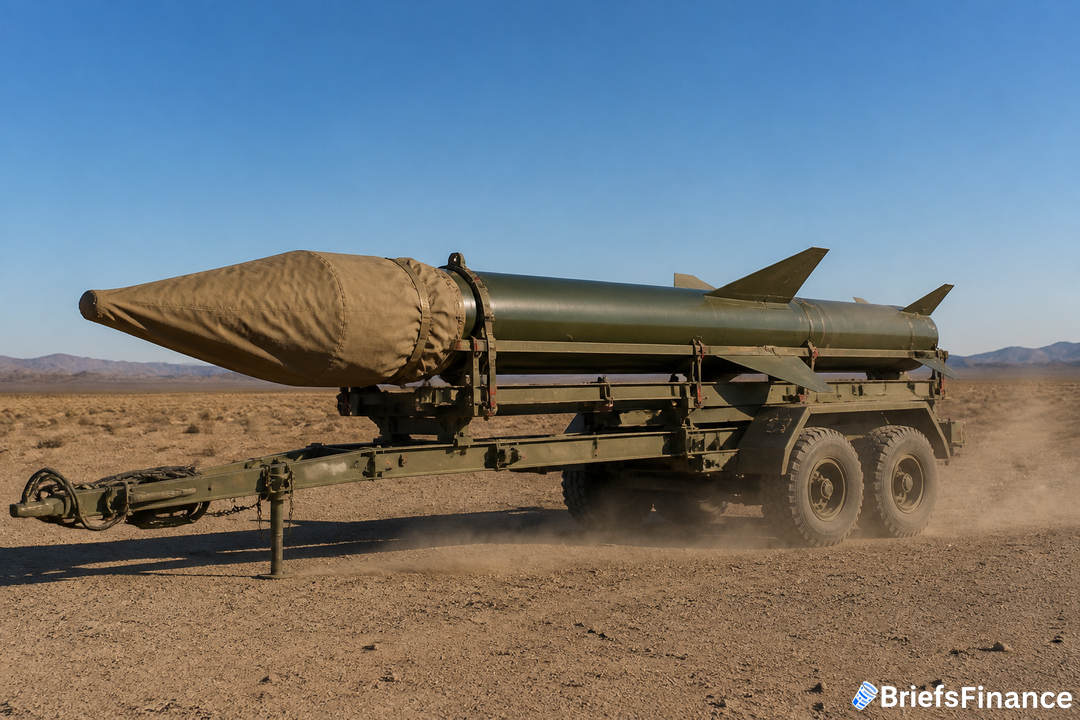
America's first hypersonic weapon is still not in full service. The Army said Dark Eagle - formally called the Long-Range Hypersonic Weapon - is still in the fielding phase, with the schedule now more than three years late. The program has blown past earlier target dates in 2023 and 2025. According to the program office, it "continues fielding activities" and must finish "additional training and other sustainment and operational-readiness activities" before it can say the system is fully fielded.
Production setbacks and what's next
The Army's top missile official, Lieutenant General Frank Lozano, said in July that "we've been working through some quality defects" on Lockheed Martin's production line. He has also said taking delivery of the rest of the initial production run hinges on fixing the root of those defects. Pressed for a status update at an Army conference in Washington, DC this week, he offered none. Lockheed, for its part, said it is "enhancing production and manufacturing processes" and is "confident in the quality of our capabilities."
Training for the Pacific fight
According to Lieutenant General Joel Vowell, deputy commander of US Army Pacific, troops have been rehearsing Dark Eagle movements across Asia, testing how quickly the heavy launchers can be shifted and prepared to shoot. The goal is to learn how to operate a long-range system across a vast region where staying hidden and relocating quickly would be essential in a potential conflict with China. "We learned some good lessons," Vowell said.
He declined to identify the training sites, but pointed out that two Dark Eagle batteries are already in place and currently drilling on repositioning across the Pacific theater. Even without sharing exercise locations, he stated that a pair of Dark Eagle batteries are set up and conducting maneuver training across the Pacific theater. He kept the training locations undisclosed and added that two Dark Eagle batteries are stood up and running movement rehearsals across the Pacific theater.
In uncertain times it helps to stay informed about markets and policy, so sign up for free Market Briefs in five minutes or less a day
Keeping the exact sites under wraps, he said two batteries have been stood up and are carrying out movement drills across the Pacific theater. He would not confirm whether both units now have their full allotment of missiles, after earlier delays in getting the projectiles. Vowell said the Army plans to add more hypersonic systems to compact, commonly deployed launchers like the High Mobility Artillery Rocket System.
Why it matters for your wallet
China and Russia already have hypersonic weapons in service, so the absence of a comparable US capability is a conspicuous gap that increases the urgency to field Dark Eagle. These weapons fly low and extremely fast - topping more than 3,800 miles, or 6,120 kilometers, per hour - and are tougher to intercept with traditional air defenses. Dark Eagle reportedly can travel more than 1,725 miles, or 2,776 kilometers, and is designed to glide at over five times the speed of sound while maneuvering in flight, though the exact performance remains classified.
Despite more than $12 billion spent since 2018, the setbacks underscore how hard it is to field a U.S. hypersonic capability, even though Russia has already employed lethal hypersonic missiles during its bombardment of Ukraine. Despite more than $12 billion spent since 2018, the setbacks highlight the challenge of fielding a U.S. hypersonic capability, even as Russia has already employed lethal hypersonic missiles during its bombardment of Ukraine.
Staying current with complex news makes decisions easier, so subscribe to the free Market Briefs newsletter for quick daily context