Free NewsletterPro Login

Warning: Undefined variable $stocks in /var/www/briefs.co/htdocs/wp-content/plugins/oxygen/component-framework/components/classes/code-block.class.php(133) : eval()'d code on line 448

Warning: foreach() argument must be of type array|object, null given in /var/www/briefs.co/htdocs/wp-content/plugins/oxygen/component-framework/components/classes/code-block.class.php(133) : eval()'d code on line 448

Warning: Undefined variable $funds in /var/www/briefs.co/htdocs/wp-content/plugins/oxygen/component-framework/components/classes/code-block.class.php(133) : eval()'d code on line 472

Warning: foreach() argument must be of type array|object, null given in /var/www/briefs.co/htdocs/wp-content/plugins/oxygen/component-framework/components/classes/code-block.class.php(133) : eval()'d code on line 472
/* the link was here */
×
Free investor livestream — Nov 17

How To Use ChatGPT & Claude To Research Stocks Like A Pro

01
The prompt we use to break down any stock
02
How to fact-check what AI tells you
03
How to compare two stocks in minutes

EU eyes one-for-one delisting with China to keep tiny German ASML supplier alive

Published Oct 14, 2026
Share:
Summary:
  • Brussels is negotiating with Beijing to lift penalties that could shutter Sindlhauser Materials GmbH within months, according to people familiar.
  • In exchange, Brussels would drop curbs on a Chinese company said to support Russia's war effort, and the bloc would likely act before Beijing.
  • The idea was floated during EU trade chief Maros Sefcovic's Beijing trip, where he met Commerce Minister Wang Wentao and agreed to improve advance notice on export curbs.

A small Bavarian shop, a big geopolitical tangle

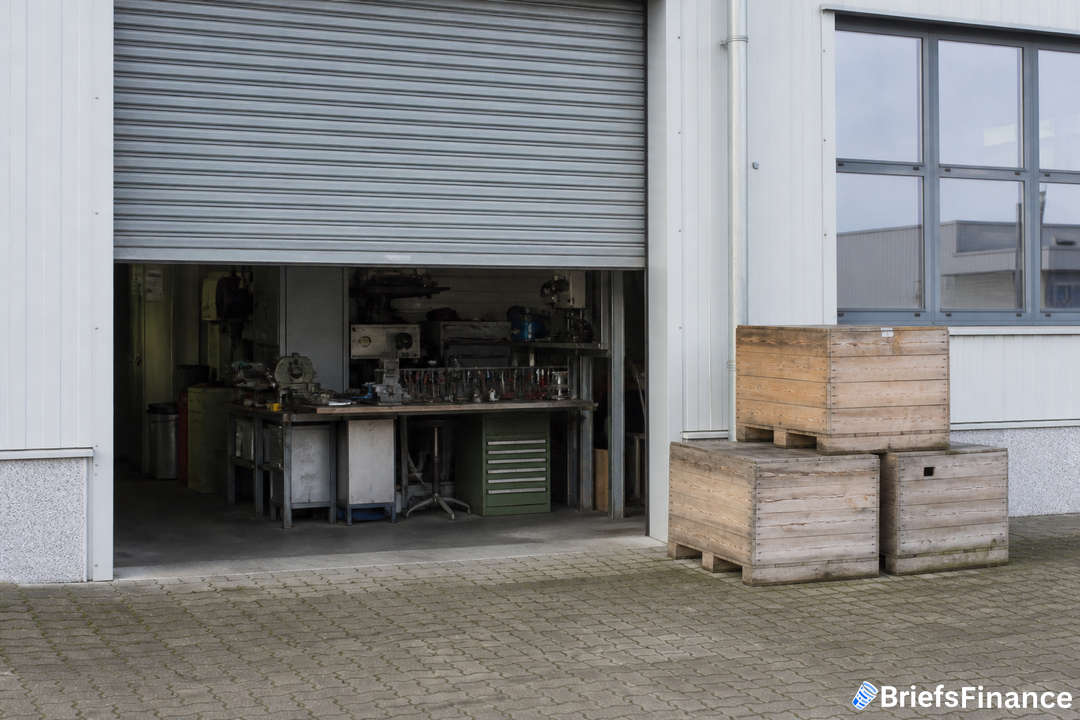
Sindlhauser Materials, a niche German player in precision manufacturing and advanced coatings used in chips and other industries, landed on China's export-control list in July alongside 13 other European companies. People familiar with the matter described the move as coming after the EU's 21st package tied to Russia, which had targeted several Chinese firms for allegedly supplying Moscow with components that can be turned into weapons. Being listed by either side triggers export controls.

Beijing's public rationale for blacklisting the European firms cited alleged links to Taiwan, people said. But officials involved believe the larger story is that China spent the past 18 months mapping global supply chains and pinpointed a small Bavarian company feeding into ASML Holding's equipment, a sign of how granular Beijing's read on Europe's pressure points has become.

Panic, patchwork fixes, and a race against the calendar

Sindlhauser is almost entirely dependent on Chinese rare earth elements and other key minerals, people said. When the listing landed in July, the immediate reaction inside the company was panic. For weeks, it was unclear if or how operations could continue. Those people now warn that if Beijing's measures remain, the firm could run out of runway within months.

Berlin and Bavaria quickly jumped in to help source alternative inputs where feasible, while also exploring workarounds such as recycling materials and tapping available funding, according to the people. Some Brussels officials had already been pushing the case with Chinese counterparts for weeks. The episode also exposed a broader vulnerability: companies like Sindlhauser had done little to diversify away from Chinese inputs, and some officials fear that delisting now could drain urgency to build non-Chinese supplier bases.

Listing rules decide where companies raise money and who can buy in. Market Briefs covers market structure free every weekday.

The proposed swap, and why it is tricky

People familiar with the talks say the EU is considering lifting its own trade curbs on an unnamed Chinese company accused of supporting Russia's war effort in exchange for China removing restrictions on Sindlhauser. The bloc is anticipated to act first. An EU official said the bloc has begun discussing possible removals of entities listed under China's export-control framework and under the EU's regulations, noting that any delisting on the EU side would require unanimous approval by member states.

Officials also cautioned that negotiating additions or removals could set a problematic precedent for others seeking relief, and would likely entail concessions involving Chinese firms thought to be supplying Moscow with critical, often sanctioned, goods.

Bigger trade backdrop, sharper intel game

Sefcovic raised the potential one-for-one delisting in Beijing last week during talks with Wang Wentao. People said both sides agreed to share more information and give early warnings around export restrictions. The EU is also trying to chip away at a yawning trade gap with China that officials say now tops $1 billion per day. Separately, Chinese shipments to Europe hit a record in September before an arrangement on hybrid car exports, according to customs data referenced in briefings.

Behind the scenes, Beijing has built deep visibility into supply chains via a licensing system for exports of critical minerals and rare earths that compels foreign buyers to submit detailed customer information, usage descriptions, and even photos of end products. For German firms, this has meant turning over proprietary information, even as Berlin lacks equivalent visibility and still has no concrete strategy to narrow that economic-intelligence gap.

ASML had no comment. Requests for comment were not immediately answered by the European Commission, Sindlhauser, or China's Ministry of Commerce. A spokesperson for Germany's Economy Ministry referred inquiries to EU negotiators.

Why this matters for your money

If a little-known supplier can suddenly be choked by export rules, that risk can cascade to the giants it feeds. Sindlhauser is in ASML's supply chain, and officials worry that trading delistings could become a template. Watch two things next: whether EU countries can unanimously back a removal on their side, and whether Beijing follows by lifting its controls. For anyone who relies on products that ultimately depend on rare earths and specialty inputs, these moves can quietly change costs, timelines, and availability far from the headlines.

Reciprocal delisting would reshape cross-border capital flows. Join Market Briefs free and follow it.

Disclosure

Recent News

1 2 3 … 125

Get Market Briefs delivered to your inbox every morning for free!

No fluff. No noise. No politics. Just finance news you can read in 5 minutes.

Blogs

November 3, 2026
How to Budget Every Payday: 5 Moves So You Never Worry About Money
  • A median earner could make about $4.7 million over a career, yet most retire with closer to $13,000 in the bank because of a keeping problem, not an income problem.
  • Audit your money, save $2,000, pay off credit card debt, then automate a 75/15/10 split across three bank accounts.
  • Earn more only after your system is in place, then protect what you build with an accountant, attorneys, the right insurance, and an estate plan.
Read More
November 3, 2026
How to Invest in Stocks: 5 Things to Do Before You Invest Your First Dollar
  • Paying off credit card debt at around 22% interest beats the stock market's roughly 10% average, and even Warren Buffett's 19%.
  • Save $2,000 in a separate emergency fund, learn to research with AI, and decide whether you're a growth, income, or wealth preservation investor.
  • Write down a plan for buying during market crashes, which have happened 25 times in the last 100 years.
Read More
November 3, 2026
Best ETFs to Buy: 5 Three-ETF Portfolios for Every Investing Goal
  • An ETF is a basket of stocks, so one purchase spreads your money across many companies instead of riding on just one.
  • Jaspreet Singh laid out five portfolios of three ETFs each, built for kids, cash flow, growth, slow and steady growth, and protection from a weaker dollar.
  • Based on 10-year average returns, $500 a month could grow to between about $660,000 and $3.1 million over 30 years, though past returns never guarantee future ones.
Read More
November 3, 2026
Best Investments of a Generation: 5 Market Shifts Backed by Your Tax Dollars
  • Private companies are about to spend $1 trillion a year on AI, and the Trump administration is putting tax dollars behind the same industries.
  • The five shifts are AI and its supply chain, robotics, rare earths, energy, and defense.
  • Each comes with real risk, from an AI bubble to wars ending or a new Congress, so these are ideas to research, not sure things.
Read More
November 3, 2026
How to Get Ahead Financially: 10 Moves to Make While Everyone Else Falls Behind
  • Learning a high-income AI skill, or building AI tools for tradespeople, can raise your earning power in a tough job market.
  • Higher interest rates, the 2025 tax cuts, Trump accounts, and stacked cash back can put more money back in your pocket.
  • Following where government money is moving, keeping cash ready for market crashes, and investing in your own education can speed up your wealth.
Read More
November 3, 2026
National Debt at $40 Trillion: Why Inflation Is the Hidden Tax, and Who Profits From It
  • Time magazine asked President Trump how he'd tackle the $40 trillion national debt, and he suggested inflation could help pay it off, a cost that lands on everyday Americans.
  • From 1971 to 2025, cars, houses, and college outpaced both inflation and incomes, while the S&P 500 grew more than 33,000% with dividends reinvested.
  • The U.S. can default, inflate, or outgrow its debt, and history shows each path rewards different assets.
Read More
November 3, 2026
FOMC Meeting: Why the Fed Is Getting Nervous, and Why AI Stocks Feel It
  • At its latest meeting, the Fed held rates steady but warned it may raise them again, because inflation is running near 3.5% against a 2% target.
  • Oil prices, tariffs, AI's hunger for energy, and government spending are all pushing prices higher, and gold, silver, and bitcoin fell on the Fed's news.
  • Chinese AI stocks are down about 40% in a few months and Google fell more than 10% in a day, raising fears that higher rates could pop an AI bubble.
Read More
November 3, 2026
Midterm Elections: Where the Money Could Move if Republicans or Democrats Win
  • The U.S. government spent about $7.5 trillion last year, and the midterm elections could change which industries get more of that money.
  • A Republican win could favor manufacturing, fossil fuels, banks, and defense.
  • A Democratic win could favor healthcare, weight-loss drugs, clean energy, and infrastructure.
Read More
November 3, 2026
Brazil Stock Market Crash: Why Lula's Win Matters to U.S. Investors
  • Brazil's stock market fell more than 20% in a few days, and its currency dropped 8%, after Lula won a presidential election investors expected him to lose.
  • The shock reaches U.S. investors through coffee and beef prices, the BRICS push away from the dollar, and a market that had become an investor favorite.
  • The last time Lula first won, in 2002, Brazil's stock market fell more than 20% and then grew 12x by 2008, though nobody knows if that will repeat.
Read More
November 2, 2026
Credit Utilization: How Paying Down Cards Can Help Your Score
  • Credit utilization is your card balances divided by your credit limits, checked overall and card by card.
  • Lower is generally better, and Experian says the effect becomes more noticeable around 30%.
  • Paying down balances and keeping new charges off your cards are the main ways to lower it.
Read More
1 2 3 … 32
Share via
Copy link