Output is slipping, but more slowly
OPEC, using secondary data, pegs Russia's September crude output at 8.643 million barrels a day on average. That is a marginal decline of 38,000 a day from August, which itself had been revised to show a 174,000 a day drop from July. Even with the modest step down in September, Russia's crude volumes still ran 1.306 million barrels a day short of its OPEC+ quota for the month.
Export volumes reveal how much refining capacity is genuinely running. Market Briefs covers energy flows free every morning.
Refineries are the choke point
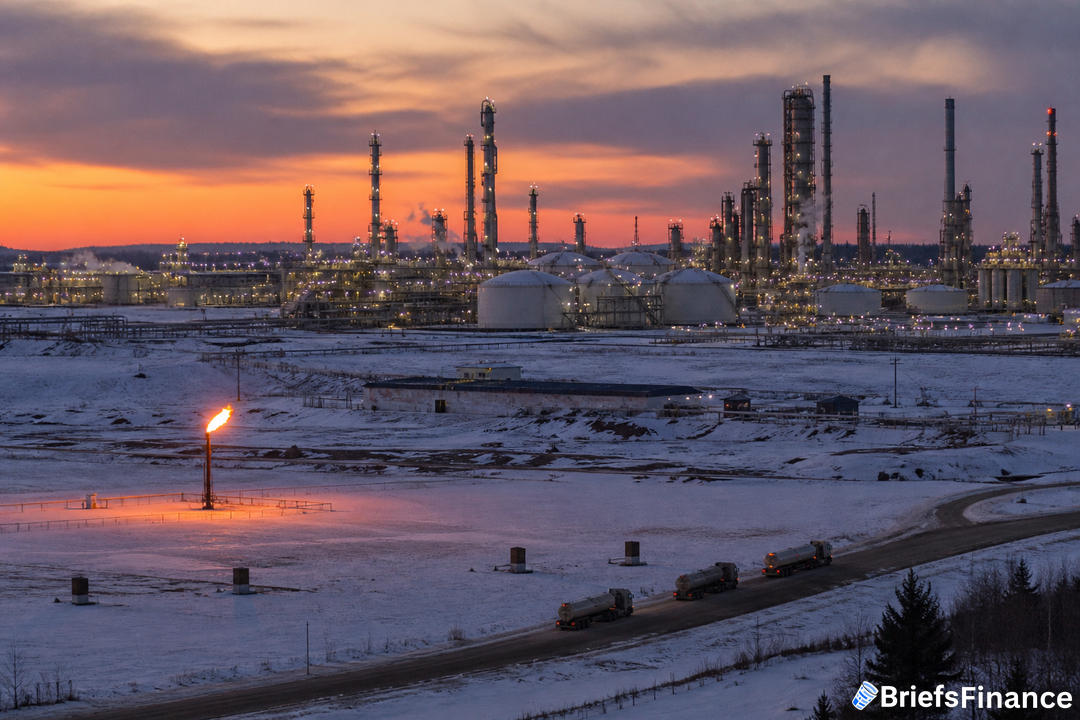
Ukraine's campaign of strikes on Russian refineries has forced multiple plants to cut or suspend operations, pushing producers to move more crude abroad. The tempo of attacks eased to a three month low in September, but repairs have not caught up, so throughput stayed below 4 million barrels a day. Rystad Energy expects crude runs to hold "steady" at roughly 3.5 million to as much as 4.0 million barrels a day if the current strike pace continues. For context, before Kyiv's effort began, seasonal refinery runs typically hovered around 5.4 million to 5.5 million a day.
Exports rise as Middle East tensions and Gulf tightness bite
With refineries constrained at home, Russia is pushing more barrels to foreign buyers. Bloomberg's tanker data shows seaborne crude shipments averaged 3.76 million barrels a day over the 28 days ending Oct. 4, the most since early August. The shift comes as conflict in the Middle East persists and supplies from the Persian Gulf remain tight. On the diplomatic front, former US President Donald Trump recently touted an "energy ceasefire" between Russia and Ukraine, but there is no indication both sides have agreed to pause; Kremlin spokesman Dmitry Peskov said talks about a potential truce are ongoing.
Product exports move diesel prices well beyond the source country. Get the free Market Briefs daily newsletter and follow it.