Why Siemens is paying attention
When a country steps hard on the spending pedal, the knock-on effect hits the factory floor. Siemens expects Poland's investment surge to pull through more orders for automation gear and digital tools as manufacturers scale up and modernize. The German engineering group is lining up to win business from that wave, not just in hardware but in the software that runs it.
How SAFE cash is reshaping industry
Under the EU's SAFE defense-loan program, Poland's take reaches up to 43.7 billion euros ($49 billion), the largest share of any country in the bloc. Warsaw is directing the money to strengthen its domestic defense manufacturing base in response to the security threat from neighboring Russia. The biggest immediate winners are makers of artillery, ammunition, armored vehicles and drones, and the broader buildup is also creating demand for technology to expand, automate and digitize factories. According to the Finance and Defense Ministries and BGK, official figures show that the portion of GDP devoted to Poland's defense outlays has about doubled in recent years, with 2025 and 2026 based on planned budgets.
Defense and data centre spending are pulling industrial firms in one direction. Market Briefs covers that shift free every weekday.
Where Siemens fits in
Zielinski says SAFE's first-order effect is more production capacity, while advanced digital solutions should become increasingly important in defense output over time. Siemens reports rising orders in Poland from firms making dual-use products for civilian and military markets. "A good example is mobile radar systems, which must be transported, deployed and put into operation quickly, safely, and with a high degree of automation," he said.
"Solutions of this type require the most advanced control systems." After decades supplying automation and control technology to automotive and aerospace players, Siemens says that experience translates to defense manufacturing. The company's lineup includes industrial automation, rail systems and software for factories, and it has been broadening its AI and automation product range.
Data centers, Poland's edge and what it means for you
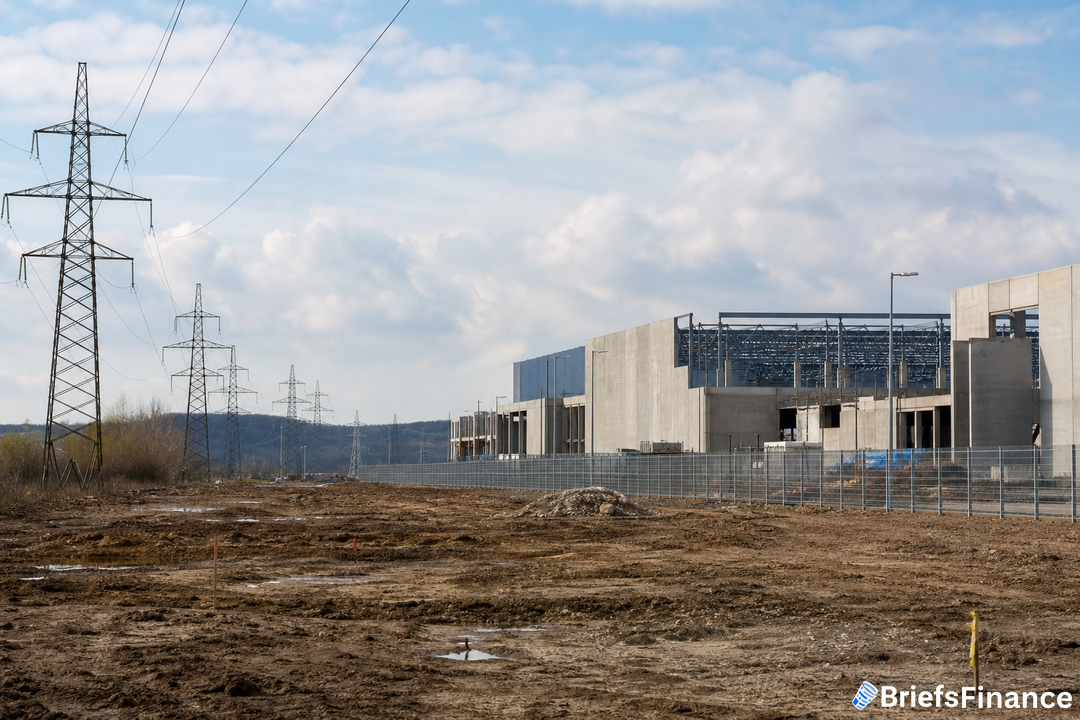
There's another angle: data centers. AI investment is stoking demand for computing infrastructure, and Siemens thinks Poland can capture more of it. Today the country trails places like Spain and Portugal, largely because its power system still leans on relatively costly and carbon-heavy coal. Even so, Zielinski expects more projects to move forward, helped in part by EU funding and rising domestic demand.
He noted, "Poland has many advantages in this regard," citing a market of 38 million residents, favorable geography and climate, plus a deep bench of skilled labor. Starting at the design phase, Siemens helps these initiatives with virtual replicas that model power, automation and cooling systems, and it also delivers and integrates the necessary equipment. If Poland seizes the moment, the wider investment cycle could help it sustain roughly 3% annual growth over the next five years.
Or as Zielinski put it: "Poland, as a country with a strong industrial base, is a very important market for Siemens."
Where equipment makers invest tells you where demand is real. Join Market Briefs free and follow it.