The raise and who backed it
Austin-based Icon, a leader in 3D printed real estate, said the Series D comes to $200 million, co-led by Baillie Gifford together with BlackRock-managed funds, among others. The round lifts total funding to $700 million and puts the company's valuation at $1.4 billion. "We were really looking for an investor group who had helped built-world, physical companies move from early startup proof points to scale," said Jason Ballard, Icon's co-founder and CEO, pointing to Baillie Gifford's experience with Nvidia, Tesla and SpaceX, as well as BlackRock's large real estate portfolio. "It really is just kind of a world class outcome for us," he added.
What Titan changes
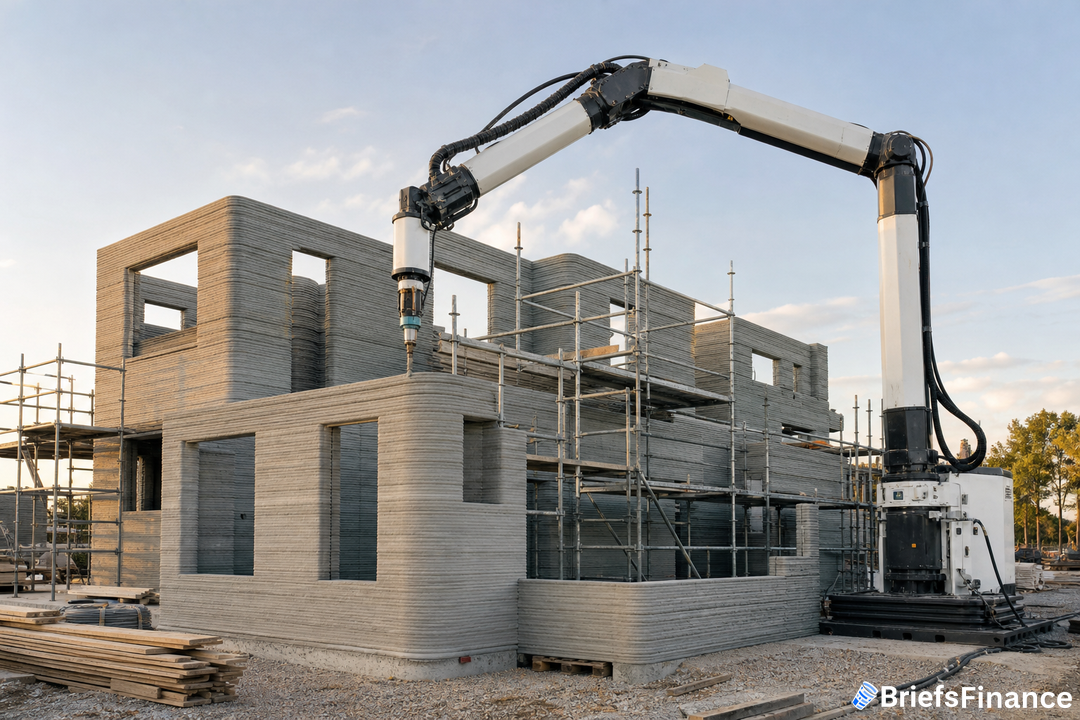
Icon's Titan, a multi-story robotic 3D construction system, went commercial in March. Earlier Icon systems could only produce single-story structures. According to the company, Titan shortens the average home build by six weeks, lets projects run with fewer workers, and lowers overall costs by 40%. Baillie Gifford's private companies investment manager, Luke Ward, said, "The construction system that Icon has developed over the last decade is compelling, not just because it brings new technologies to bear, but because it works with, rather than against, the business realities that shape a project's success too." Icon plans to use the funding to ramp Titan, develop new technologies, and grow beyond its current presence in Texas, Florida and Washington, D.C.
Construction technology funding is a bet on housing supply costs. Market Briefs covers that sector free every morning.
Sales push, financing support, and demand
Historically, Icon ran its printers for in-house developments, such as a fully 3D printed neighborhood near Austin for Lennar. The company has shifted to marketing its technology to other builders, supported by dedicated financing from Wells Fargo, which is also providing incentives to homebuyers.
"This is a new motion for us, right? Putting these things into other people's hands, and we have like 10X the demand in terms of actual money down reservations that we actually forecasted needing for next year," Ballard said, noting interest from both large publicly traded builders and smaller private firms. "We hit all these quality, measurable performance metrics. That's got people excited."
Market backdrop, government work, and the growth outlook
Icon is pushing ahead as traditional homebuilding faces higher interest rates and rising costs for land, labor and materials, alongside a housing shortfall that some estimate at up to four million homes. The eight-year-old company says its aim is to build faster, more affordably and more sustainably. Icon is also working with the U.S. military and NASA, deploying robotic construction systems to "rebuild military readiness, strengthen national security infrastructure, and extend human presence beyond earth." To support Project Olympus - the effort to create construction systems that could ultimately operate on the moon - the company has secured government contracts totaling more than $370 million.
"I think there's going to be some pretty exciting announcements in the back half of this year from NASA about the moon base, and we'll stay in lockstep with them, but that program is feeling really exciting, and we're pretty optimistic about it," Ballard said. He added that Icon is on pace for four times revenue growth this year and, based on its current pipeline, expects at least double that next year, with a potential IPO in the future. For your wallet, the read is straightforward: a young builder with real demand and financing support is moving from in-house projects to selling its systems into a stressed industry that needs speed and cost cuts.
Cheaper building methods would change affordability more than rates. Get the free Market Briefs daily newsletter and follow it.