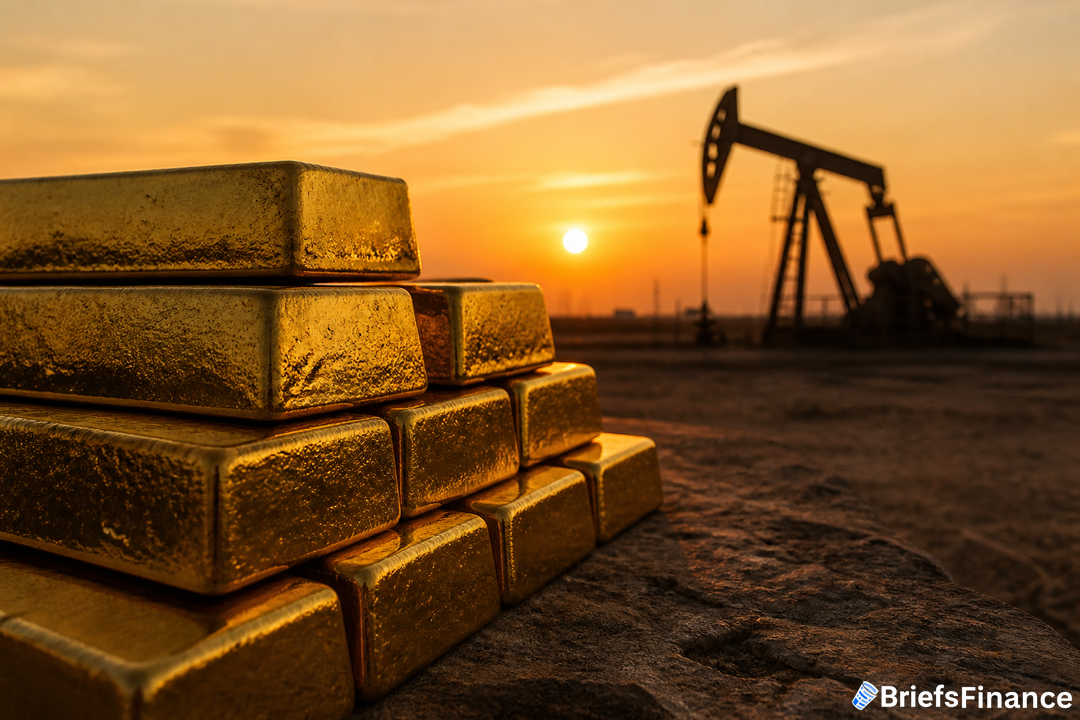
Price check
Gold is hanging around $4,160 an ounce after a 0.5% drop the day before. As the morning wrapped in Asia, spot prices were 0.4% lower at $4,156.27 per ounce at 8:56 a.m. in Singapore. Silver dipped 0.5% to $59.93, with platinum and palladium also softer. The Bloomberg Dollar Spot Index inched lower.
Gold sits at the intersection of real yields and geopolitical risk. Market Briefs covers both free every weekday.
Why it's wobbling
Investors are on edge as the conflict in the Middle East broadens, stoking fears that fresh energy supply snags could keep inflation running hot and raise the likelihood of additional interest-rate hikes. Brent crude hovered close to $106 a barrel, with Iran-backed Houthi strikes on Saudi Arabia's main airport adding pressure on Washington to back its ally.
Gold has dropped about 20% since the US-Iran war broke out in late February, an episode that set off global inflation and spurred central banks to tighten. Higher borrowing costs tend to weigh on gold because it pays no interest. Ongoing price pressures combined with substantial public-sector debt issuance have left interest rates and bond yields high, reducing gold's allure.
The policy setup
Traders are fixated on US inflation numbers due Wednesday for a read on the Federal Reserve's next step after it raised rates last month. Pricing in interest-rate swaps implies roughly a one-in-five chance of another increase at this month's meeting, and markets still anticipate one hike before year-end. Cleveland Fed President Beth Hammack said Monday that smaller, more frequent policy moves can help keep inflation expectations anchored, while stopping short of advocating a hike in October.
"With elevated oil keeping inflation risks alive, Wednesday's CPI will be the next critical test of whether the bond market has another reason to push yields higher, maintaining that stubborn ceiling over gold," said Hebe Chen, an analyst at Vantage Global Prime. She added that gold is currently most sensitive to the "chain reaction from oil prices to inflation expectations and ultimately Fed policy."
Where the metal holds tells you what the market expects from rates. Join Market Briefs free and read the signal.