What happened
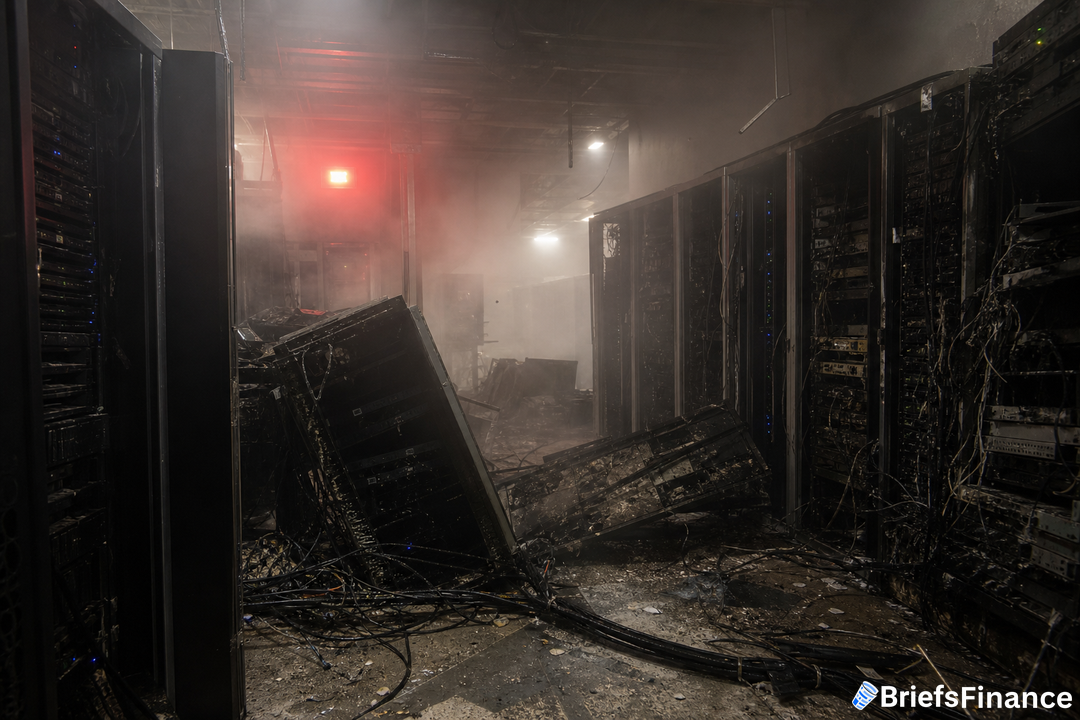
If you opened a Yandex app in Russia on Monday and things felt broken, you were not imagining it. Ukraine hit several Yandex data centers with drones, and users struggled to book rides, get directions and make payments. Downdetector, which tracks network issues, logged disruptions to multiple Yandex services, including payments and email.
Where the strikes landed
Over the past week, Ukrainian missiles hit at least three Yandex data centers. According to the company, the Sasovo site in the Ryazan region remains down following a strike.
Digital infrastructure is now a front line, not a back office. Market Briefs covers that shift free every morning.
Service recovery and fallout
On Monday the company said, "The Yandex Cloud platform is still operating in a limited mode." In a Telegram update, Yandex noted its search engine and Alisa are gradually coming back online, though some functions remain unavailable, and it listed dozens of cloud services as down. Kommersant, citing industry sources, said it may take up to six months to swap out portions of the damaged hardware. According to Ukrainian President Volodymyr Zelenskyy, speaking remotely to the Warsaw Security Forum, the attacks on the data centers also hampered Russian bots that boost pro-Kremlin messages on social media. In Moscow, Digital Minister Maksut Shadaev told the lower house of parliament that the digital development and defense ministries are in talks about steps to protect Yandex data centers, according to Interfax.
The bigger backdrop
Long-range attacks have ramped up on both sides in recent months. Russia has increasingly hit grid and transport networks and, as bombing intensified, conducted multiple lethal strikes on civilians in October. Ukraine has widened its campaign to include Russian refineries and, more recently, tech firms. For a company often compared to "Russia's Google," the episode is a reminder that even digital giants run on physical infrastructure that can be targeted.
Why it matters for your money
When a platform used daily for search, rides, payments and cloud computing can be knocked offline, it shows how real-world shocks can spill into the apps you count on. Operational risk is not just a line in a report - if a few buildings go dark, entire services can flicker for hours or days. If you use cloud-based tools for work or rely on super-apps for everyday tasks, think about what a temporary outage would mean for your plans and timelines.
Service outages carry real revenue consequences during conflict. Get the free Market Briefs daily newsletter and follow it.