Free NewsletterPro Login

Warning: Undefined variable $stocks in /var/www/briefs.co/htdocs/wp-content/plugins/oxygen/component-framework/components/classes/code-block.class.php(133) : eval()'d code on line 448

Warning: foreach() argument must be of type array|object, null given in /var/www/briefs.co/htdocs/wp-content/plugins/oxygen/component-framework/components/classes/code-block.class.php(133) : eval()'d code on line 448

Warning: Undefined variable $funds in /var/www/briefs.co/htdocs/wp-content/plugins/oxygen/component-framework/components/classes/code-block.class.php(133) : eval()'d code on line 472

Warning: foreach() argument must be of type array|object, null given in /var/www/briefs.co/htdocs/wp-content/plugins/oxygen/component-framework/components/classes/code-block.class.php(133) : eval()'d code on line 472
/* the link was here */

Data Centers, Higher Bills, and a Midterm Headache for Republicans

Published Oct 10, 2026
Share:
Summary:
  • With power bills rising, data centers are taking the heat as community resistance has put the brakes on no fewer than 120 projects worth nearly $200 billion in the year's first half.
  • From January 2025 through July, average US residential electricity prices rose 15%, and across January to July 2026 they were nearly 40% higher than the same period in 2019.
  • Washington and the states are scrambling: the House passed a bill in September, governors are pausing new sites, and Donald Trump wants tech giants to cover their added power demand.

Why data centers are suddenly a kitchen table issue

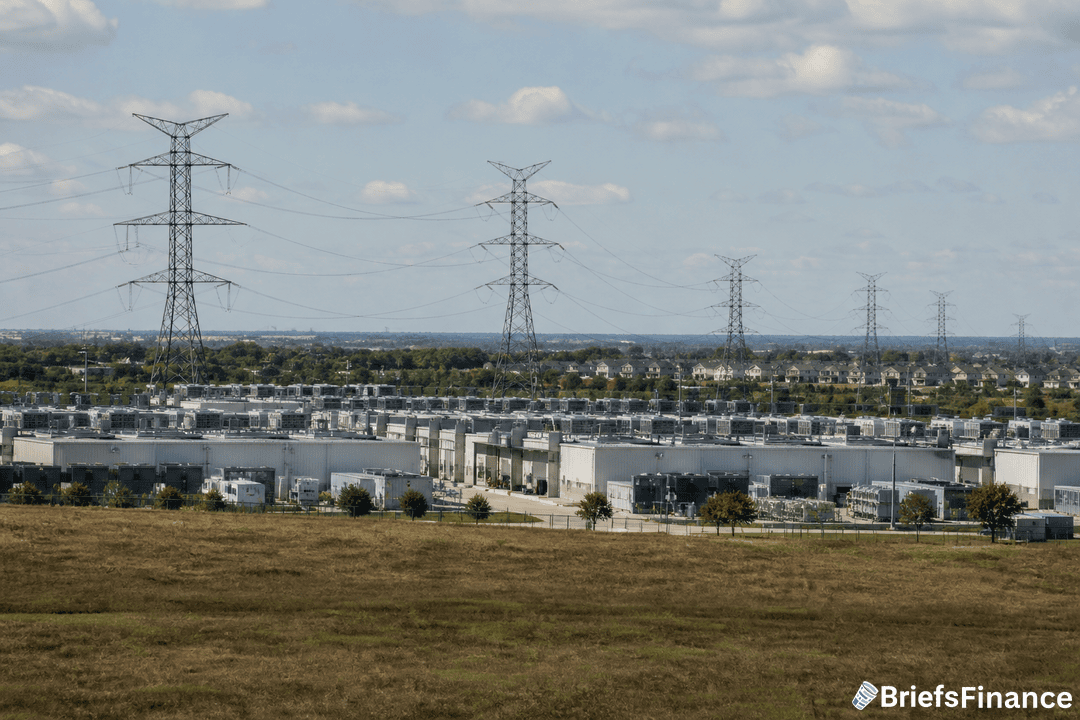
Those big, windowless server halls are now a campaign trail talking point. People living near proposed sites worry about heavy power and water use, plus the noise and heat. And with household electricity costs climbing, data centers have become an easy villain, especially since AI-scale facilities can consume power on the scale of a small city. According to Data Center Watch, community resistance has stalled at least 120 projects, collectively priced at nearly $200 billion, over the year's first half.

Voters are wary. A Pew Research Center survey in July and August found that 60% would be uncomfortable with a new data center nearby, and 50% said these facilities tend to hurt household energy bills. That frustration has turned into a political liability for Republicans seeking to keep control of both chambers in November, even as President Donald Trump said he would cut electricity prices by 50% if he were reelected to the White House.

What has happened to electricity prices

From January 2025, when Trump took office, through July of this year, the national average monthly residential electricity price increased 15% in nominal terms. Looking at a broader window, for the first seven months of 2026, average residential prices were nearly 40% above the same span in 2019.

The pain is uneven. Maine saw the biggest jump at around 90%, with California and New York closer to 70%. Iowa and Nevada were much tamer, with increases under 15%.

"There isn't a single unified story of what's going on nationally," said Severin Borenstein, an economist at the University of California, Berkeley. On the West Coast, wildfire damage has lifted bills even where wholesale costs held steady, whereas on the East Coast - especially within PJM - surges in wholesale prices have passed through to retail rates. Common threads include pricier natural gas and a wave of spending to replace old grid equipment.

"There are portions of the power grid that are 80 years old at this point," said Ryan Hledik, a principal at The Brattle Group. The gear to fix it is also pricier and slower to arrive, from gas turbines to transformers, and that supply squeeze is partly tied to data center demand.

Electricity bills are becoming the most visible cost of the AI boom. Market Briefs covers that collision free every weekday.

How data centers strain the grid and hit bills

Running thousands of chips plus cooling gear takes serious juice. A single 1 gigawatt site can draw roughly what about 800,000 homes use, according to the Electric Power Research Institute. In areas with heavy data center footprints, a 2025 Bloomberg News analysis found monthly wholesale prices were as much as 267% above 2020 levels.

The US grid was not built for these massive, sudden loads. Connecting a large facility may demand investments of hundreds of millions of dollars in new generation, transmission, and related upgrades. Historically those costs have been spread across all customers, which can lift everyone's bill.

The dynamic is most visible on PJM Interconnection's system, spanning 13 states and including Northern Virginia's Data Center Alley. During the first seven months of 2026, PJM's average wholesale price rose 47% year over year, coming in at nearly $117 per megawatt-hour, the market monitor Monitoring Analytics reports. The independent market monitor said prices would have been around $10 lower without data center demand. The buildout has also pushed PJM to procure more backup capacity to cover future peaks.

Planning is hard when the target keeps moving. Developers have submitted "phantom" interconnection requests, marketing an identical project to several utilities to secure the fastest connection, which clouds demand forecasts. There is also the risk utilities invest in upgrades for projects that never get built if AI appetite cools, leaving remaining customers to cover the bill.

A large number of utilities are gearing up to serve data centers by either constructing or signing contracts for new natural gas-fueled plants. RMI, a clean energy think tank, estimates that overbuilding gas capacity could raise the average US household's electric bill by up to $118 per year.

The political counteroffensive

Courting data centers used to be an easy jobs pitch. Now it is a headache for both parties. In September, the House passed a bipartisan measure requiring states to consider a federal standard that would make large data centers pay for the new power infrastructure they need. The bill stalled in the Senate, with Democrats calling it "toothless" because state regulators would not have to adopt the standard.

Trump has taken aim at attempts to halt new sites, contending they are crucial for the US to prevail in the AI race with China, while also asserting that tech firms should pay the costs associated with the additional electricity they need. His "Ratepayer Protection Pledge" has signatures from utilities and hyperscalers with the largest data center portfolios, including Microsoft, Alphabet's Google, and Amazon. The initiative is non-binding and offers no details on how it would mesh with the complicated rate-setting landscape.

States are moving faster. In Texas, Governor Greg Abbott has, in practice, put new data center approvals on hold until a comprehensive audit is finished. New York Governor Kathy Hochul imposed a 12-month halt on granting permits for large data centers while the state develops a framework to evaluate environmental impacts and implications for energy costs. Over a dozen additional states have proposed or weighed comparable measures, according to the National Conference of State Legislatures.

What it means for your wallet: outcomes will hinge on where you live. If your region is courting big facilities or your grid is already running hot, watch how regulators allocate upgrade costs, whether utilities lean on new gas plants, and how they handle rising equipment prices. Those choices show up in the line items on your monthly bill.

When infrastructure shows up on household bills, politics follows. Join Market Briefs free and follow the fight.

Disclosure

Recent News

1 2 3 … 98

Get Market Briefs delivered to your inbox every morning for free!

No fluff. No noise. No politics. Just finance news you can read in 5 minutes.

Blogs

October 5, 2026
What Is the Briefs Connector? A Simple Guide
  • The Briefs Connector lets your favorite AI read Briefs research, like Pro reports and the Briefs Score.
  • Without it, an AI asked about investing can give answers that sound right but aren't backed by that research.
  • It explains the research, but it won't tell you what to buy or sell.
Read More
October 5, 2026
Is a Recession Coming? What the Last Five Rate Hiking Cycles Say
  • The Fed has started raising rates again, and in the last five hiking cycles going back to 1994, a recession never started while the hikes were underway.
  • The pain showed up where there was a bubble to pop - housing in 2008, dot-coms in 2000, the pandemic money-printing boom in 2022 - and usually after the hikes ended.
  • Private equity and private credit are feeling this cycle first, and how far the pain spreads depends on how high rates go and how long they stay there.
Read More
October 2, 2026
Fed Interest Rates May Rise Again in 2026 - and the Newest Culprit Is AI
  • Fed Governor Barr told a meeting our head of investing research attended that higher rates are likely in 2026, lower inflation may not come soon, and AI is now pushing prices up.
  • The same week, President Trump asked the biggest AI companies to police themselves under an accord that's morally but not legally binding, because the White House sees AI as a race with China.
  • Higher rates put downward pressure on asset prices and squeeze borrowers, but the way through hasn't changed: own investments, buy on a schedule, and treat downturns as discounts.
Read More
October 1, 2026
Housing Market 2026: Why Office Buildings Are Cracking Before Houses Do
  • Office buildings are selling for 80% to 95% off because their five-year loans are resetting at much higher rates while half-empty floors have gutted the income those buildings are valued on.
  • Housing is under pressure, not cracking: a $400,000 mortgage costs $975 more a month than at 3%, but six of every seven mortgages are still under 6% and those owners are staying put.
  • Whether pressure turns into cracks is a race between unaffordability and the economy, and either way Jaspreet's rule is to treat your house as a liability and buy only what you can afford.
Read More
September 30, 2026
Dividend Investing vs. Growth Investing: Why the Slower Portfolio Can End Up Bigger
  • "What stock should I buy?" is the wrong first question. Growth, income, or wealth preservation comes first, and the goal changes which stocks even make sense.
  • At $500 a month for 30 years, 13% growth builds about $1.75 million. 10% growth plus a reinvested 4% dividend builds a little more than $2.2 million and pays a little more than $80,000 a year.
  • Income investors have US dividend ETFs, REITs, and international dividend funds to study. Growth investors have the Nasdaq 100, AI and chip funds, and small caps. None of it is a recommendation.
Read More
September 29, 2026
Why Is Gold Going Down? A 5.2% Treasury Yield Just Took Its Job
  • President Trump rejected Iran's deal to reopen the Strait of Hormuz, oil prices jumped back up, and gold fell instead of rising.
  • Treasury yields hit their highest level in more than 20 years, so investors sold gold and bought Treasuries that pay interest.
  • Higher Treasury yields make the national debt, mortgages, car loans, and credit cards more expensive, with the Fed's next rate decision due October 28.
Read More
September 28, 2026
The Strategic Bitcoin Reserve: Why the Government Wants Bitcoin to Explode
  • The US government holds about 328,000 Bitcoin, worth roughly $25 billion, and since a 2025 executive order it keeps seized coins instead of selling them.
  • Washington wants a bigger pile of assets so its $40 trillion national debt looks smaller next to them, which lets it keep borrowing and spending.
  • Bitcoin's wild price swings, and a government holding a coin built to escape governments, are the two risks investors need to watch.
Read More
September 25, 2026
BRIEFS EXCLUSIVE: 43% Of Respondents Say Bills Outran Their Income Over Past Two Years
  • 43% of the 494 Market Briefs readers surveyed said their bills grew faster than their income over the past two years, even though 79% could cover a surprise $5,000 expense tomorrow.
  • Half of readers own gold or crypto, the two classic bets against a weaker dollar, and only 13% bought nothing at all in the last 12 months.
  • The median reader says it takes $150,000 a year to feel financially secure, about $62,000 above the U.S. median household income.
Read More
September 25, 2026
The Economy Is Booming. So Why Did Stocks and Bonds Fall Together?
  • S&P Global says the US economy is growing at its fastest rate since 2021, with corporate profits up 28.9% in a year, almost four times the historical average.
  • Stocks and bonds fell at the same time, which is not how the two markets normally behave, because Treasury yields above 5% now compete with stocks for investors' money.
  • Jaspreet Singh lays out three ways to invest through a shift like this: always be buying, buy the crash, or follow the money before it hits the headlines.
Read More
September 24, 2026
The 2026 Economic Reset Is Starting: Are We in a Recession, or Is the Pain Still Ahead?
  • The Federal Reserve has flipped from stimulating the economy to fighting inflation with higher interest rates, while the White House still wants growth at almost any cost.
  • The national debt tops $40 trillion, has outgrown the entire U.S. economy, and its interest payments are now the government's fastest-growing expense.
  • Higher rates bring pain for private equity, private credit, and speculative assets, but they open opportunities for investors holding cash, treasuries, and value assets.
Read More
1 2 3 … 28
Share via
Copy link










