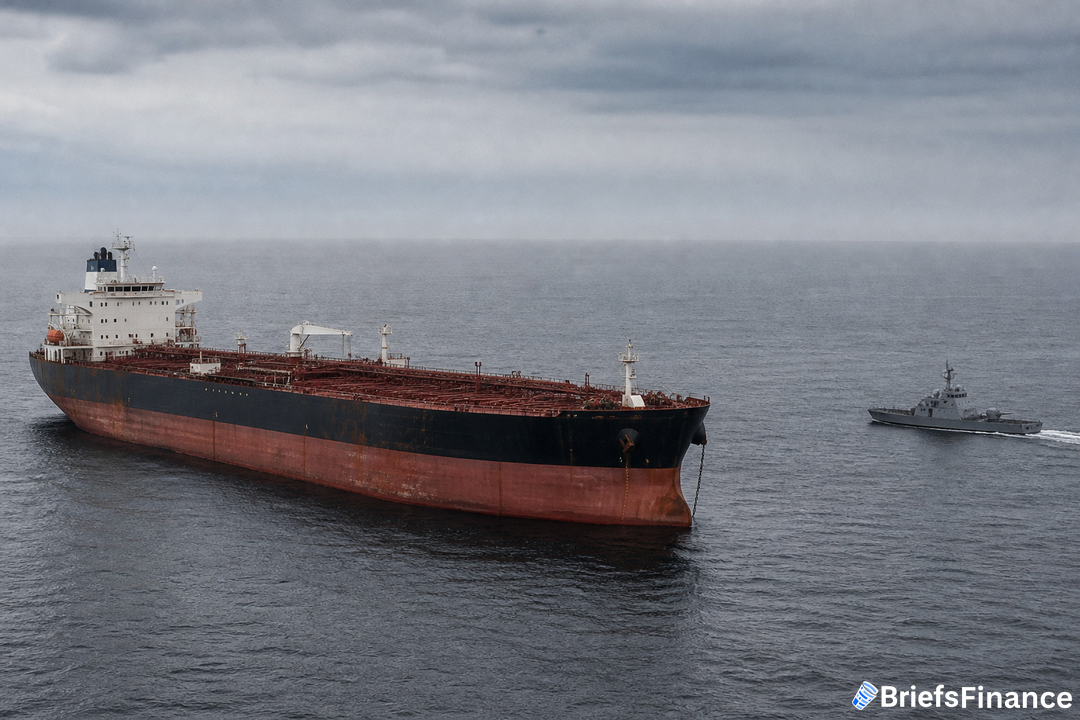
What happened at sea
Attacks on oil tankers threading the Strait of Hormuz are now a near-daily feature of the shipping lanes. Since July, at least nine sailors have lost their lives in ship attacks, and since the conflict kicked off in late February, the death toll has reached at least 24 across 100 incidents in Hormuz, the Persian Gulf and the Gulf of Oman.
The violence is unfolding as crude exports from the Middle East bounced back in September to levels seen before the war, helped by U.S. naval escorts guiding ships along Oman's coast. As one analyst put it: "Volumes are getting through but they're getting through at a time of extremely high maritime risk," said Michelle Wiese Bockmann of Windward.
Who is saying what
A Thursday notice to commercial ships from the Joint Maritime Information Center, a U.S.-allied coalition based in Bahrain, warned that "These actions continue to demonstrate Iran's intent to assert [its] presence along key transit lanes and maintain pressure on transiting vessels."
Iran's messaging has hardened too. A senior Revolutionary Guard official told Fars News Agency on Wednesday that Tehran will shut down all "illicit routes" through Hormuz. State media outlet Tasnim relayed that the Guard will not limit operations to Hormuz and will pursue ships across the wider Gulf that it says break Iran's transit rules.
U.S. Central Command briefed shippers on Thursday. A day earlier, it said 20 million barrels of crude moved through the strait, pushing back on Iranian claims that traffic had been halted. "This is not a sustainable new normal," added Richard Meade, editor in chief of Lloyd's List, during a Thursday briefing.
Attacks becoming routine changes how insurers and traders price risk. Market Briefs covers shipping risk free every morning.
Who was hit and how crews fared
The human cost is mounting. On Monday, a projectile struck the UAE-owned tanker On Peace while it was in transit through Hormuz, injuring twelve crew members, all Indian nationals, according to maritime security firm Marisks.
The violence has spread beyond the strait. A tanker off Qatar was hit by multiple projectiles on Wednesday, causing casualties, according to a UK maritime security monitor. On Friday, Marisks reported that the tanker Gem No. 2 was struck off the UAE, sparking a fire. The ship left Ras Tanura, Saudi Arabia, in March and, per Marisks, it has remained within the Persian Gulf without departing at any time since the war started.
What it means for crude flows and your wallet
Flows are wobbling as the risks pile up. Kpler's Friday readout shows crude exports through Hormuz averaged 8.5 million barrels a day for the week ended Wednesday, roughly two fifths below the prewar pace. Shipments from the Middle East overall were 15.3 million bpd, around one tenth under prewar levels. Iran has not loaded any crude for export since late August, which Kpler attributes to the U.S. naval blockade.
A weekly cadence of incidents is a structural shift, not a spike. Get the free Market Briefs daily newsletter and follow it.