Free NewsletterPro Login

Warning: Undefined variable $stocks in /var/www/briefs.co/htdocs/wp-content/plugins/oxygen/component-framework/components/classes/code-block.class.php(133) : eval()'d code on line 448

Warning: foreach() argument must be of type array|object, null given in /var/www/briefs.co/htdocs/wp-content/plugins/oxygen/component-framework/components/classes/code-block.class.php(133) : eval()'d code on line 448

Warning: Undefined variable $funds in /var/www/briefs.co/htdocs/wp-content/plugins/oxygen/component-framework/components/classes/code-block.class.php(133) : eval()'d code on line 472

Warning: foreach() argument must be of type array|object, null given in /var/www/briefs.co/htdocs/wp-content/plugins/oxygen/component-framework/components/classes/code-block.class.php(133) : eval()'d code on line 472
/* the link was here */

Renault cheers EU-China pact to rein in Chinese hybrid shipments

Published Oct 11, 2026
Share:
Summary:
  • Renault called the EU's initial agreement with China to slow hybrid imports a "major milestone" for Europe's car industry.
  • The deal came Friday after EU trade chief Maros Sefcovic met his Chinese counterpart; Renault CEO Francois Provost said he had urged Sefcovic to reach an agreement quickly.
  • Provost highlighted faster model development, local supply chains, and a conditional plan to invest €10 billion in France over five years.

What happened

Renault says the European Union has scored an important early win with a deal to sharply curb the flow of Chinese-made hybrids into the bloc. The agreement followed Friday talks between EU trade chief Maros Sefcovic and his Chinese counterpart. "I had urged him to seek an agreement quickly," Chief Executive Officer Francois Provost told an interviewer on Sunday. "Without one, we would be looking at a trade war with China, which would be a lose-lose situation for everyone."

Before the trip, Provost joined a group of executives meeting with Sefcovic as the EU moved to address growing trade gaps. In the run-up to talks with Chinese Commerce Minister Wang Wentao, France and Germany pressed Brussels to markedly strengthen its countermeasures and investigate whether subsidized imports damage industries like chemicals and plastics. "At least on the China front, there has been some headway thanks to to Commissioner Sefcovic," Provost said.

Why Europe acted now

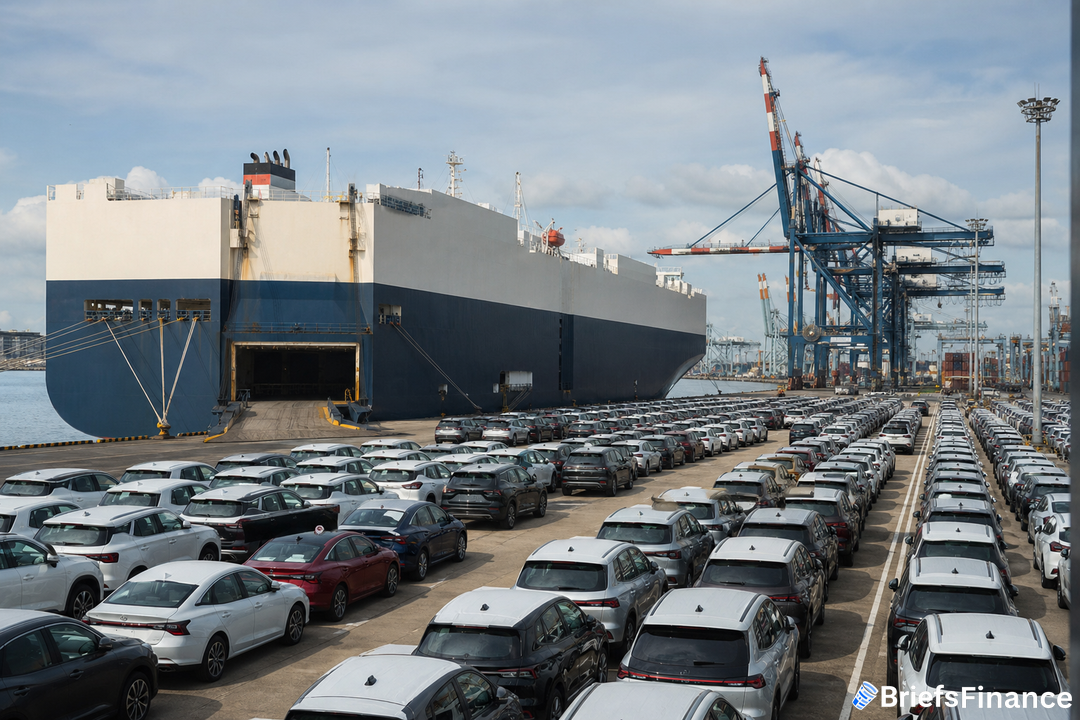
Chinese brands have ramped up hybrid sales across Europe this year, reaching up to one quarter of monthly deliveries and fanning trade tensions. Dataforce tracking includes marques such as Polestar, DR, Evo, Chery-Ebro and Stellantis-Leapmotor ventures, and shows that brands like BYD hit their highest share of the European market in August across the EU, EFTA countries and the UK. The dataset counts both plug-in and non-plug-in hybrids.

The appeal is clear: lineups like BYD's Dolphin hatchback bring competent EV tech at prices Europeans notice. Meanwhile, local manufacturers face heat from players such as Chery Automobile and are ceding ground in China to quicker-moving competitors. The pressure is real at home too, with companies like Volkswagen cutting jobs as part of broader cost reductions.

Carmaker reactions reveal who actually wins from a trade deal. Market Briefs covers that policy free every morning.

Renault's playbook

Provost has pushed for an EU-China arrangement that limits import volumes while prompting Chinese automakers and suppliers to build in Europe. "We need Chinese companies to invest heavily in the European value chain rather than just set up 'screwdriver plants'," he said, urging the EU to move fast on Made-in-Europe rules to frame local operations. He added, "We have no reason to be ashamed of the technology in our cars, and we are ensuring that these cars are competitive against the Chinese rivals who will be manufacturing in Europe." He also argued Renault's bet on EVs "was the right one."

In France, Renault is already working with partners from China. Near Renault's Douai assembly site in northern France, Envision AESC assembles EV battery packs destined for the R5 city car - currently the top seller - along with the R4 and the Alpine A290. Renault sped up development by teaming engineers based in China and in France, needing only 16 months to roll out the second-generation battery-powered Dacia Spring, which starts below €18,000 ($20,160).

So far, Renault has weathered the competition better than many European peers. It stuck to its EV rollout plans even as choppy demand pushed rivals like VW and Stellantis into costly strategy shifts. With Europe as its core market, the company likewise gained from strong EV demand while gasoline and diesel prices were rising.

What this means for your portfolio

Last month, Moody's raised Renault's long-term credit rating, citing a "sustained" improvement in credit quality and a "materially stronger" balance sheet. Citi analyst Harald Hendrikse summed up execution this year, writing, "Renault management has clearly done a much better budgeting and execution job than investors expected." Looking ahead, Provost said he plans to allocate another €10 billion in France over the next five years, contingent on sufficient political and social backing.

Net-net, Europe is trying to reshape the playing field while Renault doubles down on faster cycles, local supply, and EVs. If you are tracking carmakers or EV-adjacent names, watch whether limits on hybrid imports stick and whether more Chinese suppliers build in Europe, because both could shift where value gets created.

European producers have been lobbying on this for a long time. Get the free Market Briefs daily newsletter and follow it.

Disclosure

Recent News

1 2 3 … 98

Get Market Briefs delivered to your inbox every morning for free!

No fluff. No noise. No politics. Just finance news you can read in 5 minutes.

Blogs

October 5, 2026
What Is the Briefs Connector? A Simple Guide
  • The Briefs Connector lets your favorite AI read Briefs research, like Pro reports and the Briefs Score.
  • Without it, an AI asked about investing can give answers that sound right but aren't backed by that research.
  • It explains the research, but it won't tell you what to buy or sell.
Read More
October 5, 2026
Is a Recession Coming? What the Last Five Rate Hiking Cycles Say
  • The Fed has started raising rates again, and in the last five hiking cycles going back to 1994, a recession never started while the hikes were underway.
  • The pain showed up where there was a bubble to pop - housing in 2008, dot-coms in 2000, the pandemic money-printing boom in 2022 - and usually after the hikes ended.
  • Private equity and private credit are feeling this cycle first, and how far the pain spreads depends on how high rates go and how long they stay there.
Read More
October 2, 2026
Fed Interest Rates May Rise Again in 2026 - and the Newest Culprit Is AI
  • Fed Governor Barr told a meeting our head of investing research attended that higher rates are likely in 2026, lower inflation may not come soon, and AI is now pushing prices up.
  • The same week, President Trump asked the biggest AI companies to police themselves under an accord that's morally but not legally binding, because the White House sees AI as a race with China.
  • Higher rates put downward pressure on asset prices and squeeze borrowers, but the way through hasn't changed: own investments, buy on a schedule, and treat downturns as discounts.
Read More
October 1, 2026
Housing Market 2026: Why Office Buildings Are Cracking Before Houses Do
  • Office buildings are selling for 80% to 95% off because their five-year loans are resetting at much higher rates while half-empty floors have gutted the income those buildings are valued on.
  • Housing is under pressure, not cracking: a $400,000 mortgage costs $975 more a month than at 3%, but six of every seven mortgages are still under 6% and those owners are staying put.
  • Whether pressure turns into cracks is a race between unaffordability and the economy, and either way Jaspreet's rule is to treat your house as a liability and buy only what you can afford.
Read More
September 30, 2026
Dividend Investing vs. Growth Investing: Why the Slower Portfolio Can End Up Bigger
  • "What stock should I buy?" is the wrong first question. Growth, income, or wealth preservation comes first, and the goal changes which stocks even make sense.
  • At $500 a month for 30 years, 13% growth builds about $1.75 million. 10% growth plus a reinvested 4% dividend builds a little more than $2.2 million and pays a little more than $80,000 a year.
  • Income investors have US dividend ETFs, REITs, and international dividend funds to study. Growth investors have the Nasdaq 100, AI and chip funds, and small caps. None of it is a recommendation.
Read More
September 29, 2026
Why Is Gold Going Down? A 5.2% Treasury Yield Just Took Its Job
  • President Trump rejected Iran's deal to reopen the Strait of Hormuz, oil prices jumped back up, and gold fell instead of rising.
  • Treasury yields hit their highest level in more than 20 years, so investors sold gold and bought Treasuries that pay interest.
  • Higher Treasury yields make the national debt, mortgages, car loans, and credit cards more expensive, with the Fed's next rate decision due October 28.
Read More
September 28, 2026
The Strategic Bitcoin Reserve: Why the Government Wants Bitcoin to Explode
  • The US government holds about 328,000 Bitcoin, worth roughly $25 billion, and since a 2025 executive order it keeps seized coins instead of selling them.
  • Washington wants a bigger pile of assets so its $40 trillion national debt looks smaller next to them, which lets it keep borrowing and spending.
  • Bitcoin's wild price swings, and a government holding a coin built to escape governments, are the two risks investors need to watch.
Read More
September 25, 2026
BRIEFS EXCLUSIVE: 43% Of Respondents Say Bills Outran Their Income Over Past Two Years
  • 43% of the 494 Market Briefs readers surveyed said their bills grew faster than their income over the past two years, even though 79% could cover a surprise $5,000 expense tomorrow.
  • Half of readers own gold or crypto, the two classic bets against a weaker dollar, and only 13% bought nothing at all in the last 12 months.
  • The median reader says it takes $150,000 a year to feel financially secure, about $62,000 above the U.S. median household income.
Read More
September 25, 2026
The Economy Is Booming. So Why Did Stocks and Bonds Fall Together?
  • S&P Global says the US economy is growing at its fastest rate since 2021, with corporate profits up 28.9% in a year, almost four times the historical average.
  • Stocks and bonds fell at the same time, which is not how the two markets normally behave, because Treasury yields above 5% now compete with stocks for investors' money.
  • Jaspreet Singh lays out three ways to invest through a shift like this: always be buying, buy the crash, or follow the money before it hits the headlines.
Read More
September 24, 2026
The 2026 Economic Reset Is Starting: Are We in a Recession, or Is the Pain Still Ahead?
  • The Federal Reserve has flipped from stimulating the economy to fighting inflation with higher interest rates, while the White House still wants growth at almost any cost.
  • The national debt tops $40 trillion, has outgrown the entire U.S. economy, and its interest payments are now the government's fastest-growing expense.
  • Higher rates bring pain for private equity, private credit, and speculative assets, but they open opportunities for investors holding cash, treasuries, and value assets.
Read More
1 2 3 … 28
Share via
Copy link










