Free NewsletterPro Login

Warning: Undefined variable $stocks in /var/www/briefs.co/htdocs/wp-content/plugins/oxygen/component-framework/components/classes/code-block.class.php(133) : eval()'d code on line 448

Warning: foreach() argument must be of type array|object, null given in /var/www/briefs.co/htdocs/wp-content/plugins/oxygen/component-framework/components/classes/code-block.class.php(133) : eval()'d code on line 448

Warning: Undefined variable $funds in /var/www/briefs.co/htdocs/wp-content/plugins/oxygen/component-framework/components/classes/code-block.class.php(133) : eval()'d code on line 472

Warning: foreach() argument must be of type array|object, null given in /var/www/briefs.co/htdocs/wp-content/plugins/oxygen/component-framework/components/classes/code-block.class.php(133) : eval()'d code on line 472
/* the link was here */
×
Free investor livestream — Nov 17

How To Use ChatGPT & Claude To Research Stocks Like A Pro

01
The prompt we use to break down any stock
02
How to fact-check what AI tells you
03
How to compare two stocks in minutes

Healey Readies Short-Term Cost Relief as Oct. 28 Budget Nears

Published Oct 11, 2026
Share:
Summary:
  • Chancellor John Healey plans to use the Oct. 28 budget to deliver winter energy help, including through the warm homes discount, set to wind down before 2029-30.
  • Officials say global borrowing costs tied to the US-Iran war likely slashed the £23.6 billion ($31 billion) buffer under Labour's main fiscal rule by about half.
  • The debt rule still had a £27.1 billion margin in the spring, giving room for temporary support, though pricier government borrowing raises market risks.

What's on the table

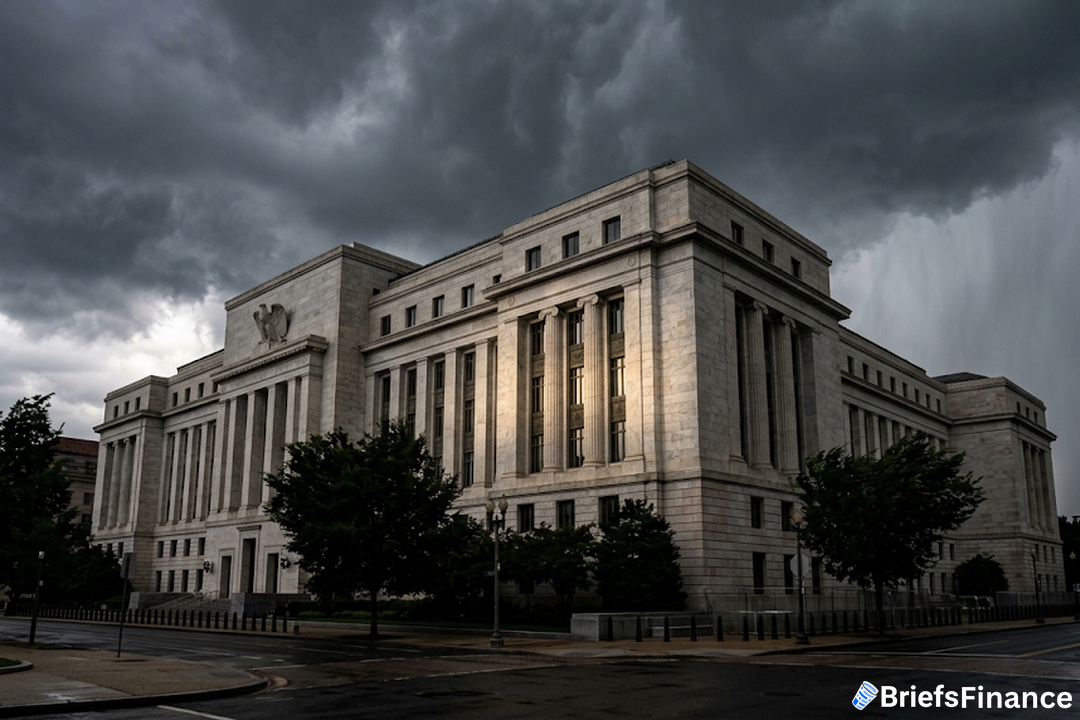
Healey is trying to give households a break without locking the Treasury into long-term bills. People familiar with the plans say the budget on Oct. 28 is set to add winter support for energy costs, using existing channels such as the warm homes discount. Other options being weighed include a time-limited VAT cut on petrol and keeping the freeze on fuel duty in place. The plan is for these steps to lapse ahead of 2029-30, the point at which the government's main budget guardrail takes effect.

That aligns with the quick-hit strategy already flagged by Prime Minister Andy Burnham; upon taking office earlier in the summer, he said VAT on household electricity bills would be reduced for six months starting Oct. 1. In the words of Tom Pope, the Institute for Government's chief economist: "The consensus seems to be he'll allow headroom to drop a little in the medium-term which means he doesn't have to do big tax rises," adding, "And then he'll announce cost-of-living support in the short-term."

How it gets funded

Short-term help still has to be paid for. The options on the table are higher taxes, spending cuts or additional borrowing. Ahead of the budget, the Treasury has explored options to raise revenue - including a windfall charge on bank profits and on oil and gas companies - say people familiar with the discussions.

Borrowing is still feasible given how the UK's secondary fiscal rule is designed: by 2029-30, debt must be lower as a share of GDP. At the spring fiscal event, the government had a £27.1 billion cushion against that target. In practice, that means the Treasury can borrow more in the next few years for temporary relief and still hit the debt rule if those costs fall away in time. Helen Miller, director of the Institute for Fiscal Studies, said, "If they do breathing space-style measures, I wouldn't be at all surprised to see that those are temporary and done through borrowing." Her warning: "The risk with some of these things, even if they are announced to be temporary, is they might end up being permanent," pointing to the fuel duty freeze first announced in 2011 that has persisted ever since.

Pre-budget relief measures reveal what a government fears most politically. Market Briefs covers fiscal policy free every weekday.

Markets and the war wildcard

There is a tension here. Officials tie a worldwide rise in borrowing costs to the US-Iran war, and it is estimated to have cut the £23.6 billion headroom under Labour's primary rule by about half. That rule requires day-to-day spending to be covered by tax revenue by the end of the parliament.

People familiar with Healey's stance say he is inclined to treat the war's fiscal hit as a passing shock, rather than overhaul policy now to rebuild headroom. The same people say he is wary of locking in big tax hikes or spending cuts if the outlook improves from 2027 onwards and the Middle East conflict eases. Healey and Burnham's bet is that a quick end to the war would relieve pressure on energy bills and the public finances.

Investors may not be so patient. "Bond markets care about borrowing in the short-term," Pope said. "Given where markets are, you do still need to worry about their reaction quite a lot." The UK is already paying lending rates near multi-decade highs as global inflation worries rise with energy prices.

At the pump, UK diesel is at a record, according to the Department for Energy Security and Net Zero. And Bloomberg data show developed-market government bond yields have climbed since June.

Process, politics and what to watch

Healey has tried to avoid the pre-budget chaos of last year, when weeks of noisy speculation were followed by an accidental one-hour-early leak of then-chancellor Rachel Reeves' plans. This time, the Treasury asked the Office for Budget Responsibility to produce a "round zero" baseline ahead of the formal 10-week process, two people familiar with the move said. In the past, the first projections typically arrived about two weeks in, squeezing the timetable.

The Treasury said its spokesperson was unable to comment on the forecasting process. "The Chancellor is focused on giving households and businesses a bit of breathing space where we can," the spokesperson said, pointing to existing energy and transport policies.

One more moving target is defense. When he was defense secretary, Healey pushed for UK defense spending to reach 3% of GDP by 2030. As chancellor he has not made that pledge, and people familiar with the situation say the path would be easier if the war cools and the fiscal picture improves.

Short-term help now usually means harder choices later. Join Market Briefs free and follow the budget.


Disclosure

Recent News

1 2 3 … 125

Get Market Briefs delivered to your inbox every morning for free!

No fluff. No noise. No politics. Just finance news you can read in 5 minutes.

Blogs

November 3, 2026
How to Budget Every Payday: 5 Moves So You Never Worry About Money
  • A median earner could make about $4.7 million over a career, yet most retire with closer to $13,000 in the bank because of a keeping problem, not an income problem.
  • Audit your money, save $2,000, pay off credit card debt, then automate a 75/15/10 split across three bank accounts.
  • Earn more only after your system is in place, then protect what you build with an accountant, attorneys, the right insurance, and an estate plan.
Read More
November 3, 2026
How to Invest in Stocks: 5 Things to Do Before You Invest Your First Dollar
  • Paying off credit card debt at around 22% interest beats the stock market's roughly 10% average, and even Warren Buffett's 19%.
  • Save $2,000 in a separate emergency fund, learn to research with AI, and decide whether you're a growth, income, or wealth preservation investor.
  • Write down a plan for buying during market crashes, which have happened 25 times in the last 100 years.
Read More
November 3, 2026
Best ETFs to Buy: 5 Three-ETF Portfolios for Every Investing Goal
  • An ETF is a basket of stocks, so one purchase spreads your money across many companies instead of riding on just one.
  • Jaspreet Singh laid out five portfolios of three ETFs each, built for kids, cash flow, growth, slow and steady growth, and protection from a weaker dollar.
  • Based on 10-year average returns, $500 a month could grow to between about $660,000 and $3.1 million over 30 years, though past returns never guarantee future ones.
Read More
November 3, 2026
Best Investments of a Generation: 5 Market Shifts Backed by Your Tax Dollars
  • Private companies are about to spend $1 trillion a year on AI, and the Trump administration is putting tax dollars behind the same industries.
  • The five shifts are AI and its supply chain, robotics, rare earths, energy, and defense.
  • Each comes with real risk, from an AI bubble to wars ending or a new Congress, so these are ideas to research, not sure things.
Read More
November 3, 2026
How to Get Ahead Financially: 10 Moves to Make While Everyone Else Falls Behind
  • Learning a high-income AI skill, or building AI tools for tradespeople, can raise your earning power in a tough job market.
  • Higher interest rates, the 2025 tax cuts, Trump accounts, and stacked cash back can put more money back in your pocket.
  • Following where government money is moving, keeping cash ready for market crashes, and investing in your own education can speed up your wealth.
Read More
November 3, 2026
National Debt at $40 Trillion: Why Inflation Is the Hidden Tax, and Who Profits From It
  • Time magazine asked President Trump how he'd tackle the $40 trillion national debt, and he suggested inflation could help pay it off, a cost that lands on everyday Americans.
  • From 1971 to 2025, cars, houses, and college outpaced both inflation and incomes, while the S&P 500 grew more than 33,000% with dividends reinvested.
  • The U.S. can default, inflate, or outgrow its debt, and history shows each path rewards different assets.
Read More
November 3, 2026
FOMC Meeting: Why the Fed Is Getting Nervous, and Why AI Stocks Feel It
  • At its latest meeting, the Fed held rates steady but warned it may raise them again, because inflation is running near 3.5% against a 2% target.
  • Oil prices, tariffs, AI's hunger for energy, and government spending are all pushing prices higher, and gold, silver, and bitcoin fell on the Fed's news.
  • Chinese AI stocks are down about 40% in a few months and Google fell more than 10% in a day, raising fears that higher rates could pop an AI bubble.
Read More
November 3, 2026
Midterm Elections: Where the Money Could Move if Republicans or Democrats Win
  • The U.S. government spent about $7.5 trillion last year, and the midterm elections could change which industries get more of that money.
  • A Republican win could favor manufacturing, fossil fuels, banks, and defense.
  • A Democratic win could favor healthcare, weight-loss drugs, clean energy, and infrastructure.
Read More
November 3, 2026
Brazil Stock Market Crash: Why Lula's Win Matters to U.S. Investors
  • Brazil's stock market fell more than 20% in a few days, and its currency dropped 8%, after Lula won a presidential election investors expected him to lose.
  • The shock reaches U.S. investors through coffee and beef prices, the BRICS push away from the dollar, and a market that had become an investor favorite.
  • The last time Lula first won, in 2002, Brazil's stock market fell more than 20% and then grew 12x by 2008, though nobody knows if that will repeat.
Read More
November 2, 2026
Credit Utilization: How Paying Down Cards Can Help Your Score
  • Credit utilization is your card balances divided by your credit limits, checked overall and card by card.
  • Lower is generally better, and Experian says the effect becomes more noticeable around 30%.
  • Paying down balances and keeping new charges off your cards are the main ways to lower it.
Read More
1 2 3 … 32
Share via
Copy link