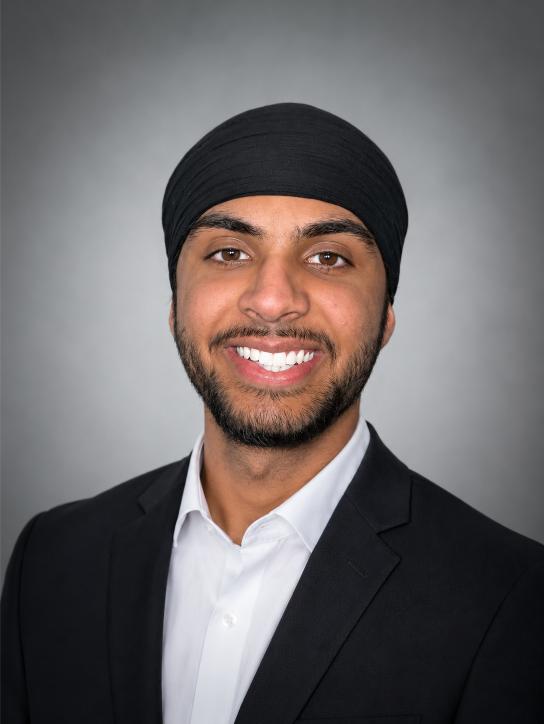
"We are essentially building Disney for the 21st century," says My Drama co-founder Bogdan Nesvit.
Media Partners Asia sees U.S. microdrama revenue hitting 1.5 billion dollars in 2026, while China's 2024 haul topped theatrical box office.
Fox took a stake in Holywater Tech in October 2025 and plans no fewer than 200 vertical titles over two years for its app.
What microdramas are and why they matter
Bogdan Nesvit, who co-founded the microseries app My Drama, frames the goal plainly: "We are essentially building Disney for the 21st century." His company centers on ultra-short, serialized stories made for phones.
These snackable shows lean on romance staples and end on cliffhangers to pull viewers into the next episode. They have racked up billions of views this year as interest in old-line media slips. Meanwhile, YouTube says people now spend more hours watching there than on single-name streaming services, a shift microdrama apps hope to ride by steering audiences into mobile-first viewing.
Nesvit argues the format could grow into mainstream entertainment and scale to "the size of Netflix." He also says studios want granular viewing insights, down to how users react each second.
How studios and startups are building the business
For now, tech outfits and upstarts such as My Drama lead on downloads and time spent in app. Sensor Tower counts TikTok's PineDrama as the top microdrama app in the U.S. so far this year, with 13.2 million downloads through September. The firm also reported that, in the third quarter, DramaBox and ReelShort beat Netflix and Disney on typical time spent on mobile in the U.S.
Legacy players are moving in. Fox Entertainment was early, buying a share of Holywater Tech, the parent of My Drama, in October 2025. Fox also committed to deliver a minimum of 200 phone-friendly, vertical shows across two years for Holywater's app. Holywater lists "Secret Society: Till Blood Do Us Part" and "Kiss of the Pirate King" among its standouts, and says individual series have drawn tens of millions of views.
Nesvit says partnerships give studios the pipes to publish short-form series and find viewers, while Holywater advises on what works in mobile. Studios, he adds, want feedback as specific as shot length and even which dress color pops on screen. The plan is to pull audiences from YouTube, TikTok and Instagram into Holywater's ecosystem and build ties with established media.
Holywater has already re-cut Season 3 of Fox's "Farmer Wants a Wife" for its platform and is planning a scripted project inspired by "Fear Factor: House of Fear" made up of 30 episodes of about three minutes each. Revenue today is roughly 80 percent subscriptions with the rest from ads, and the company is weighing brand integrations. The co-founders say the business is profitable. Co-founder Anatolii Kasianov calls production "very cost efficient," estimating 150,000 to 200,000 dollars for an average 70-minute series, and adds that studio IP helps pull in fans without heavy spend.
When stories are designed for quick attention on mobile, stay clear on economic and market trends with the free Market Briefs
Hollywood's new entrants
Some veterans think they can build their own platforms. Jana Winograde, Susan Rovner and Lloyd Braun - whose résumés span NBCUniversal, Showtime, Warner Bros. Discovery and ABC - launched a microdrama startup called aTwist in September. By late November, the company said it had tens of millions of views across TikTok, Instagram and YouTube, where its shows live alongside the app.
"We have an expertise in getting people to care about these shows," Rovner told CNBC, citing her 22 years at Warner Bros. Television and more than 18 series that surpassed 100 episodes. She also took a swipe at rivals: "A lot of our competitors' completion rates are very low, their churn rates are very high."
That churn problem is real. Sensor Tower pegs average churn for the most downloaded microdrama apps at nearly 60 percent so far in 2026, with the number of users leaving about equal to those joining each quarter. aTwist says it is leaning into high-stakes storytelling, recurring seasons and talent. Jesse Tyler Ferguson and Justin Mikita teamed up on the musical "Theater Kids vs. Zombies," which premiered October 15. October also brought "Honey, I Think Our House Is Haunted" starring Mario Lopez and "Unboxing the Killer Doll" with Paris Hilton.
In May, aTwist revealed an exclusive pact with BET, a linear network tied to Skydance, to produce horizontal microdramas that premiere on BET first and later appear in vertical format on the aTwist app. "That brings a lot of awareness to our brand, a lot of marketing," Winograde said, noting it gives linear channels low-cost programming. She hinted more partnerships could follow.
Streamers test short-form inside their apps
Big platforms are adding vertical lanes. NBCUniversal's Peacock rolled out a vertical video channel in its app this summer featuring both original unscripted fare and more traditional vertical dramas. Earlier this month, NBCUniversal invested in Story TV from India's EloElo Group to accelerate its international microdrama push. Deepak Arya, NBCUniversal's EVP overseeing corporate strategy and development, said, "We see significant opportunity in mobile-first storytelling."
Disney+, Paramount+ and Netflix likewise added vertically oriented feeds this year, designed to point viewers back to their main catalogs rather than to showcase vertical-first originals. Amazon is eyeing originals in the space too. Mike Hopkins, who runs Prime Video and Amazon MGM Studios, told CNBC last month the company is interested in making its own microdramas.
The economics and what it means for your portfolio
Turning watch time into profit is still the hard part. Media Partners Asia reports that ReelShort, a leading U.S. app launched in 2022 by Crazy Maple Studio, generated 785 million dollars in revenue in 2025 but still booked a 12 million dollar net loss. The company says it reaches about 65 million users each month on LinkedIn. High spending on marketing and content has weighed on results, though MPA expects ReelShort to post its first year of profitability in 2026.
The market potential is large but choppy. MPA estimates U.S. microdrama revenue at 1.5 billion dollars in 2026, and the format in China topped the movie box office in 2024. For investors, that points to two currents moving at once: fresh venues for attention and ad budgets, and a business model where user churn and constant content spend can compress margins. The bottom line: growth runway meets cost gravity, and which teams can convert short bursts of viewing into durable cash flow will set the winners.
As media and markets evolve, get a warm daily roundup to understand what matters by signing up for Market Briefs newsletter
Anthropic has gone public at a valuation of about $1.5 trillion, while Amazon went public in 1997 at around $440 million. Anthropic has about $33 billion in revenue this year and no profit, and investors are paying more than 40 times its sales, against about 3 times for Amazon. Briefs Finance CEO Jaspreet Singh says nobody knows what comes next, and that long-term investors use downturns to buy instead of panic selling.
Tech stocks are selling off because investors don't know who will lead Nvidia, the company that has been funding the AI industry and selling it chips.
Inflation has the Federal Reserve planning to raise interest rates, with a hike expected in December, and that puts pressure on homebuyers, private equity and the $40 trillion national debt.
Briefs Finance CEO Jaspreet Singh says nobody has a crystal ball, so his rules are to buy when markets are low, hold long term and invest only what you're willing to lose.
The national debt is above $40 trillion, and the Federal Reserve has gone from sending Washington its profits to losing money.
President Trump's four-part plan leans on shorter-term debt, stablecoin companies buying Treasuries, a bigger balance sheet and government stakes in private companies.
The goal is to outgrow the debt, not pay it off, so Jaspreet Singh points investors to the seven industries where Washington wants growth.
The Fed makes its next rate decision on December 9 and is now talking about jumbo interest rate hikes of 0.5%, though one in December looks unlikely.
Washington will pay a record $1.05 trillion in interest this year on $40 trillion of debt, and that debt resets at higher rates as the Fed hikes.
Jaspreet Singh's five moves are to pay down variable-rate debt, earn interest on your savings, know which stocks feel the pressure, look at value and hedge.
Margin debt, the money investors borrow to buy stocks, is at a record of around 4.6% of GDP, up from 3.9% in 2021.
ETF money has more than tripled in five years to 7% of GDP, while corporate buybacks and 401(k) money sit below their earlier peaks.
Margin calls and panic selling can make the next downturn deeper, so Jaspreet Singh keeps buying broad market funds and says most investors should skip margin debt.
Jensen Huang is out at Nvidia over affairs with multiple people, and the company he founded has been the bank of American AI, with about $30 billion into OpenAI and $10 billion into Anthropic.
A hotter-than-expected inflation report has Fed officials talking about a possible 0.5% hike in December, and gold, silver, and bitcoin fell on the news.
President Trump said the US may not need a deal with Iran, keeping oil prices and inflation risk high. Jaspreet Singh breaks down what it all means for AI stocks and your portfolio.
Stocks are booming at the fastest pace in years, jobless claims just hit a 57-year low, and most investors still feel like nobody is hiring.
The Fed is protecting the dollar over the economy, oil swings on every Iran headline, and a few AI companies are carrying an S&P 500 where four of five stocks sit in a correction.
Jaspreet Singh explains why circular financing between Nvidia, OpenAI, Anthropic, and SpaceX rhymes with 2008's house of cards, and how his three investing pillars handle a stock market bubble.
The Fed has raised rates, cut them, then raised them again only twice in the last 60 years, and both times the economy fell into a recession and stocks crashed.
The same stop-and-go cycle is playing out now, with one big difference: US debt is 125% of GDP today versus about 30% in 1980.
In the 1970s gold rose roughly 24x, real estate 157%, stocks lagged, and cash lost half its value. Jaspreet Singh lays out five assets to consider before the next flip.
The IRS 2027 tax plan keeps the same seven rates but widens every bracket and lifts the married-filing-jointly standard deduction to $33,200.
The 0% long-term capital gains bracket rises to $102,100, so a household living on $135,300 of investment income could owe $0 in federal income tax.
C corporations still pay 21%, small businesses keep the 20% QBI deduction, and the 401(k) limit climbs to $25,500 with an $8,500 catch-up for investors over 50.
Make sure to check your inbox for the first email.
Before you go
We’re hosting our first ever livestream on how investors can use ChatGPT & Claude to invest like a pro. It’s on 11/17 and is hosted by our CEO Jaspreet Singh.