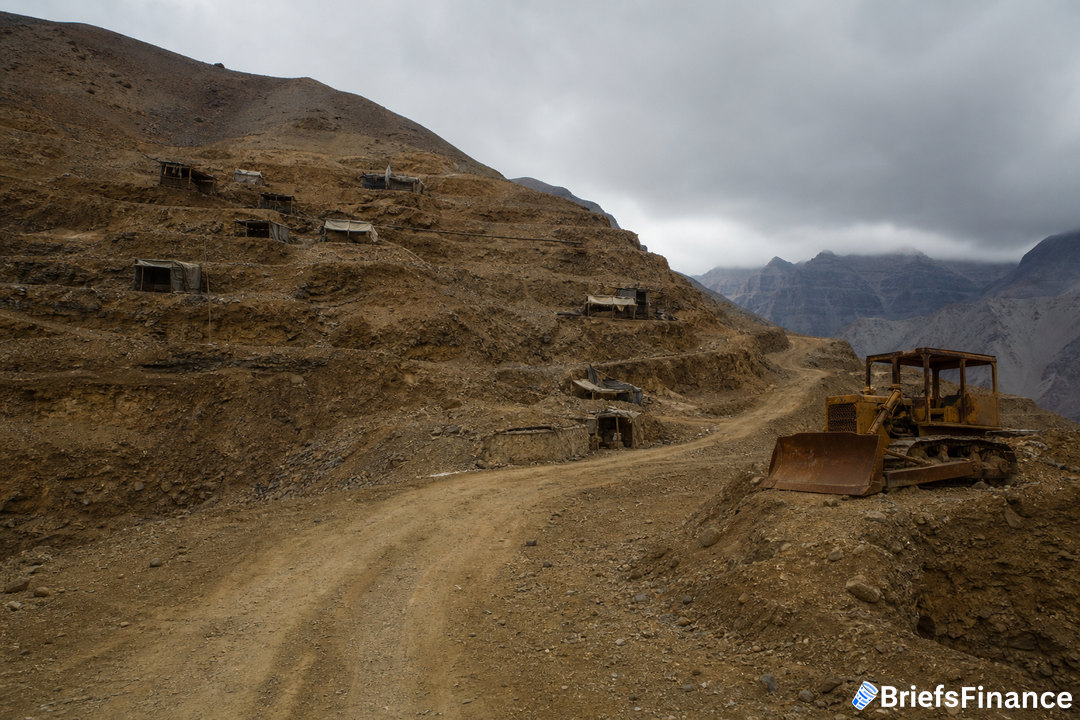
Hundreds of miners marched this week in Lima and Juliaca as Reinfo, the registry that lets informal miners operate while they formalize, nears its Dec. 31 lapse.
President Keiko Fujimori's team is pushing a new MAPE Law that would shift miners to a fresh system and keep Reinfo registrants on a path to compliance through June 2028.
The proposal has sat in the lower house for over a month without a committee vote, raising the risk of a rules vacuum starting Jan. 1.
What is at stake now
Miners rallied in the capital and in the southern hub of Juliaca over the approaching end of Reinfo on Dec. 31, a list that lets informal operators keep working while they move toward legal status. CONFEMIN, which speaks for small scale and artisanal miners, wants a four year extension and has slated another nationwide march for Dec. 1.
The group is seeking more than time. It is calling for a new headcount so miners outside Reinfo can enter the process, plus tweaks to concession rules that it says would unlock idle ground. The group also seeks the removal of Energy and Mines Minister Guillermo Shinno and Vice Minister Mayra Figueroa on the grounds of incompetence and conflicts of interest.
The government's plan and the political roadblock
Fujimori's administration aims to swap out Reinfo for a new framework under the proposed MAPE Law, giving miners until the middle of 2028 to complete formalization. Those already on Reinfo would have until June 2028 to meet all legal requirements.
A little over one month ago, officials delivered the MAPE bill to the lower chamber, but it remains bottled up in committee. That delay has officials warning of a legal gap as soon as Jan. 1 if no fix is in place when Reinfo ends. "If nothing is approved by Dec. 31, all miners - including the informal miners we need to help - will become illegal, and we should not let it get to that point," Shinno said Tuesday. "Time is extremely short, but if there is political will, we can move quickly."
Allies of the government say the Energy and Mines Committee is slow walking the measure. The panel is led by Yenifer Paredes of Juntos por el Perú.
When policy debates affect livelihoods, staying informed matters, so sign up for the free Market Briefs newsletter that explains it all
Industry pressure and legal arguments
Large miners want Congress to let Reinfo sunset, saying a bridge to formality morphed into cover for unlawful activity. "We know that Reinfo comes hand-in-hand with illegal economies, and it's neither logical nor ethical to renew it yet again," said Gonzalo Quijandría, vice president of industry group SNMPE, in remarks to business leaders and officials on Wednesday. "No more Reinfo, no more illegal mining, no more crime."
Quijandría later pushed back on Shinno's warning of blanket illegality if the registry expires, arguing existing criminal law would still shield miners who are mid process. "It's not as dramatic as saying Reinfo expires and, at that moment, we can go after all illegal miners," he said. "They wouldn't be operating illegally. Renewing Reinfo just keeps this blank check in place." SNMPE backs the MAPE bill but is pressing for tighter controls, including closer scrutiny of processing plants and stronger tracking of minerals and inputs.
How this touches projects, copper supply and your portfolio
Peru is the number three copper producer, and future output there is part of the supply needed for power lines, electric cars and data centers. But informal and illegal miners have clashed more often with big operators, with mineral rights disputes involving MMG Ltd. and Southern Copper Corp. at times slowing projects. Unregulated mining also cuts into tax receipts and can dent investor appeal, even as small scale mining remains a key income source in poorer rural regions, making crackdowns politically fraught.
The fight over Reinfo spilled into the CADE business forum near Cusco, where lower house President Oscar Reto was booed after refusing to take a stance on an extension. Pro government lawmakers blame the Energy and Mines Committee for bottling up the bill. Roberto Sánchez - the head of Juntos por el Perú who ran against Fujimori in this year's presidential runoff - took part in the Lima demonstration and wrote, "We will defend together the right to formalization."
The bottom line: Congress has days to either pass the MAPE framework or extend a bridge, or risk a gap in the rules on Jan. 1. Regulatory uncertainty can ripple into project timelines, capex plans and tax flows - all inputs your portfolio watches in mining heavy markets.
In uncertain regulatory times a quick read helps, subscribe to Market Briefs for a five minute take on the economy each morning
Anthropic has gone public at a valuation of about $1.5 trillion, while Amazon went public in 1997 at around $440 million. Anthropic has about $33 billion in revenue this year and no profit, and investors are paying more than 40 times its sales, against about 3 times for Amazon. Briefs Finance CEO Jaspreet Singh says nobody knows what comes next, and that long-term investors use downturns to buy instead of panic selling.
Tech stocks are selling off because investors don't know who will lead Nvidia, the company that has been funding the AI industry and selling it chips.
Inflation has the Federal Reserve planning to raise interest rates, with a hike expected in December, and that puts pressure on homebuyers, private equity and the $40 trillion national debt.
Briefs Finance CEO Jaspreet Singh says nobody has a crystal ball, so his rules are to buy when markets are low, hold long term and invest only what you're willing to lose.
The national debt is above $40 trillion, and the Federal Reserve has gone from sending Washington its profits to losing money.
President Trump's four-part plan leans on shorter-term debt, stablecoin companies buying Treasuries, a bigger balance sheet and government stakes in private companies.
The goal is to outgrow the debt, not pay it off, so Jaspreet Singh points investors to the seven industries where Washington wants growth.
The Fed makes its next rate decision on December 9 and is now talking about jumbo interest rate hikes of 0.5%, though one in December looks unlikely.
Washington will pay a record $1.05 trillion in interest this year on $40 trillion of debt, and that debt resets at higher rates as the Fed hikes.
Jaspreet Singh's five moves are to pay down variable-rate debt, earn interest on your savings, know which stocks feel the pressure, look at value and hedge.
Margin debt, the money investors borrow to buy stocks, is at a record of around 4.6% of GDP, up from 3.9% in 2021.
ETF money has more than tripled in five years to 7% of GDP, while corporate buybacks and 401(k) money sit below their earlier peaks.
Margin calls and panic selling can make the next downturn deeper, so Jaspreet Singh keeps buying broad market funds and says most investors should skip margin debt.
Jensen Huang is out at Nvidia over affairs with multiple people, and the company he founded has been the bank of American AI, with about $30 billion into OpenAI and $10 billion into Anthropic.
A hotter-than-expected inflation report has Fed officials talking about a possible 0.5% hike in December, and gold, silver, and bitcoin fell on the news.
President Trump said the US may not need a deal with Iran, keeping oil prices and inflation risk high. Jaspreet Singh breaks down what it all means for AI stocks and your portfolio.
Stocks are booming at the fastest pace in years, jobless claims just hit a 57-year low, and most investors still feel like nobody is hiring.
The Fed is protecting the dollar over the economy, oil swings on every Iran headline, and a few AI companies are carrying an S&P 500 where four of five stocks sit in a correction.
Jaspreet Singh explains why circular financing between Nvidia, OpenAI, Anthropic, and SpaceX rhymes with 2008's house of cards, and how his three investing pillars handle a stock market bubble.
The Fed has raised rates, cut them, then raised them again only twice in the last 60 years, and both times the economy fell into a recession and stocks crashed.
The same stop-and-go cycle is playing out now, with one big difference: US debt is 125% of GDP today versus about 30% in 1980.
In the 1970s gold rose roughly 24x, real estate 157%, stocks lagged, and cash lost half its value. Jaspreet Singh lays out five assets to consider before the next flip.
The IRS 2027 tax plan keeps the same seven rates but widens every bracket and lifts the married-filing-jointly standard deduction to $33,200.
The 0% long-term capital gains bracket rises to $102,100, so a household living on $135,300 of investment income could owe $0 in federal income tax.
C corporations still pay 21%, small businesses keep the 20% QBI deduction, and the 401(k) limit climbs to $25,500 with an $8,500 catch-up for investors over 50.
Make sure to check your inbox for the first email.
Before you go
We’re hosting our first ever livestream on how investors can use ChatGPT & Claude to invest like a pro. It’s on 11/17 and is hosted by our CEO Jaspreet Singh.