How big the shift is
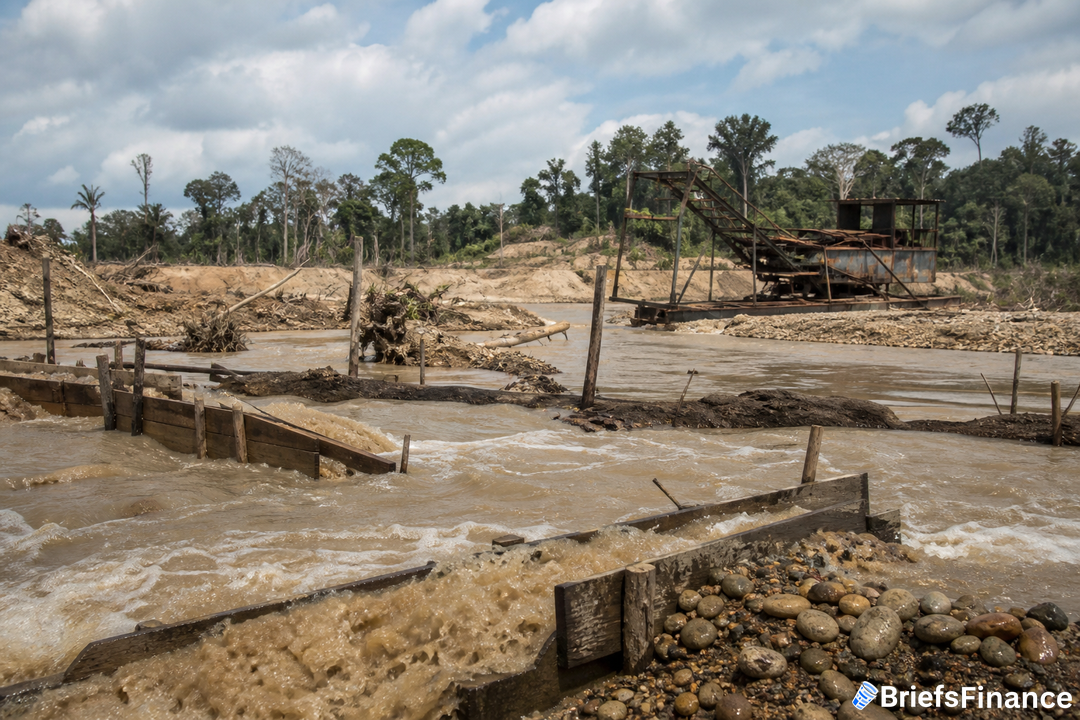
Peru's gold trade has flipped in a way that would have seemed unlikely a few years ago. By matching official production figures reported to authorities against customs data, the Peruvian Institute of Economics concludes that unregistered gold exports overtook formal shipments by 8.7 tons in the first six months, accounting for just over half of all gold exported. Illicit flows rose sharply in that stretch, while legal exports declined.
IPE characterizes illegal mining as the country's biggest black-market activity and estimates those exports could amount to $16 billion-$18 billion by late 2026. For 2024 alone, the institute expects the tally to reach at least $16 billion. That would be 39% higher than next year's level and close to nine times what it was a decade ago, even as global gold prices have climbed nearly fourfold in the same period.
Why illegal mining is spreading
High bullion prices and looser requirements have drawn more people in poor rural regions into unregistered mining. Paola Herrera, an economist at IPE, cautions the figures likely undercount the real scale because they do not capture any gold that slips out through smuggling routes.
Industry leaders say the problem has moved well past remote riverbeds. "Illegal miners are now the biggest and most powerful miner in the country," said Gonzalo Quijandría, vice president of SNMPE, Peru's main mining chamber. He added that crews are "invading formal mines and exporting that gold as their own without paying a dollar in taxes."
What Lima plans to do about it
Energy and Mines Minister Guillermo Shinno said President Keiko Fujimori's new administration plans to let the Reinfo permit lapse at year end after a decade of extensions. Reinfo was meant as a temporary bridge for small-scale miners to formalize, but critics argue it enabled illegal operations to expand. Shinno said he wants to swap it for a "much simpler" path to formalization and also aims to streamline approvals so new mining projects can advance faster.
Quijandría called the permit a "blank check," saying it left little reason to complete formalization and effectively allowed people to operate outside the law. He also argued that cutting red tape and enforcing the rules are both needed to revive a sector that makes up more than 60% of Peru's exports. "It's not as simple as saying everyone will be formal tomorrow," he said. "We'll also have to bring the full weight of the law and force to bear," which in his view means bringing in police and the armed forces.
When complex markets challenge decisions, staying consistent matters, so download the free Always Be Buying E-Book to learn more
Industry impact and the investor backdrop
Big names such as Newmont, MMG Ltd., and Southern Copper Corp. have had to deal with informal miners on their concessions. Tensions have been especially acute around Cia. Minera Poderosa SA's operations in Pataz, where clashes tied to gold extraction have left dozens dead in recent years. The fallout includes fights over mineral rights that can stall projects, trim tax income, and dent Peru's appeal for new capital just as the world is looking for more supply.
The broader mining climate has softened. Peru has already slipped behind the Democratic Republic of Congo as the second largest copper producer, and it dropped one spot to 41 out of 68 jurisdictions in the Fraser Institute's latest investment attractiveness index. It has been four years since a major new mine began producing in Peru. IPE notes its 2026 view uses its most conservative assumptions and that it estimates illegal gold as the gap between official production and export data, drawing on figures from IPE, the Energy and Mines Ministry, and the central bank.
What this could mean for your money
If a bigger slice of Peru's gold trade operates outside the law, supply visibility gets fuzzier, timelines for new projects stretch, and tax revenues become less predictable. That can ripple into pricing, country risk, and the premiums buyers pay for traceable metal. You do not have to be trading futures to feel it. Less certainty in a major producer can add some extra chop to gold-related funds, jewelry costs, and even the timelines for new copper and gold supply that feed everyday products.
Even with headlines about commodities, disciplined savings win over time, so claim your free Always Be Buying E-Book as an E-Book