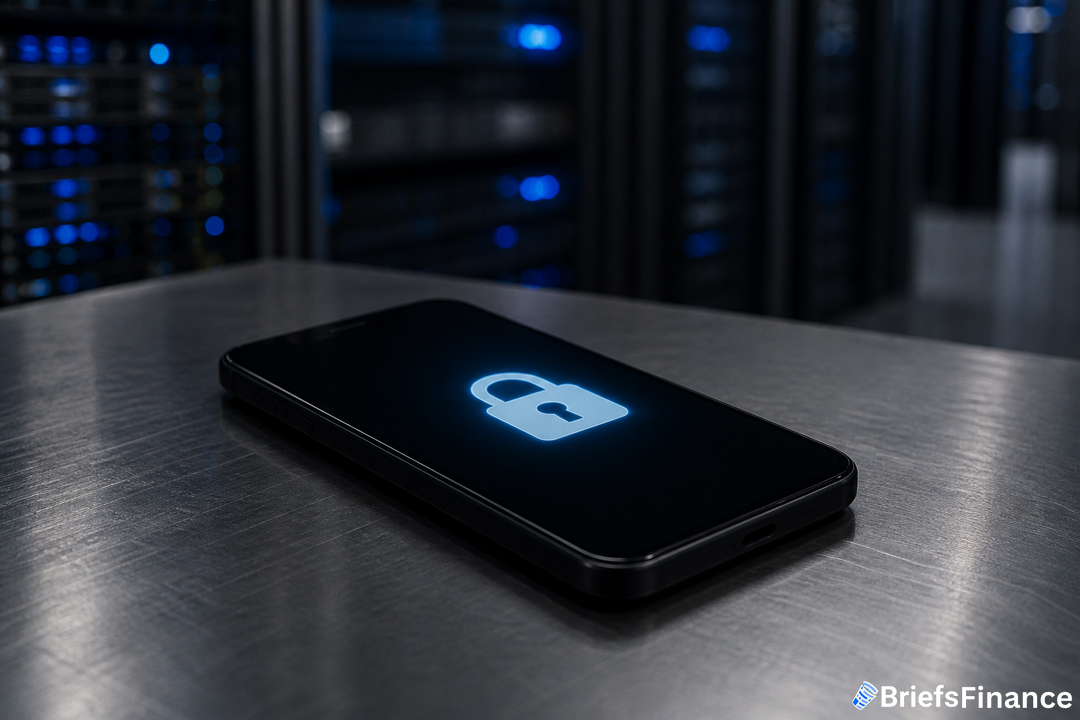
A secure device that mixes phone convenience with hardware wallet safeguards
Ledger is stepping beyond its core hardware-wallet niche with Atom, a smartphone-style device aimed at people and companies that already keep a separate handset for sensitive work. It lets users handle regular Android apps while shifting sensitive actions into a sealed environment for crypto, encrypted messaging and AI agent control.
The pitch: start and approve transactions on one device without losing the protections that made hardware wallets popular. Under the hood, Atom runs two systems - an open-source Android build for day-to-day apps, and Ledger OS on a secure chip for high-stakes tasks - and it can switch modes automatically.
People using Atom can move crypto in both directions and tap services from select third parties, with Kraken cited as an example for transacting against holdings. The device can also manage AI agents via OpenClaw. Users can encrypt messages before routing them through the messaging app they prefer. Ledger says it cannot view plaintext, and recipients can decrypt and read messages using another Atom in secure mode.
What happened in the recent reseller incident
Ledger's move comes after losses reported by customers who bought some devices from a Malaysian reseller. The incident was first disclosed on Oct. 9, and research by Galaxy Digital Inc. estimated total theft at above $90 million spread over hundreds of cryptocurrency addresses. Ledger has not confirmed the tally or user count.
An investigation published on Thursday found attackers purchased genuine units, added concealed spyware implants meant to grab users' passwords, then pushed them back into circulation through resellers in Southeast Asia. The company said its own systems and its devices were not breached.
When technology and money intersect, stay informed with the free Market Briefs newsletter that explains markets and crypto in minutes.
New anti-tamper protections and how Atom is different
Ledger says Atom will add physical tamper defenses that can spot if the casing around the secure element has been breached or if the display was removed. Those checks keep running even when the device is powered off. According to the company, these defenses are designed to prevent the same type of spyware implants that users discovered earlier this month.
Hardware wallets isolate private keys from internet-connected gadgets, boosting safety but adding friction when you need to move funds. Atom is Ledger's attempt to cut that hassle while preserving a strong security boundary.
The business bet: security phones, tokenization and AI identity
CEO Pascal Gauthier says the addressable market here is far bigger than traditional hardware wallets, with roughly 200 million security phones sold each year. He added, "It's not trying to replace your iPhone." On the limits of safety, he noted, "Perfect security doesn't exist," and, "It's a reminder that the fight between good and evil never stops. We're not taking it lightly."
Ledger also sees tailwinds from tokenization as more assets land on blockchains and from AI as people lean on autonomous agents. As Gauthier put it, "How do you prove tomorrow, in a world of AI, that you online is actually you?"
When you can buy it and why it matters for your money
Atom will cost $899 and is slated to go on sale next summer. It signals Ledger's shift from a single-purpose device to a broader security platform that can live with your everyday apps.
If you hold crypto or plan to interact with tokenized assets or AI agents, a purpose-built secure device could change your workflow and risk exposure. The bigger question is market fit at $899 and whether a security-first phone becomes a standard sidekick rather than a niche tool.
Given how quickly tools change, get a concise daily digest from Market Briefs to understand the economy, markets and crypto fast.