What Actually Got Stolen
When you file your taxes, you hand the government a map of your financial life. Your income, your home address, and your real estate sit in one file. In France, a lot of those files just got pulled.
The attack hit the tax agency during the summer months, based on an earlier government statement. It grabbed records on roughly 350,000 people and 250,000 businesses, and the stolen details included taxable income, tax withholding rates, property addresses, and the size of real estate holdings. That is not just a list of names. It is a tool for someone who wants a picture of your money.
The hacker, who calls themselves ZeroBytes, said they gained access through a remote connection point used by employees working from outside the office. Once inside, they reached an internal search tool that tax workers use to look up taxpayer records. A person claiming to be part of the attack also told Bloomberg that some of the data has already been sold. The authorities in France say a legal investigation is underway.
The Political Fallout
A breach this sensitive was always going to become a political fight. Prime Minister Sebastien Lecornu called an emergency meeting on Monday, August 18, 2026, and told officials to alert victims without delay. Many individual notices have already gone out, and company notifications are expected in the following week, according to budget minister David Amiel.
French lawmakers from the Socialist party are asking for a parliamentary investigation. Right-wing presidential candidate Bruno Retailleau wrote, in Friday's post, that the country is the second most affected nation by cyberattacks in the world, and "the government still hasn't done anything to protect us."
Rates, prices and policy all end up in your budget eventually. Get the free Market Briefs daily newsletter and see it coming.
The Government's Plan: More AI, Better Locks
"In the race against hackers, the state cannot slow down," Amiel said in Paris on Tuesday. Those are not just words. The tax office plans to use AI to probe for weaknesses and spot the next breach before it starts.
At the same time, ANSSI, France's National Cybersecurity Agency, will do a detailed audit to figure out exactly how the attack happened. Stéphane Bajard, ANSSI's deputy chief, says these types of intrusions are less complex and cheaper than old-style ransomware holds. So they are spreading faster than the usual expensive cyber-attacks.
ANSSI's own numbers show data-exfiltration incidents increased 50% in one year in 2025.
This is not the first time the same office has been compromised, either. The National Bank Account Registry, which is also run by the tax authority, was affected in February, and several other French public services were hit in 2026. From a security standpoint, the trend line is clear.
What This Means for Your Data
The real problem with a tax breach is not the headline.
It is that a tax file is something you cannot "cancel and re-issue. You cannot change your income history. You cannot change your address. You can argue about a credit card number, but you cannot reset what you earned and what you owe.
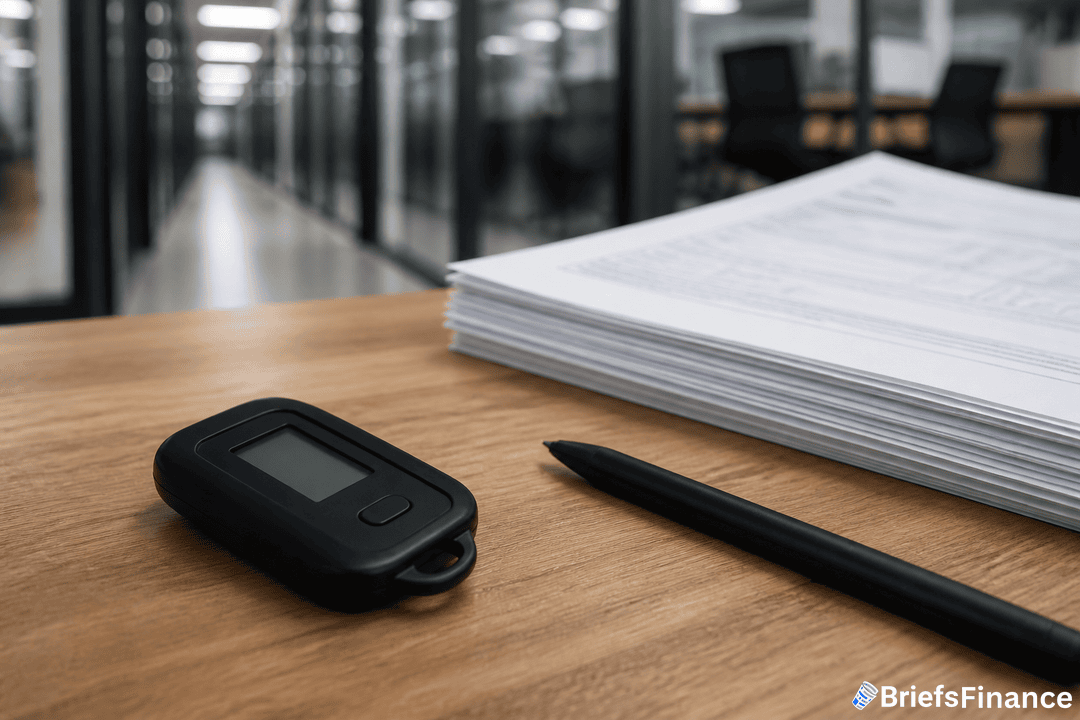
The French government is adopting additional checks: all tax employees with access to data will get USB tokens for two-step authentication by the end of the year. That's a genuine improvement, since it makes a single stolen password useless. But it doesn't return the records that are already in it.
From the individual point of view, this is a reminder that the most personal information is exactly what has to be protected. A hack like this is not one brief moment. It is a call to treat your own financial files like the crown they are.
Once a copy is out there, some information is never discount. That's the real cost of a leak.
The best financial decisions come from understanding the whole picture. Join Market Briefs free and get the full brief each morning.