Free NewsletterPro Login

Warning: Undefined variable $stocks in /var/www/briefs.co/htdocs/wp-content/plugins/oxygen/component-framework/components/classes/code-block.class.php(133) : eval()'d code on line 448

Warning: foreach() argument must be of type array|object, null given in /var/www/briefs.co/htdocs/wp-content/plugins/oxygen/component-framework/components/classes/code-block.class.php(133) : eval()'d code on line 448

Warning: Undefined variable $funds in /var/www/briefs.co/htdocs/wp-content/plugins/oxygen/component-framework/components/classes/code-block.class.php(133) : eval()'d code on line 472

Warning: foreach() argument must be of type array|object, null given in /var/www/briefs.co/htdocs/wp-content/plugins/oxygen/component-framework/components/classes/code-block.class.php(133) : eval()'d code on line 472
/* the link was here */
×
Free investor livestream — Nov 17

How To Use ChatGPT & Claude To Research Stocks Like A Pro

01
The prompt we use to break down any stock
02
How to fact-check what AI tells you
03
How to compare two stocks in minutes

South Africa plots cash-utility and shared ATMs to cut costs, widen access

Published Oct 16, 2026
Share:
Summary:
  • The South African Reserve Bank wants to set up a cash-utility framework by March next year, including governance and directors, to tighten control of cash circulation and enable neutral-branded ATMs.
  • Plans include shifting SARB and industry cash centers into the new utility starting next year, with owners to be compensated or offered shares; the network could shrink from about 109 sites to roughly 40 to 50.
  • The SARB aims to lift digital use from around one transaction per person per month to 15, and boost PayShap volumes to 500 million a month by 2029 from about 60 million.

What is changing

The central bank wants to push the creation of a cash utility by March next year, complete with its governance setup and appointed directors. That timeline comes from Pradeep Maharaj, executive director for the central bank's Payments Ecosystem Modernization Programme, who said, "By March next year, we want to drive the establishment of the cash utility."

Alongside the new structure, the bank plans tighter oversight of how cash moves and aims to use unbranded, shared ATMs to lower costs and improve reach.

Overhauling the cash network

South Africa runs about 109 facilities that store, sort and distribute banknotes and coins, but Maharaj said the country likely needs only around 40 to 50. Beginning next year, the new utility would absorb cash centers run by the SARB as well as those managed by industry participants.

Where assets move into the new entity, the bank will either pay for them or give the affected firms equity in the utility. It also plans to study optimal ATM placement and which operating models to adopt.

White-label ATMs and services

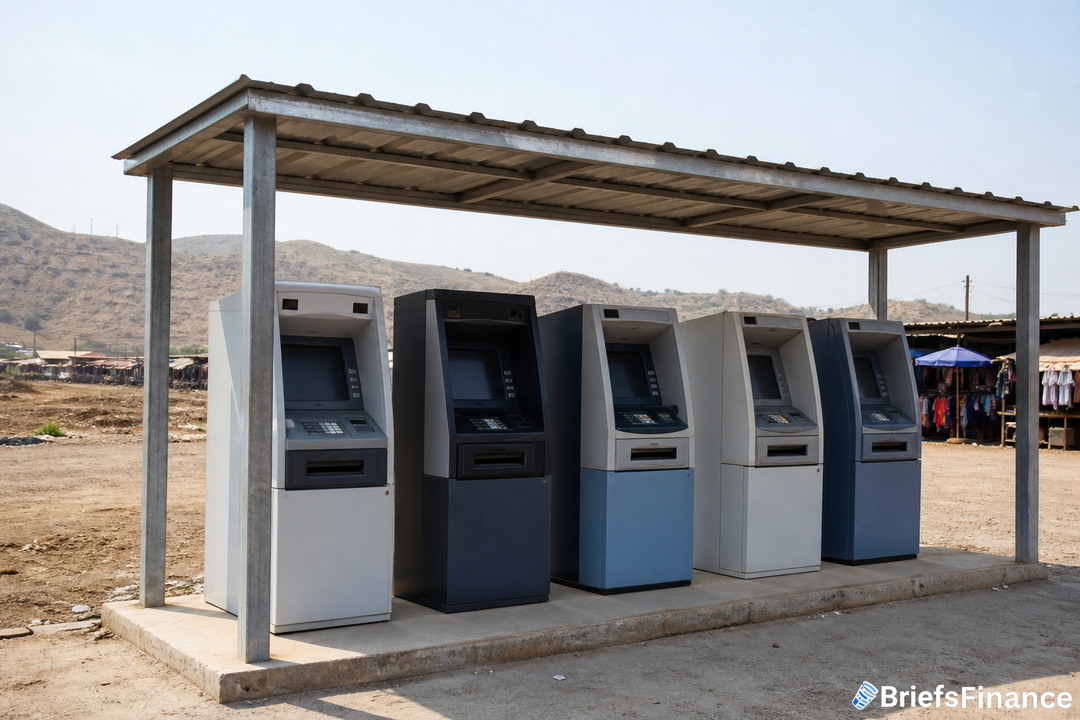
By next year, the SARB intends to wrap up the white-label ATM program so that implementation can commence in 2028. Discussions with lenders are underway to repurpose some of their machines as neutral-branded devices usable by customers from multiple banks. A meeting between the stakeholders is scheduled for next month to finalize the proposals.

Those ATMs will need to support account inquiries, cash withdrawals and deposits, with some functions offered at no charge. Africa's largest economy has roughly 30,000 ATMs today, many beyond the reach of lower income and rural users who have fewer digital options and often face fees up to five times higher than urban customers.

When cash and payments evolve, it helps to stay informed; sign up for the free Market Briefs to get concise daily context

Cash, costs and the push to digitize

Physical currency in circulation totals about 180 billion rand, roughly 11 billion dollars, and cash still accounts for around 56 percent of consumer payments by count. Handling, transporting and protecting that money costs almost 90 billion rand each year, a burden borne by consumers. The central bank says the planned reforms will likely be the largest revamp of cash handling since ATMs arrived more than four decades ago.

To shift more activity to faster payments, the SARB wants to raise average usage to 15 payments per person per month from about one. For context, Brazil, India and Thailand see around 25 to 26 fast payments per person per month. The plan leans on PayShap, a real time platform it owns with commercial lenders, with steps such as a consistent user experience and opening access to non-banks.

The goal is to reach a monthly run rate of 500 million transactions on PayShap by 2029, up from roughly 60 million. "We want to measure that, and see how we progress in the digitization work that we are doing," Maharaj said. "It's no use building very fancy infrastructure and nobody uses it."

What this means for your portfolio: if executed, a cash utility could trim the cost of cash while shared ATMs and faster payments reshape fee pools. Watch banks, ATM operators, cash logistics firms and real time payment rails as plans move toward implementation.

If you want a quick read on policy, banking and cash access, subscribe to the free Market Briefs newsletter for five-minute updates

Disclosure

Recent News

1 2 3 … 125

Get Market Briefs delivered to your inbox every morning for free!

No fluff. No noise. No politics. Just finance news you can read in 5 minutes.

Blogs

November 3, 2026
How to Budget Every Payday: 5 Moves So You Never Worry About Money
  • A median earner could make about $4.7 million over a career, yet most retire with closer to $13,000 in the bank because of a keeping problem, not an income problem.
  • Audit your money, save $2,000, pay off credit card debt, then automate a 75/15/10 split across three bank accounts.
  • Earn more only after your system is in place, then protect what you build with an accountant, attorneys, the right insurance, and an estate plan.
Read More
November 3, 2026
How to Invest in Stocks: 5 Things to Do Before You Invest Your First Dollar
  • Paying off credit card debt at around 22% interest beats the stock market's roughly 10% average, and even Warren Buffett's 19%.
  • Save $2,000 in a separate emergency fund, learn to research with AI, and decide whether you're a growth, income, or wealth preservation investor.
  • Write down a plan for buying during market crashes, which have happened 25 times in the last 100 years.
Read More
November 3, 2026
Best ETFs to Buy: 5 Three-ETF Portfolios for Every Investing Goal
  • An ETF is a basket of stocks, so one purchase spreads your money across many companies instead of riding on just one.
  • Jaspreet Singh laid out five portfolios of three ETFs each, built for kids, cash flow, growth, slow and steady growth, and protection from a weaker dollar.
  • Based on 10-year average returns, $500 a month could grow to between about $660,000 and $3.1 million over 30 years, though past returns never guarantee future ones.
Read More
November 3, 2026
Best Investments of a Generation: 5 Market Shifts Backed by Your Tax Dollars
  • Private companies are about to spend $1 trillion a year on AI, and the Trump administration is putting tax dollars behind the same industries.
  • The five shifts are AI and its supply chain, robotics, rare earths, energy, and defense.
  • Each comes with real risk, from an AI bubble to wars ending or a new Congress, so these are ideas to research, not sure things.
Read More
November 3, 2026
How to Get Ahead Financially: 10 Moves to Make While Everyone Else Falls Behind
  • Learning a high-income AI skill, or building AI tools for tradespeople, can raise your earning power in a tough job market.
  • Higher interest rates, the 2025 tax cuts, Trump accounts, and stacked cash back can put more money back in your pocket.
  • Following where government money is moving, keeping cash ready for market crashes, and investing in your own education can speed up your wealth.
Read More
November 3, 2026
National Debt at $40 Trillion: Why Inflation Is the Hidden Tax, and Who Profits From It
  • Time magazine asked President Trump how he'd tackle the $40 trillion national debt, and he suggested inflation could help pay it off, a cost that lands on everyday Americans.
  • From 1971 to 2025, cars, houses, and college outpaced both inflation and incomes, while the S&P 500 grew more than 33,000% with dividends reinvested.
  • The U.S. can default, inflate, or outgrow its debt, and history shows each path rewards different assets.
Read More
November 3, 2026
FOMC Meeting: Why the Fed Is Getting Nervous, and Why AI Stocks Feel It
  • At its latest meeting, the Fed held rates steady but warned it may raise them again, because inflation is running near 3.5% against a 2% target.
  • Oil prices, tariffs, AI's hunger for energy, and government spending are all pushing prices higher, and gold, silver, and bitcoin fell on the Fed's news.
  • Chinese AI stocks are down about 40% in a few months and Google fell more than 10% in a day, raising fears that higher rates could pop an AI bubble.
Read More
November 3, 2026
Midterm Elections: Where the Money Could Move if Republicans or Democrats Win
  • The U.S. government spent about $7.5 trillion last year, and the midterm elections could change which industries get more of that money.
  • A Republican win could favor manufacturing, fossil fuels, banks, and defense.
  • A Democratic win could favor healthcare, weight-loss drugs, clean energy, and infrastructure.
Read More
November 3, 2026
Brazil Stock Market Crash: Why Lula's Win Matters to U.S. Investors
  • Brazil's stock market fell more than 20% in a few days, and its currency dropped 8%, after Lula won a presidential election investors expected him to lose.
  • The shock reaches U.S. investors through coffee and beef prices, the BRICS push away from the dollar, and a market that had become an investor favorite.
  • The last time Lula first won, in 2002, Brazil's stock market fell more than 20% and then grew 12x by 2008, though nobody knows if that will repeat.
Read More
November 2, 2026
Credit Utilization: How Paying Down Cards Can Help Your Score
  • Credit utilization is your card balances divided by your credit limits, checked overall and card by card.
  • Lower is generally better, and Experian says the effect becomes more noticeable around 30%.
  • Paying down balances and keeping new charges off your cards are the main ways to lower it.
Read More
1 2 3 … 32
Share via
Copy link