What Tehran is signaling
Iran says it has reinforced its defenses in case US attacks resume. "Today, we possess a much higher level of defensive capability than during the war, and even before it began," Army spokesman Mohammad Akraminia told the semi-official Iranian Students' News Agency.
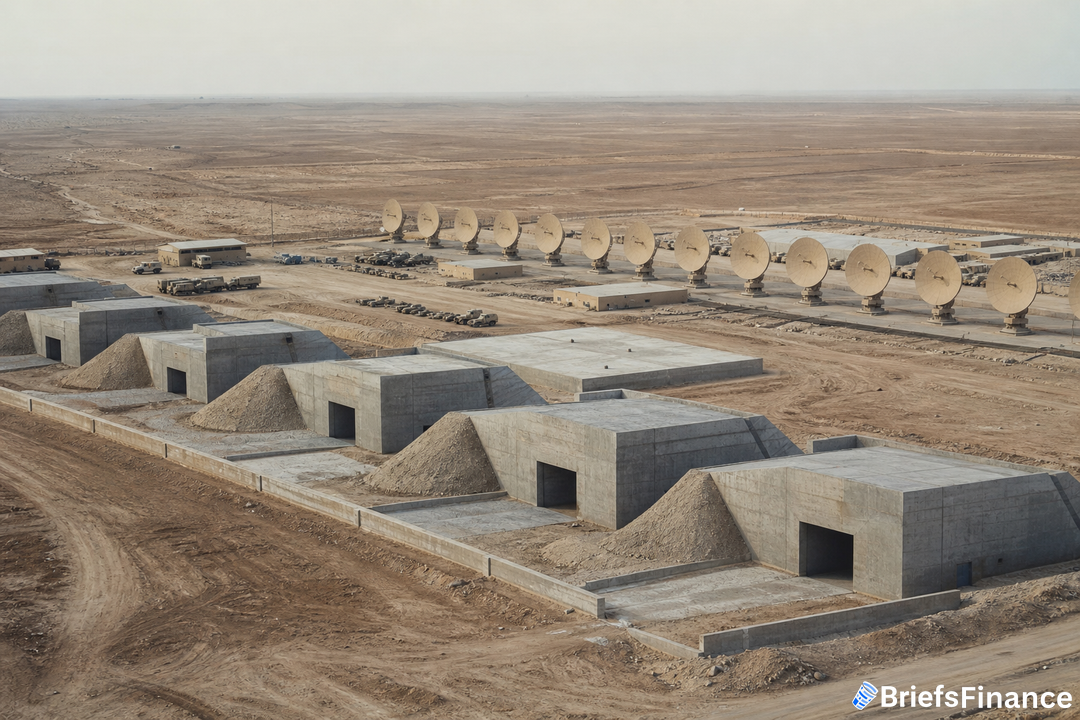
He said the army has repaired a "significant portion" of equipment damaged during the war and acquired "new equipment" to extend air-defense coverage. The Islamic Revolutionary Guard Corps has joined the army in drills using the new gear and practicing "combined and innovative operations," he added, without naming specific systems.
These remarks came after a Thursday Newsmax interview where US President Donald Trump would not exclude employing the weapon nicknamed the "Mother of all Bombs" against Iran after the midterms.
The military chessboard at sea and on land
Mahdi Mohammadi, an aide to lead negotiator Mohammad Bagher Ghalibaf, wrote Friday on Telegram that "All sources we consult to gauge the enemy's intent agree that a threat is imminent," adding, "There is complete consensus on this point across our analytical apparatus." He also said that if Trump "wants to declare victory, he will likely have to target Iran's nuclear program," and argued Iran is prepared regardless of the eventual target.
Tehran has also cautioned it might hit US ships implementing a blockade on its southern harbors. Akraminia stated that US naval vessels have already pulled back to beyond 500 kilometers (311 miles) off Iran's shoreline, cautioning they will be driven even farther back in the coming days. He outlined the split in duties: the IRGC patrols the Strait of Hormuz's western side, while the regular navy manages the eastern stretch toward the northern Indian Ocean.
When global developments make you want clear context, sign up for the free Market Briefs to get concise daily insights
Last week, Admiral Brad Cooper, commander of US Central Command, said the military "remains intensely focused" on carrying out the blockade.
Air war scorecard so far
The US said it had "local air superiority" over Iran as early as March, yet a Congressional Research Service report released last month counted at least 81 US aircraft, including drones, lost or damaged during the fighting.
Both aviators survived and were subsequently recovered by US forces. As recently as September, Washington was still striking Iranian air-defense installations and radar assets. Tehran's assertion that it has rebuilt its air defenses may create additional hazards for Washington as it considers resuming airstrikes.
The weapons in play and the investor angle
Trump had earlier said he would not strike Iran before the Nov. 3 elections that determine control of Congress. In Thursday's interview, when asked about employing the so-called "Mother of all Bombs," he discussed possible action after the vote. That label denotes the GBU-43/B Massive Ordnance Air Blast Bomb, which is a thermobaric weapon. In Israel's June 2025 war against Iran, the US released over a dozen GBU-57 Massive Ordnance Penetrator bunker-buster bombs on Iranian nuclear facilities.
Why it matters: more hardware in the Gulf plus stalled talks keeps geopolitical risk elevated and energy volatility sticky. If tensions spill into trade lanes, shipping and insurance costs usually jump first, with crude and freight-linked stocks moving next. The bottom line: policy risk sits alongside supply and demand in any bet tied to oil and maritime trade.
Because headlines can feel overwhelming, sign up for the free Market Briefs newsletter that summarizes economy, markets and crypto in minutes