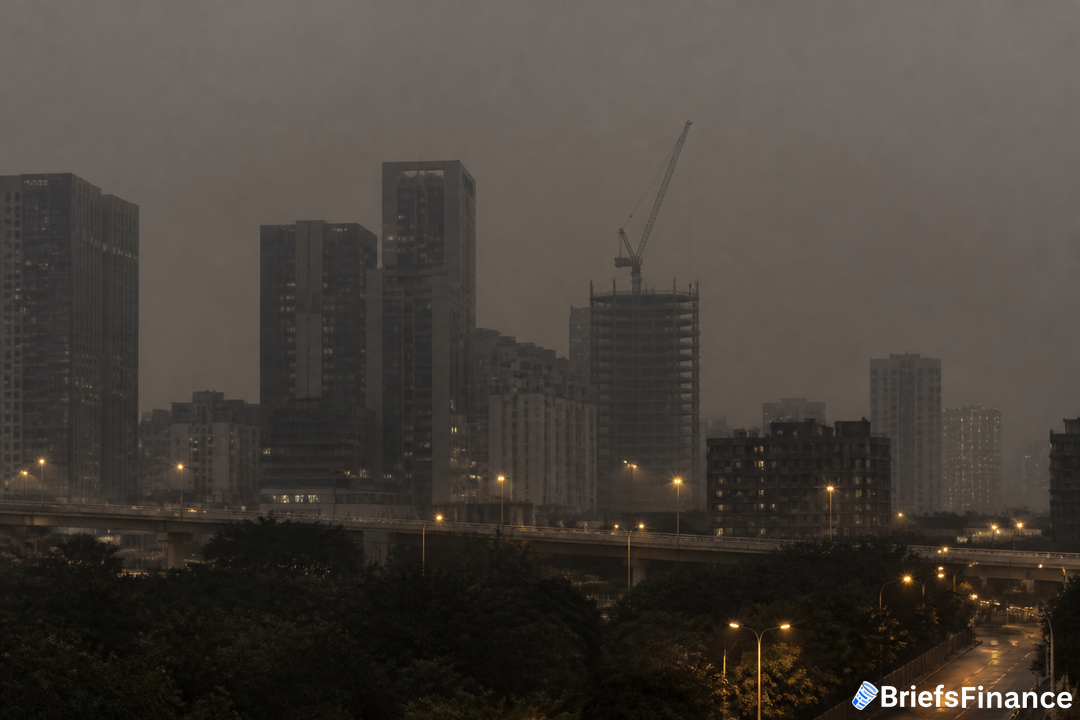
What MSCI signaled and how markets reacted
MSCI said on Thursday it expects to drop Indonesia from its global indexes unless there are major fixes to market governance. The index provider said it will decide by June 30 and could issue updates during the consultation period. The review was moved up from next month.
The announcement triggered Indonesia's sharpest stock selloff since the Asian Financial Crisis in 1998. The benchmark index fell 12% on Friday, as the $565 billion market contends with almost $5 billion of year-to-date outflows through mid October and the tag of worst performing market for 2026.
Why governance is the sticking point
After months of public and private prodding on market manipulation and disclosure, MSCI told Indonesian counterparts in recent weeks that fixes were still lacking, according to people familiar with the talks. In conversations over the past two months, the firm warned that "bad actors" could gravitate back to larger stocks and questioned whether recent efforts were sufficient, the people said.
According to an MSCI official speaking to Danantara, although some disclosures have gotten better, investors remain skeptical that transparency overhauls suffice. The executive said the concerns relate to behavior like front running and coordinated trading, and that regulators need robust surveillance tools and meaningful deterrents such as fines or debarments, according to the people. MSCI solicited feedback from asset managers and brokerage firms and held meetings with Danantara's leadership.
Flashpoints: stock inclusions, liquidity, and enforcement
Complaints piled up after MSCI added two large Indonesian names in the second half of 2025. After its August move to add Dian Swastatika, the company's market capitalization was about $30 billion at the time and later climbed to as high as $53 billion, around 100 times its prior year profits. UBS traders struggled to find available stock, and peers elsewhere - among them JPMorgan Asset Management - said they faced comparable challenges. MSCI later cut Dian Swastatika's index weight by changing its free float calculation.
Investors also flagged trading constraints in Barito Renewables, which was Indonesia's most valuable listed company at the start of 2025 with a market value of roughly $90 billion. The Indonesia Stock Exchange later determined that more than 97% of the shares were in the hands of entities connected to the controlling owner.
When governance questions reshape investment outlooks, turn to the free Market Briefs newsletter for a clear five-minute daily summary
Authorities stepped in on Friday. Following a probe into share-price manipulation, the Financial Services Authority took action by levying penalties of 1.5 trillion rupiah, or $83 million, on entities associated with Dian Swastatika, and by imposing a separate 500 billion rupiah fine on entities linked to Barito Renewables. Seeking to demonstrate a response, President Prabowo Subianto was scheduled Friday to confer on MSCI with senior officials - among them key ministers - and Danantara's management, according to a person familiar, who also described a jittery mood with worries the fallout could reach senior ranks.
What the downgrade path looks like and why it matters to your portfolio
Passive vehicles that track MSCI indexes and hold billions of dollars in Indonesian stocks would have to sell.
Indonesia's government has been seeking to rebuild confidence, including by engaging with MSCI. In late September in New York, Danantara Chief Investment Officer Pandu Sjahrir met MSCI Chief Executive Officer Henry Fernandez, according to people familiar. When asked Friday, Indonesia's Government Communication Agency pointed to a statement from the Financial Services Authority, which stated it is carefully reviewing MSCI's assessment and the areas that need additional refinement. An MSCI spokesperson declined further comment, and representatives for Danantara did not respond to a request for comment.
The bottom line: index decisions can move real money. Based in London with RBC Global Asset Management, Veronique Erb serves as an emerging markets portfolio manager and said, "It matters disproportionately to Indonesia if it gets downgraded because they historically have been so dependent on foreign portfolio flows." "Foreign investors are in no rush to get back into Indonesia," she added, noting Indonesia already has a low index weight and "you don't have to be in Indonesia."
To follow potential index changes and what they mean without the noise, subscribe to the free Market Briefs newsletter for five-minute updates