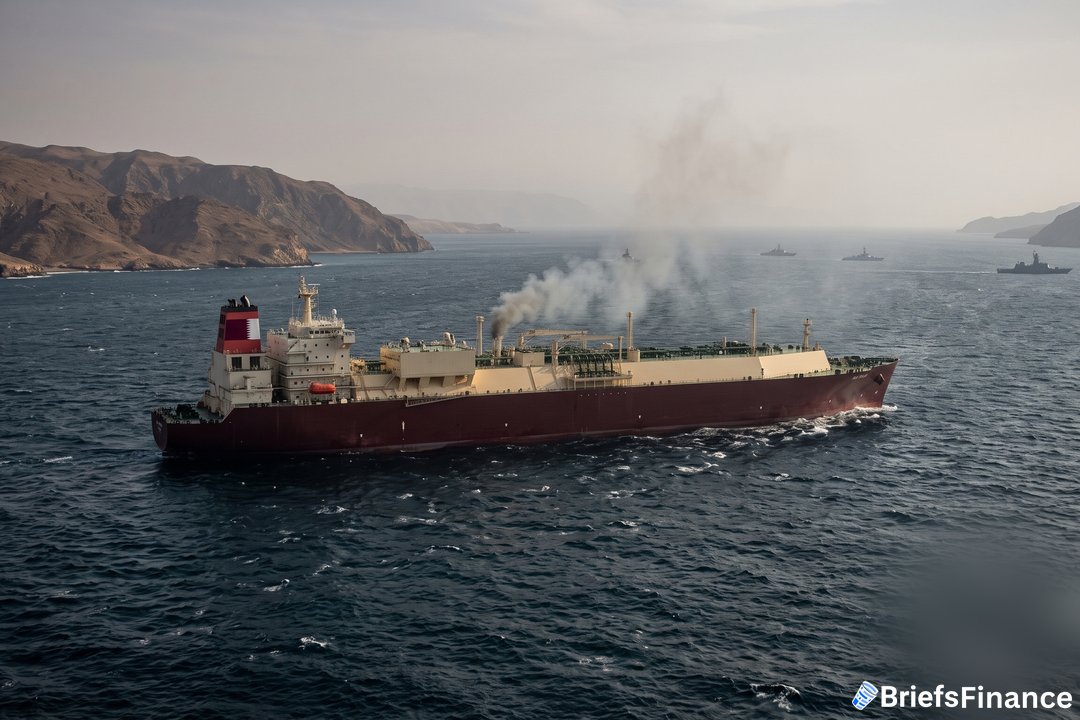
Qatar was the go‑between for the US and Iran. Now its own ship has been hit. On July 7, a Qatari LNG tanker was attacked near the Strait of Hormuz. The attack puts Qatar's role as a mediator in serious danger.
The Attack and Its Immediate Impact
The Qatari tanker Al Rekayyat was hit in a location where a Saudi Arabian oil tanker had also sustained damage. British naval forces noted an additional strike in the vicinity. Iran has not claimed responsibility, but it has used drones and missiles against ships during the conflict. Iran has said that all ships must ask for permission before passing through the Strait of Hormuz.
Since the wider regional hostilities erupted in February 2026, no Qatari LNG carrier had been struck until now. LNG, or liquefied natural gas, is natural gas cooled into a liquid so it can be shipped by sea. Qatar is one of the world's biggest exporters of LNG. The attack threatens the flow of energy through a critical waterway.
Why Qatar's Role Is at Risk
Qatar agreed to mediate between the US and Iran in May 2026. That effort produced a temporary peace pact in June. The deal set a 60‑day period for negotiations on bigger issues like Iran's nuclear program and free passage through the Strait of Hormuz. But the attack on the Qatari tanker shows that Iran may not respect the agreement.
Get your free investing masterclass bonus when you join Market Briefs, our free daily newsletter
Andreas Krieg, director of MENA Analytica Ltd and a faculty member at King's College London, said, referring to the interim peace deal, "the attack on the LNG tanker will prompt Qatar to reconsider its role as mediator, since it is now clear that Iran does not respect its boundaries or the MOU framework agreement." He added that Qatar has "absorbed extensive hits during its various mediations" "and "it has made very clear to the Iranians that it will not tolerate anything like this unprecedented attack on Qatar's LNG shipping"." Krieg described Iran's approach as "incoherent" and said the IRGC navy in particular "may be pursuing its own interests, while other parts of the government and the IRGC remain committed to negotiation."
Qatar's diplomatic authorities called on Iran to cease threatening global energy shipments "in pursuit of narrow interests."
What Could Happen Next
If Qatar steps back from mediation, talks between the US and Iran could slow down or stop. The US may respond with military strikes.
Dina Esfandiary, an analyst at Bloomberg Economics, said "The US may once again hit Iranian military targets in retaliation for these attacks, believing it will deter Iran from further or more escalatory action. "Instead, we're likely to see a continuation of tit-for-tat strikes and skirmishing in the strait. This will stop short of a return to full-scale war for now - but it will do little to help talks advance"." The 60‑day negotiating period may need to be extended because major issues remain unresolved.
What to Watch
The key question is whether Qatar will pull out of mediation and whether the US will retaliate, but for now the peace process hangs in the balance.
Subscribe to Market Briefs, our free daily newsletter, and claim your bonus investing masterclass