Free NewsletterPro Login
S&P 500 6,287 +0.42%
DOW 44,521 -0.18%
NASDAQ 21,103 +0.71%
S&P 500 +12.4%
Briefs Finance Fund +24.8%
JOIN THE FUND →

Attack on Qatari LNG Ship Threatens US-Iran Peace Talks

Published Jul 8, 2026
[tts_player]
Share:
Summary:
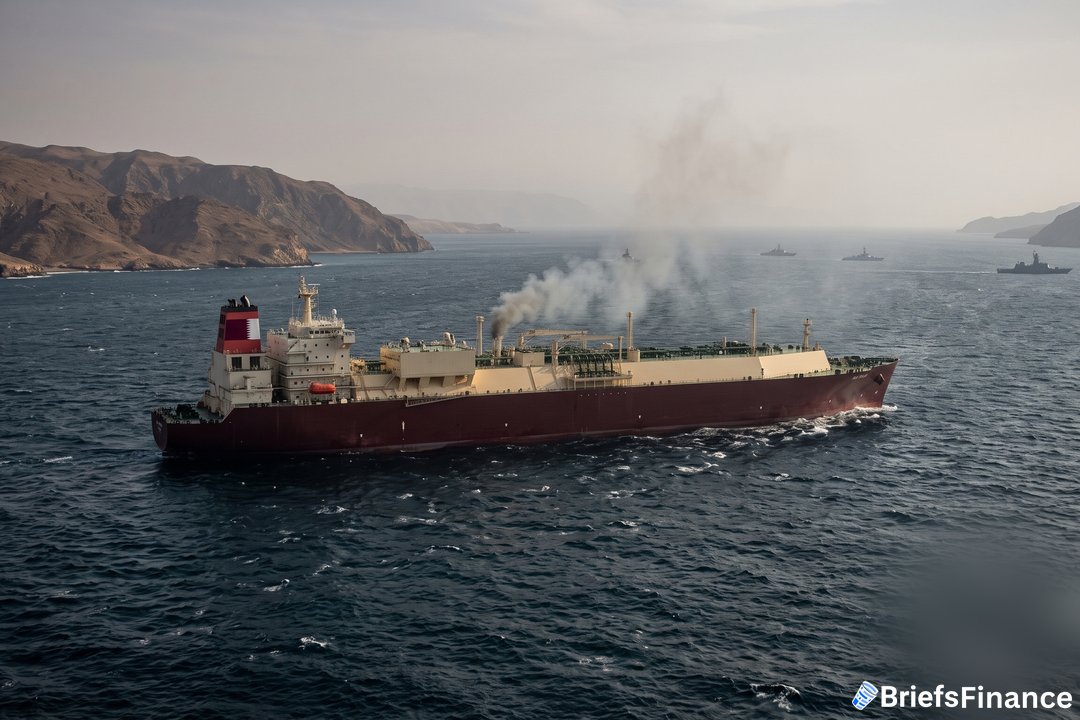
  • On July 7, 2026, the Qatari LNG tanker Al Rekayyat was targeted near the Strait of Hormuz.
  • Qatar had been mediating between the US and Iran since May 2026, resulting in a temporary peace agreement in mid-June.
  • The assault may push Qatar to abandon its mediating role, potentially requiring an extension of the negotiation timeline.

Qatar was the go‑between for the US and Iran. Now its own ship has been hit. On July 7, a Qatari LNG tanker was attacked near the Strait of Hormuz. The attack puts Qatar's role as a mediator in serious danger.

The Attack and Its Immediate Impact

The Qatari tanker Al Rekayyat was hit in a location where a Saudi Arabian oil tanker had also sustained damage. British naval forces noted an additional strike in the vicinity. Iran has not claimed responsibility, but it has used drones and missiles against ships during the conflict. Iran has said that all ships must ask for permission before passing through the Strait of Hormuz.

Since the wider regional hostilities erupted in February 2026, no Qatari LNG carrier had been struck until now. LNG, or liquefied natural gas, is natural gas cooled into a liquid so it can be shipped by sea. Qatar is one of the world's biggest exporters of LNG. The attack threatens the flow of energy through a critical waterway.

Why Qatar's Role Is at Risk

Qatar agreed to mediate between the US and Iran in May 2026. That effort produced a temporary peace pact in June. The deal set a 60‑day period for negotiations on bigger issues like Iran's nuclear program and free passage through the Strait of Hormuz. But the attack on the Qatari tanker shows that Iran may not respect the agreement.

Get your free investing masterclass bonus when you join Market Briefs, our free daily newsletter

Andreas Krieg, director of MENA Analytica Ltd and a faculty member at King's College London, said, referring to the interim peace deal, "the attack on the LNG tanker will prompt Qatar to reconsider its role as mediator, since it is now clear that Iran does not respect its boundaries or the MOU framework agreement." He added that Qatar has "absorbed extensive hits during its various mediations" "and "it has made very clear to the Iranians that it will not tolerate anything like this unprecedented attack on Qatar's LNG shipping"." Krieg described Iran's approach as "incoherent" and said the IRGC navy in particular "may be pursuing its own interests, while other parts of the government and the IRGC remain committed to negotiation."

Qatar's diplomatic authorities called on Iran to cease threatening global energy shipments "in pursuit of narrow interests."

What Could Happen Next

If Qatar steps back from mediation, talks between the US and Iran could slow down or stop. The US may respond with military strikes.

Dina Esfandiary, an analyst at Bloomberg Economics, said "The US may once again hit Iranian military targets in retaliation for these attacks, believing it will deter Iran from further or more escalatory action. "Instead, we're likely to see a continuation of tit-for-tat strikes and skirmishing in the strait. This will stop short of a return to full-scale war for now - but it will do little to help talks advance"." The 60‑day negotiating period may need to be extended because major issues remain unresolved.

What to Watch

The key question is whether Qatar will pull out of mediation and whether the US will retaliate, but for now the peace process hangs in the balance.

Subscribe to Market Briefs, our free daily newsletter, and claim your bonus investing masterclass

Disclosure

Recent News

1 2 3 33

Get Market Briefs delivered to your inbox every morning for free!

No fluff. No noise. No politics. Just finance news you can read in 5 minutes.

Blogs

June 29, 2026
Portfolio Diversification: Why Putting All Your Eggs in One Basket Destroys Wealth
  • Real diversification means spreading investments across all 11 economic sectors plus bonds, alternatives, and cash so no single bet can sink the portfolio.
  • Different sectors perform at different times, so a diversified portfolio captures upswings while smoothing the brutal drawdowns that wipe out concentrated bets.
  • Total market index funds offer the simplest path to diversification, and annual rebalancing is what keeps the structure working over time.
Read More
June 29, 2026
Non Taxable Income: What It Is and Why It Matters
  • Non taxable income is money you receive that you don't owe income tax on.
  • The tax code treats workers, investors, and business owners very differently, and investors often come out ahead.
  • Learning how income is taxed is a quiet superpower for keeping more of what you earn.
Read More
June 29, 2026
Semiconductor Stocks: A Simple Guide for Investors
  • Semiconductor stocks are companies that design and make computer chips, the brains inside nearly every modern device.
  • The AI boom has turned chips into one of the market's most important and most watched groups.
  • They offer big growth potential, but come with high valuations and a notoriously cyclical history.
Read More
June 25, 2026
How Stocks Work: A Simple Guide for Beginners
  • A stock is a slice of ownership in a company - buy one, and you own a piece of the business.
  • You make money two ways: the share price rising over time, and dividends paid to shareholders.
  • The simplest path for most beginners is buying into the whole market through a low-cost index fund.
Read More
June 25, 2026
Stop Loss vs Stop Limit: What's the Difference?
  • A stop loss order sells your stock once it hits a trigger price, prioritizing getting you out.
  • A stop limit order only sells within a price range you set, prioritizing price over a guaranteed exit.
  • The trade-off: a stop loss almost always executes; a stop limit might not if the price moves too fast.
Read More
June 25, 2026
Energy Stocks: A Simple Guide for Investors
  • Energy stocks are companies that produce and supply the power the world runs on, from oil and gas to newer sources.
  • They make up one of the 11 sectors of the market and tend to move with energy prices and big-picture shifts.
  • Like any sector, the key is diversification and understanding the forces driving demand.
Read More
June 18, 2026
What Is a Stop Loss Order? A Simple Guide
  • A stop loss order automatically sells a stock once it falls to a price you set.
  • It's a tool to cap losses or lock in gains without watching the market all day.
  • It works best for active strategies, and can backfire if used carelessly on long-term holdings.
Read More
June 18, 2026
Best S&P 500 Index Fund: How to Choose One
  • The best S&P 500 index fund for most investors is simply the cheapest, most established one that tracks the index well.
  • Funds like VOO, IVV, and SPY all hold the same 500 companies, so the biggest difference is the fee.
  • Pick one, automate your buys, and let time do the heavy lifting.
Read More
June 17, 2026
What Are Penny Stocks? Risks and Rewards Explained
  • Penny stocks are very low-priced shares of very small companies, often trading for just a few dollars or less.
  • They promise huge gains but carry huge risks: low liquidity, high failure rates, and wild price swings.
  • Most investors are better served by quality companies and funds than by chasing cheap shares.
Read More
June 17, 2026
Best Stocks for Beginners With Little Money
  • The best stocks for beginners with little money usually aren't individual stocks at all - they're low-cost index funds.
  • You can start with $100 or less and use small, regular investments to build wealth over time.
  • Focus on diversification and consistency, not on picking the next big winner.
Read More
1 2 3 24
Share via
Copy link










