Chile's biggest lithium producer wants to boost output by more than 70%. But getting to 470,000 metric tons will take more than a decade and a pile of cash.
That jump alone is big.
The Plan and the Price Tag
The joint venture - called Novandino - is owned by SQM, a private Chilean miner, and Codelco, the state-owned mining giant. Together they plan to spend $3 billion to overhaul their operations.
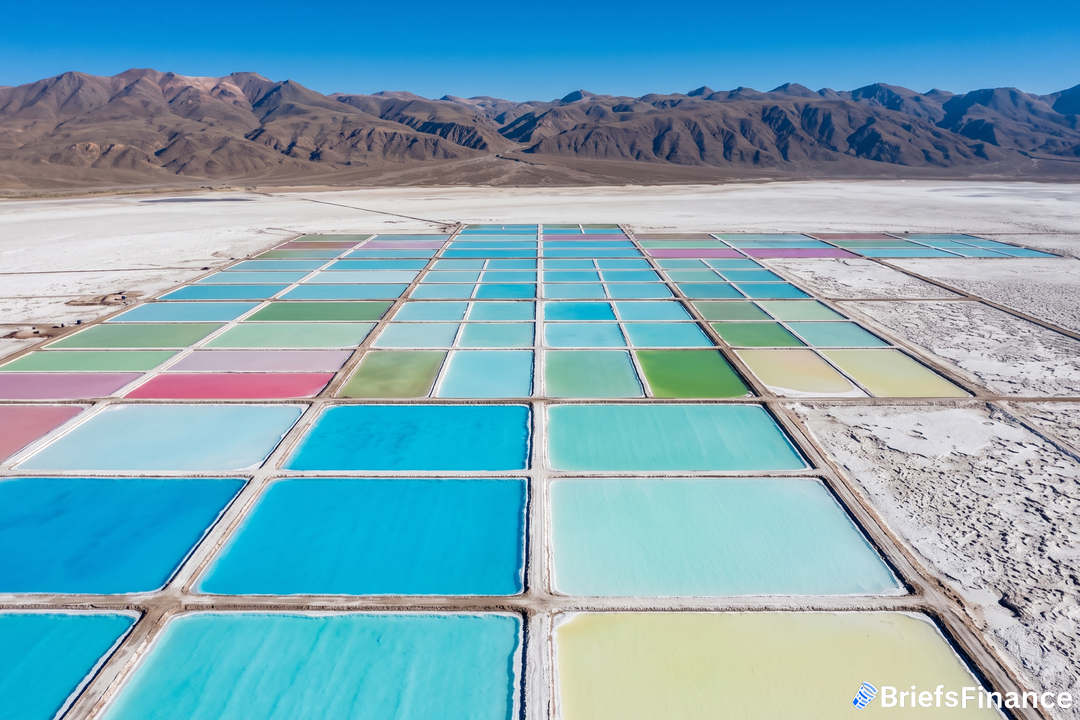
Production will first climb to about 300,000 metric tons. Then a seven-year transition begins. During that time the venture will shift to a new integrated system that includes a method called direct lithium extraction. This process resembles replacing a factory's entire production line without shutting it down - costly and time-consuming.
Get your free investing masterclass bonus when you join Market Briefs, our free daily newsletter
Getting to the top target of 470,000 tons is not guaranteed. It requires more studies and engineering. It also depends on changes to production limits and whether the new extraction method cuts water use enough.
Chile's Atacama salt flat is one of the world's richest lithium brines, but water scarcity in the region has long been a concern. Direct lithium extraction promises to use significantly less water than traditional evaporation ponds, which could help the project gain regulatory approval and community support. The success of this technology is therefore critical to the venture's long-term expansion plans.
Why Lithium Demand Is Driving the Plan
The venture expects global demand for lithium to keep growing at a double-digit rate. The main engines: batteries for electric vehicles and grid-scale battery storage. More EVs and more grid batteries mean more need for the metal.
But the ramp-up will not happen overnight. Federico Gay, an analyst at Benchmark Mineral Intelligence, said: "It will take several years, certainly not this decade, to achieve that capacity." Reaching 470,000 metric tons is a long-term ambition, not a near-term goal.
The seven-year transition period will test both the technology and the regulatory environment. Direct lithium extraction is a newer method that could use less water - a big concern in Chile's Atacama salt flat. If it works, production limits may be adjusted. If it does not, the 470,000 ton target may slip.
Additional Context
The Atacama salt flat has been a crucial source of lithium for decades, but environmental groups have repeatedly raised concerns about excessive water use. SQM has faced protests and legal challenges in the past. The shift to direct lithium extraction could alleviate these tensions, but its scalability at such a massive scale remains unproven. The joint venture's long-term success hinges on both technological breakthroughs and community acceptance.
Subscribe to Market Briefs, our free daily newsletter, and claim your bonus investing masterclass