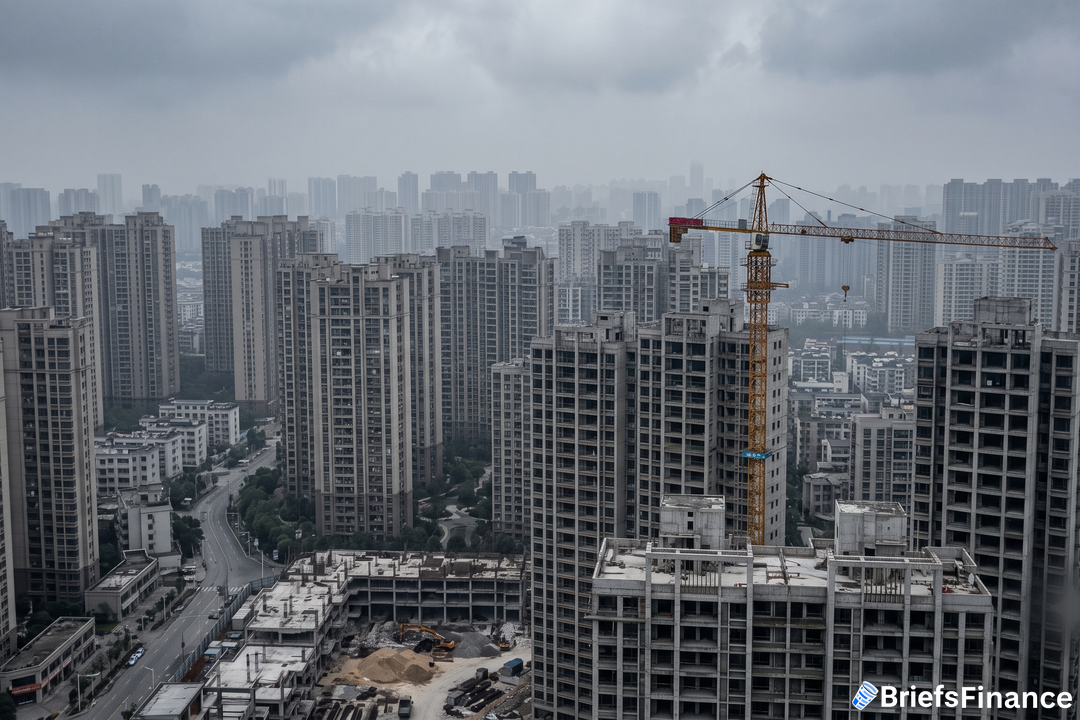
Chinese homebuyers are holding back, unwilling to enter a market that continues to decline. They expect prices to keep dropping, so they wait. Sellers, once confident, now plead for signatures. The result is a housing market that keeps sliding with no clear bottom in sight.
Prices Keep Falling - Buyers Keep Waiting
In June 2026, secondary-market home prices across 100 major cities fell another 0.42%, according to the China Index Academy. The average price per square meter was 12,639 yuan, or about US$1,750. Only 12 of those 100 cities saw prices rise month-on-month.
The year-on-year declines are even starker. In first-tier cities, prices dropped 6.95% from June 2025. Second-tier cities fell 8.21%, and third- and fourth-tier cities dropped 7.48%.
Among the ten largest cities, Nanjing posted the steepest year-on-year decline at 11.45%, followed by Wuhan at 10.89%. Shenzhen, the smallest drop among the ten, fell 5.27%.
Columnist Qingjin Wenwang described a buyer's experience: "A friend of mine started looking for a home to buy ahead of marriage in late 2025. Back then, sellers were confident and showed little willingness to negotiate." But by June 2026, the tables turned. "Sellers had largely softened their tone and kept asking him when he could sign a deal," Wenwang said.
New Homes and Construction Are Shrinking
The slump is not limited to existing homes. In the first five months of 2026, new home sales by floor area fell 10.8% year-on-year. By value, they dropped 13.5%. Real estate investment plunged 16.2%, new construction starts slid 22.6%, and completions fell 23.4%.
Get your free investing masterclass bonus when you join Market Briefs, our free daily newsletter
An anonymous Guangdong-based property columnist put the decline in perspective: "Since 2021, China's property market has undergone a dramatic transformation. New home sales peaked at 1.79 billion square meters that year and have fallen every year since, dropping below one billion square meters in 2025."
That same columnist added: "In many cities, prices have fallen more than 40% from their peak, and some have dropped more than 50%. Such a steep decline in such a short period is by any measure severe."
Why Buyers Won't Bite - and What Comes Next
Three structural reasons explain the standoff. First, China's population has been shrinking since 2022. Fewer people means fewer future buyers.
Second, rapid urbanization is largely over - the big wave of people moving to cities has crested. Third, the total housing stock is now sufficient except in desirable districts of top cities.
Columnist Duanwei Liwen warned against assuming a rebound: "You cannot use one national figure to explain the situation in every Chinese city." He noted that home values in Beijing, Shanghai, and Shenzhen remain "still absurdly high." He cautioned buyers who think they see a bottom: "Over the past few years, many people have already fallen into this trap. They see prices pull back and assume the floor has been reached, or they see policy ease slightly and conclude a rebound is coming. Then prices keep falling, and they cannot sell their properties."
From January to May 2026, just 4 of 70 large cities saw new-home prices rise from a year earlier. For secondary-market prices, the number was zero.
The prolonged downturn reflects deep structural shifts in China's economy and demographics. The shrinking population and near-complete urbanization have fundamentally reduced housing demand, while oversupply in many cities has further depressed prices. As a result, the market remains stuck in a cycle of falling values and cautious buyers.
What to Watch
Market observers interpret the January-to-June figures as evidence that the housing slump is not over, predicting additional price drops for the rest of 2026.
Subscribe to Market Briefs, our free daily newsletter, and claim your bonus investing masterclass