What happened
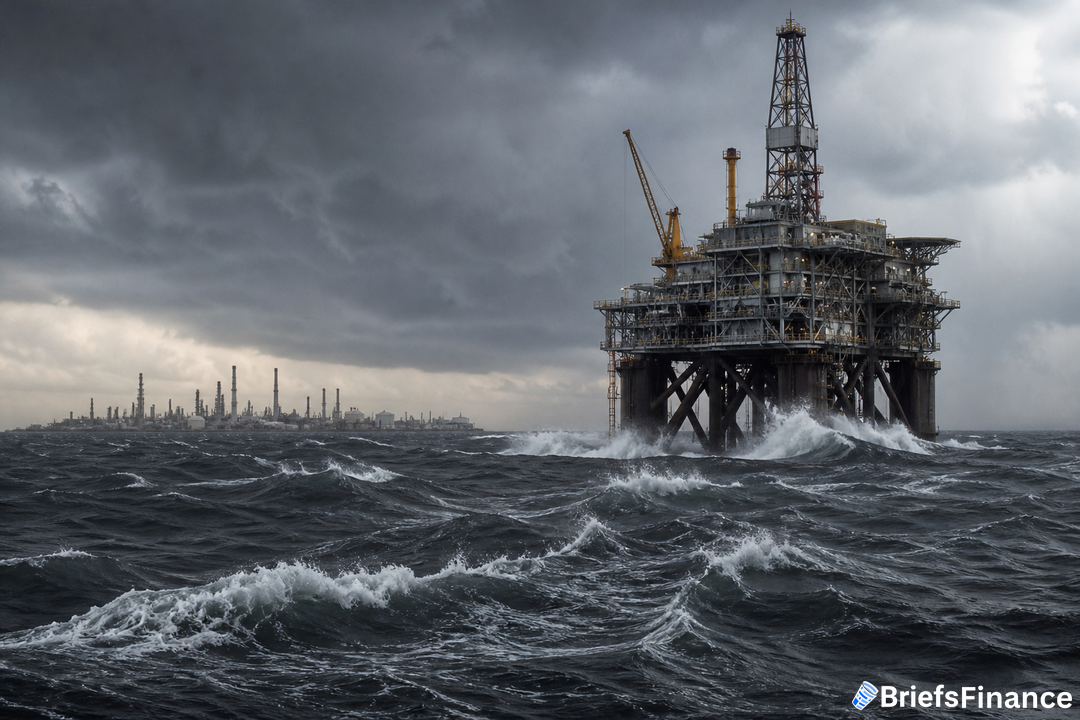
Isaias is taking a bite out of Gulf of Mexico oil operations at a time when fuel supplies are strained worldwide. As of Thursday, federal regulators said Gulf producers had shut about 1.3 million barrels per day, representing 63% of U.S. Gulf production. The National Hurricane Center describes the storm as a Category 3 packing 120 mph winds and moving toward Mississippi, Alabama and the Florida Panhandle, with landfall likely late Friday or early Saturday.
Refineries in the path
The current forecast track seems to veer from the heavily concentrated refining stretch that runs through the Baton Rouge-New Orleans area of southern Louisiana. Even so, facilities to the east could feel the impact. Chevron's refinery in Pascagoula, Mississippi, and Vertex Energy's plant in Saraland, Alabama, are under hurricane warnings and can together produce 466,000 barrels per day, equal to 2.4% of U.S. refining capacity, according to Andy Lipow of Lipow Oil Associates.
Chevron spokesperson Ross Allen said the Pascagoula site remains operational. Vertex officials weren't immediately available to comment on Saraland.
Weather disruptions to supply reach fuel prices within days. Market Briefs covers energy markets free every morning.
Fuel markets were tight before the storm
Gulf Coast refineries are already running hot at roughly 95% of capacity, leaving little room to compensate if throughput drops, Lipow noted. Diesel prices have jumped as wars in Eastern Europe and the Middle East have knocked out refining capacity. Ukrainian strikes on Russian refineries pushed Moscow to ban diesel exports, and Iran and its Houthi allies have hit refineries in the Middle East. To seize robust margins, U.S. refiners have been sending diesel overseas, with Europe a prime destination.
What this means for your money
Lipow warned that shipping could get tangled up. "Tankers will be delayed delivering crude oil to the refineries while other tankers are delayed loading gasoline, jet fuel and diesel out of the refineries," he said. "Florida will experience delays in receiving gasoline, jet fuel and diesel." Appearing on CNBC's "Squawk Box," ClearView Energy Partners managing director Kevin Book observed that in previous Gulf disruptions, gasoline and diesel prices often climbed even as crude prices fell because refineries pulled back on oil purchases and produced less fuel for end users. If you rely on gasoline or diesel for work or travel, the next few days could be choppier than usual along the Southeast corridor.
Gulf output interruptions are a recurring seasonal risk. Get the free Market Briefs daily newsletter and follow it.