Warning: Undefined variable $stocks in /var/www/briefs.co/htdocs/wp-content/plugins/oxygen/component-framework/components/classes/code-block.class.php(133) : eval()'d code on line 448
Warning: foreach() argument must be of type array|object, null given in /var/www/briefs.co/htdocs/wp-content/plugins/oxygen/component-framework/components/classes/code-block.class.php(133) : eval()'d code on line 448
Warning: Undefined variable $funds in /var/www/briefs.co/htdocs/wp-content/plugins/oxygen/component-framework/components/classes/code-block.class.php(133) : eval()'d code on line 472
Warning: foreach() argument must be of type array|object, null given in /var/www/briefs.co/htdocs/wp-content/plugins/oxygen/component-framework/components/classes/code-block.class.php(133) : eval()'d code on line 472
/* the link was here */
×
Free investor livestream — Nov 17
How To Use ChatGPT & Claude To Research Stocks Like A Pro
Saudi officials are in talks with buyers to arrange next year's long-term contract barrels to be picked up at locations beyond the Strait of Hormuz.
The talks would formalize a shuttle ship-to-ship delivery system used during the Iran war, now in its eighth month, as traditional routes through Hormuz remain disrupted.
Pricing, freight, and eligible volumes are still being hashed out, and discussions need to wrap by year-end.
What Saudi Arabia is proposing
Saudi officials are working with customers on a plan to allow long-term contracted oil to be loaded next year at locations beyond the Strait of Hormuz. The proposal would formalize a workaround the kingdom has leaned on during the Iran war as it tries to win more market share. People familiar with the talks say the negotiations remain in progress and need to be wrapped up by year-end. They also note that nothing has been definitively decided, and they requested anonymity because the negotiations are private.
How shipping and deliveries have changed
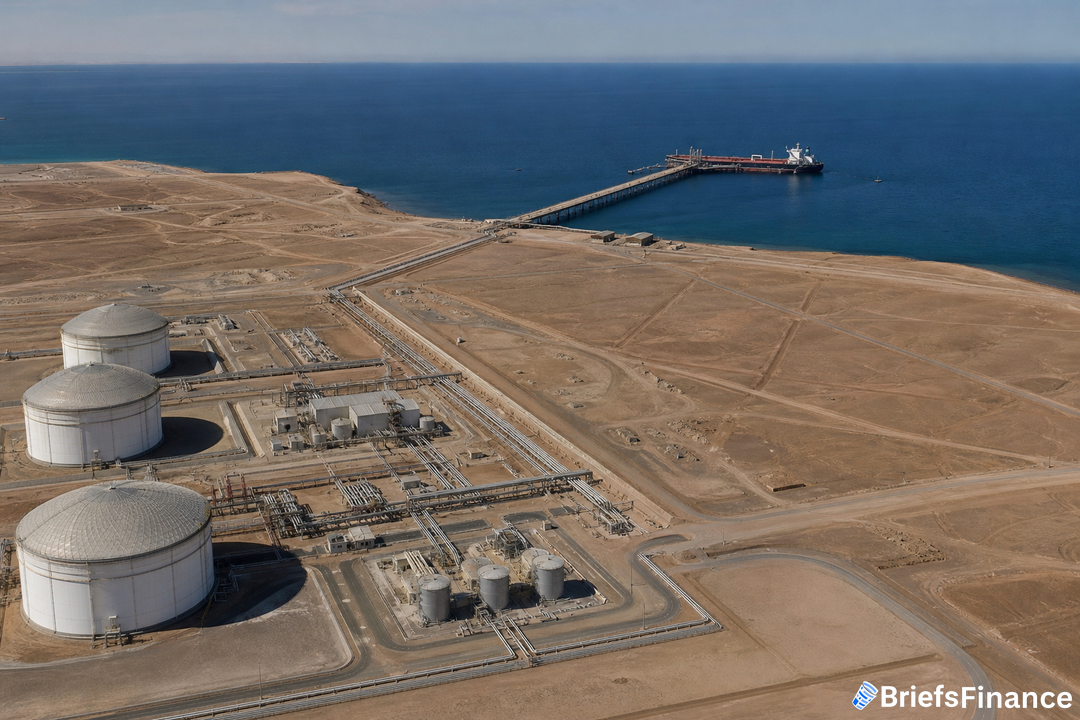
Deliveries under long-term contracts make up most of the kingdom's supply, and state-run Saudi Aramco has adjusted how those barrels move. Before the conflict, Aramco's core customers in Asia typically sent their own ships to Ras Tanura, the export terminal deep in the Gulf, and Aramco generally stayed out of arranging the voyage. After the war started, a number of shipowners have hesitated to transit Hormuz, forcing buyers to scramble for affordable tankers even when crude is on offer.
That caution helped spur a shuttle system through the strait in which the seller often carries the transit risk and then hands the oil to another vessel outside the waterway. Those ship-to-ship transfers have become a key way to keep supply flowing as competition for buyers picks up. Ship-tracking data compiled by Bloomberg show September shipments were close to their 2025 average as transits via Hormuz climbed. The September figures cover the first 23 days of the month.
How Aramco is adjusting and what's still undecided
People briefed on the talks say Aramco has been moving its three flagship grades - Arab Light, Arab Medium and Arab Heavy - via this shuttling arrangement. Recently, Aramco also allowed some buyers to complete ship-to-ship transfers off India's coast, offering a potentially safer option for customers unable to reach the Gulf of Oman due to security concerns while easing congestion around Arabian peninsula ports. The United Arab Emirates, Saudi Arabia, Kuwait and Iraq have all used the Hormuz shuttling system to move cargoes beyond the waterway via ship-to-ship transfers.
Aramco is weighing further changes, including offering a choice of pricing benchmarks and potentially taking cargoes all the way to Asian buyers. The company is also considering taking on the shipping role itself so it can send additional crude straight to customers. Beyond smoothing exports, those options could allow Aramco to retain a portion of the windfall created by sharply higher charter costs for traversing Hormuz.
Some Asian customers have talked with Aramco about linking long-term contractual purchases to Brent futures rather than the Dubai and Oman benchmarks, which would mark a new level of flexibility. Aramco and the Saudi Energy Ministry did not respond to requests for comment.
What this means for your portfolio
If these talks close by year-end, the fine print of long-term deals - where barrels are handed over, which benchmarks set the price, and who handles freight - could look different next year. For buyers, that changes both the logistics and the math of moving crude. For everyone else, the takeaway is simple: when routes shift but supply keeps flowing, price swings can still show up at the pump and in inflation data.
Anthropic has gone public at a valuation of about $1.5 trillion, while Amazon went public in 1997 at around $440 million. Anthropic has about $33 billion in revenue this year and no profit, and investors are paying more than 40 times its sales, against about 3 times for Amazon. Briefs Finance CEO Jaspreet Singh says nobody knows what comes next, and that long-term investors use downturns to buy instead of panic selling.
Tech stocks are selling off because investors don't know who will lead Nvidia, the company that has been funding the AI industry and selling it chips.
Inflation has the Federal Reserve planning to raise interest rates, with a hike expected in December, and that puts pressure on homebuyers, private equity and the $40 trillion national debt.
Briefs Finance CEO Jaspreet Singh says nobody has a crystal ball, so his rules are to buy when markets are low, hold long term and invest only what you're willing to lose.
The national debt is above $40 trillion, and the Federal Reserve has gone from sending Washington its profits to losing money.
President Trump's four-part plan leans on shorter-term debt, stablecoin companies buying Treasuries, a bigger balance sheet and government stakes in private companies.
The goal is to outgrow the debt, not pay it off, so Jaspreet Singh points investors to the seven industries where Washington wants growth.
The Fed makes its next rate decision on December 9 and is now talking about jumbo interest rate hikes of 0.5%, though one in December looks unlikely.
Washington will pay a record $1.05 trillion in interest this year on $40 trillion of debt, and that debt resets at higher rates as the Fed hikes.
Jaspreet Singh's five moves are to pay down variable-rate debt, earn interest on your savings, know which stocks feel the pressure, look at value and hedge.
Margin debt, the money investors borrow to buy stocks, is at a record of around 4.6% of GDP, up from 3.9% in 2021.
ETF money has more than tripled in five years to 7% of GDP, while corporate buybacks and 401(k) money sit below their earlier peaks.
Margin calls and panic selling can make the next downturn deeper, so Jaspreet Singh keeps buying broad market funds and says most investors should skip margin debt.
Jensen Huang is out at Nvidia over affairs with multiple people, and the company he founded has been the bank of American AI, with about $30 billion into OpenAI and $10 billion into Anthropic.
A hotter-than-expected inflation report has Fed officials talking about a possible 0.5% hike in December, and gold, silver, and bitcoin fell on the news.
President Trump said the US may not need a deal with Iran, keeping oil prices and inflation risk high. Jaspreet Singh breaks down what it all means for AI stocks and your portfolio.
Stocks are booming at the fastest pace in years, jobless claims just hit a 57-year low, and most investors still feel like nobody is hiring.
The Fed is protecting the dollar over the economy, oil swings on every Iran headline, and a few AI companies are carrying an S&P 500 where four of five stocks sit in a correction.
Jaspreet Singh explains why circular financing between Nvidia, OpenAI, Anthropic, and SpaceX rhymes with 2008's house of cards, and how his three investing pillars handle a stock market bubble.
The Fed has raised rates, cut them, then raised them again only twice in the last 60 years, and both times the economy fell into a recession and stocks crashed.
The same stop-and-go cycle is playing out now, with one big difference: US debt is 125% of GDP today versus about 30% in 1980.
In the 1970s gold rose roughly 24x, real estate 157%, stocks lagged, and cash lost half its value. Jaspreet Singh lays out five assets to consider before the next flip.
The IRS 2027 tax plan keeps the same seven rates but widens every bracket and lifts the married-filing-jointly standard deduction to $33,200.
The 0% long-term capital gains bracket rises to $102,100, so a household living on $135,300 of investment income could owe $0 in federal income tax.
C corporations still pay 21%, small businesses keep the 20% QBI deduction, and the 401(k) limit climbs to $25,500 with an $8,500 catch-up for investors over 50.
Make sure to check your inbox for the first email.
Before you go
We’re hosting our first ever livestream on how investors can use ChatGPT & Claude to invest like a pro. It’s on 11/17 and is hosted by our CEO Jaspreet Singh.