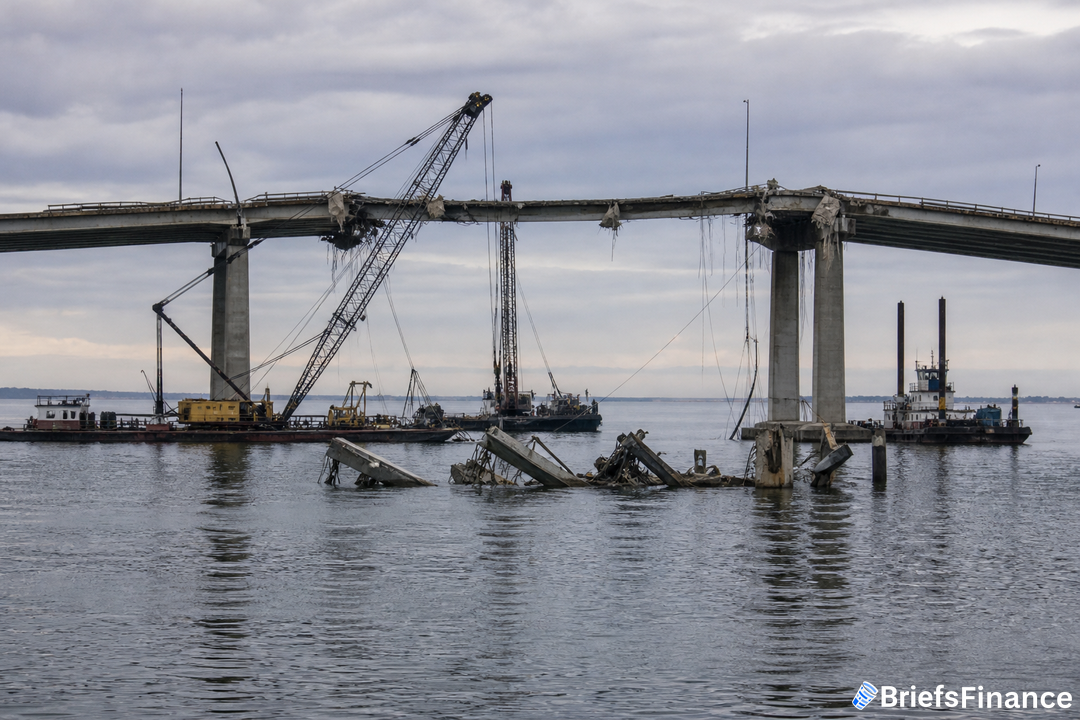
What changed at the bridge
A run of Ukrainian drone and missile strikes from Monday to Thursday brought down part of the automobile side of the Kerch Strait Bridge by zeroing in on a pair of supporting arches that turned out to be weak points. The nearby rail line also took fire but is still intact.
Put up after Russia's illegal 2014 annexation of Crimea, the span is Europe's longest and a highly visible emblem of Moscow's hold over occupied Ukrainian territory.
Moscow's repair timeline and stance
Speaking in Kyiv on Saturday, Defense Minister Yevheniy Khmara said Russian teams have divers in the water and are working through how to remove the wreckage. "They are conducting their research - they have lowered divers in, they're breaking down the ways they can pull out the damaged parts of the bridge," he said, adding, "We estimate the time that they will be able to lift and clear this structure to the side to be at least a few months."
Vladimir Putin has vowed to reconstruct the bridge and pledged he would "respond" to the strikes. The attacks coincided with his visit to China for meetings with Xi Jinping and Donald Trump, and he dismissed talk of any partial truce with Ukraine on the back of the bridge damage.
When headlines remind us how interconnected markets are, sign up for the free Market Briefs newsletter for quick context.
Signals from Kyiv and London
President Volodymyr Zelenskyy described the operation as a "fair response" to sustained Russian attacks on Ukrainian bridges, including crossings over the Dnipro River in Kyiv. "Before our response attack on the Crimean bridge, Putin attacked Ukrainian bridges 109 times," he said. "Not one, not two - 109 missile and drone attacks. Not the number of missiles, the number of attacks."
After meeting Zelenskyy on Saturday, UK Defense Secretary Wes Streeting said the Russian leader "has absolutely no business playing the victim."
Why it matters for investors
A months long cleanup and Moscow's vow to rebuild and "respond," paired with Putin brushing off talk of a partial truce, point to limited prospects for near term de escalation. The bottom line: expect persistent geopolitical headline risk around the conflict, which can swing regional equities and risk sentiment.
To make sense of headlines and global risk, get the free Market Briefs straight to your inbox each morning.