Free NewsletterPro Login

Warning: Undefined variable $stocks in /var/www/briefs.co/htdocs/wp-content/plugins/oxygen/component-framework/components/classes/code-block.class.php(133) : eval()'d code on line 448

Warning: foreach() argument must be of type array|object, null given in /var/www/briefs.co/htdocs/wp-content/plugins/oxygen/component-framework/components/classes/code-block.class.php(133) : eval()'d code on line 448

Warning: Undefined variable $funds in /var/www/briefs.co/htdocs/wp-content/plugins/oxygen/component-framework/components/classes/code-block.class.php(133) : eval()'d code on line 472

Warning: foreach() argument must be of type array|object, null given in /var/www/briefs.co/htdocs/wp-content/plugins/oxygen/component-framework/components/classes/code-block.class.php(133) : eval()'d code on line 472
/* the link was here */
×
Free investor livestream — Nov 17

How To Use ChatGPT & Claude To Research Stocks Like A Pro

01
The prompt we use to break down any stock
02
How to fact-check what AI tells you
03
How to compare two stocks in minutes

Europe's Power Squeeze Hits German Steel, with Winter Risk Still Building

Published Nov 21, 2026
Share:
Summary:
  • Power covering the coming three months is around €200 per megawatt hour, about twice last winter's level.
  • Feralpi's German steel mill has paused output multiple times this autumn as power became uneconomic, even with orders in hand.
  • European gas prices are three times what they were a year earlier as the Middle East war tightened supply and competition with Asia.

A mill running on two emails a day

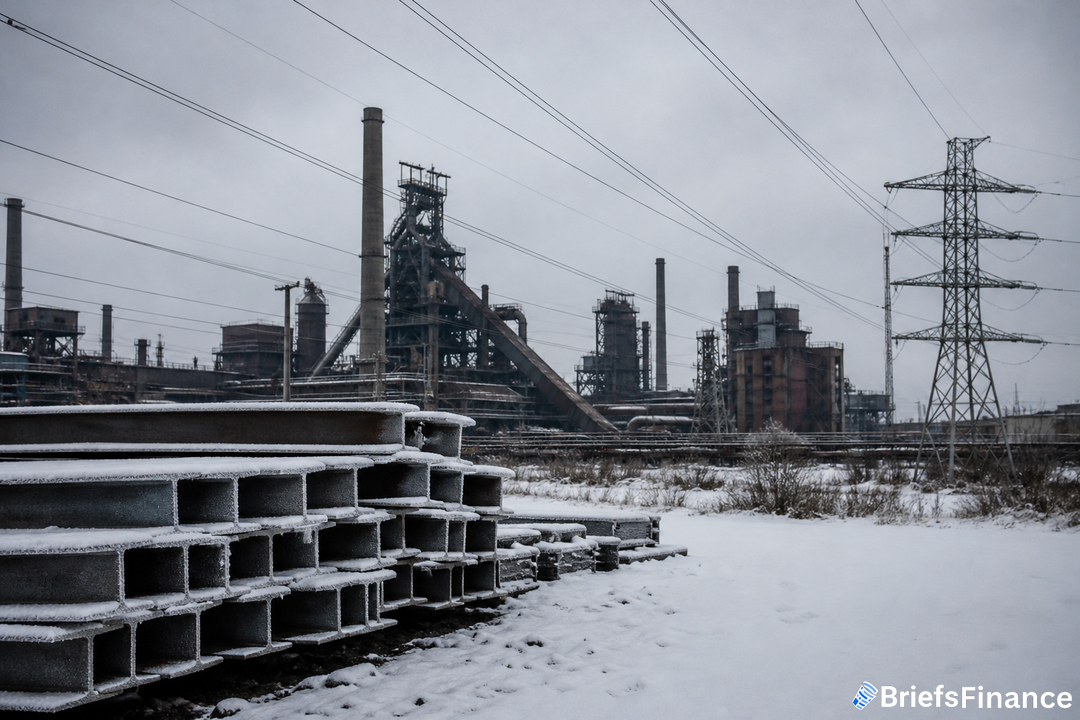
At a German steel plant run by Italy's Feralpi Group, Plant Manager Uwe Reinecke checks two emails daily with the next day's electricity prices and plans shifts almost hour by hour. The furnace runs on power bought close to delivery, and soaring costs have repeatedly forced stoppages this autumn despite solid demand. "The current rise in prices is significantly steeper than the increase we've been seeing since the summer, and that's causing us enormous difficulties," Reinecke said.

This is not an isolated headache. Contracts for electricity spanning the next three months change hands near €200 per megawatt hour, roughly double last winter's pricing. The driver is familiar. European gas prices are up threefold from a year ago, making electricity more expensive because gas plants often set the market price when cheaper sources fall short.

How the market sets the bill

Wholesale power is where utilities and big users buy electricity, from next day to years ahead. Day-ahead prices track near-term conditions like weather, renewable output and demand, while longer-dated contracts bake in expectations for fuel costs, the economy and plant availability. Buyers can lock in prices to reduce exposure to sudden swings.

Plenty of energy-heavy manufacturers still rely on spot purchases, so they feel the jump straight away. Feralpi's site is one of them, with limited hedging because many customers order at short notice. Companies without sufficient hedges "run the risk of operating at a loss, forcing them to consider at least partial production shutdowns" this winter, said Timothée de Rancourt of Royale Energy Solutions. When prices spike to extreme levels, the power itself can be worth more than the output it would create, leading some firms with advantageous hedges to resell electricity rather than operate machinery.

The strain is spreading

The current stress is about persistence rather than 2022-style extremes, but it is visible. Over the past two weeks, Germany's day-ahead market cleared above €300 on three occasions, and some quarter hours topped €600 during still, cloudy Dunkelflaute conditions that muted renewable output. Similar bursts have shown up across Europe and in the UK.

Some of the impact is delayed. Tens of millions of homes are shielded by fixed or regulated tariffs, and many large users pre-buy power months or years out. Those cushions expire, though, and costs are already edging higher.

A number of providers have already increased their 2027 offers, and EnBW plans to raise its household electricity tariff by 3.3 percent starting in January. Germany's coalition agreed to a power tax cut next year to cushion rising costs. In Poland, Prime Minister Donald Tusk said Tuesday the country plans to shield consumers from high prices.

When prices and costs affect companies, it's helpful to stay informed, so try the free Market Briefs for daily clarity.

The corporate fallout is here. Two German electricity retailers, Grüüün and Stromee, have ceased supplying power to their customers. Austria's Verbund said low hydropower forced costly spot purchases, cutting earnings by €120 million in the first nine months. Spain's Acerinox reported that increased energy bills resulted in a €16 million hit to its European operations last quarter, while long term contracts covered only about half of its electricity needs.

Risk could rise if winter bites. Monthly power contracts could climb to €300 if gas rallies further and a severe cold snap hits, according to BB Energy Trading Ltd. Governments are prepping backup. Germany plans to reactivate coal and oil units from its grid reserve should a natural gas emergency arise this winter, based on a draft law viewed by Bloomberg News.

And the meter is moving for consumers: Cornwall Insight Ltd. forecasts that, in Britain, January will bring a jump in the energy price cap, pushing the average annual bill up 26 percent to £2,166. In Germany, Verivox reports the average price among the 10 cheapest electricity plans is up about 33 percent compared with before the Iran war broke out, reaching 34.6 cents per kilowatt hour. "We expect further price increases," said Energy Expert Thorsten Storck.

What investors should watch next

Summer's record solar helped when demand was low, but as winter approaches Europe leans more on wind, which can swing sharply. That keeps price risk elevated even if we avoid 2022-style peaks. One marker to watch: average day-ahead prices from November 1 to 19 are running higher than during the 2022 energy crisis.

Why that matters for your portfolio: energy intensive industries face margin pressure when spot prices jump, and thinly hedged companies may trim output. As contracts reset, higher wholesale costs can also seep into consumer bills, pressuring demand. The bottom line is timing.

Long term deals delay the hit, but they renew. Keep an eye on power curves, gas headlines and policy cushions like Germany's tax cut.

It helps to check in on the economy often, so subscribe to the free Market Briefs newsletter for five-minute market summaries.

Disclosure

Recent News

1 2 3 … 133

Get Market Briefs delivered to your inbox every morning for free!

No fluff. No noise. No politics. Just finance news you can read in 5 minutes.

Blogs

November 20, 2026
Anthropic Stock at $1.5 Trillion: Why This IPO Isn't Amazon in 1997

Anthropic has gone public at a valuation of about $1.5 trillion, while Amazon went public in 1997 at around $440 million. Anthropic has about $33 billion in revenue this year and no profit, and investors are paying more than 40 times its sales, against about 3 times for Amazon. Briefs Finance CEO Jaspreet Singh says nobody knows what comes next, and that long-term investors use downturns to buy instead of panic selling.

Read More
November 17, 2026
Is the Stock Market Going to Crash? Why Nvidia and the Fed Have Investors on Edge
  • Tech stocks are selling off because investors don't know who will lead Nvidia, the company that has been funding the AI industry and selling it chips.
  • Inflation has the Federal Reserve planning to raise interest rates, with a hike expected in December, and that puts pressure on homebuyers, private equity and the $40 trillion national debt.
  • Briefs Finance CEO Jaspreet Singh says nobody has a crystal ball, so his rules are to buy when markets are low, hold long term and invest only what you're willing to lose.
Read More
November 16, 2026
The $40 Trillion National Debt: Trump's 4-Part Plan to Make It Feel Smaller
  • The national debt is above $40 trillion, and the Federal Reserve has gone from sending Washington its profits to losing money.
  • President Trump's four-part plan leans on shorter-term debt, stablecoin companies buying Treasuries, a bigger balance sheet and government stakes in private companies.
  • The goal is to outgrow the debt, not pay it off, so Jaspreet Singh points investors to the seven industries where Washington wants growth.
Read More
November 16, 2026
The Fed Is Talking About a Jumbo Interest Rate Hike. It Has No Easy Way Out
  • The Fed makes its next rate decision on December 9 and is now talking about jumbo interest rate hikes of 0.5%, though one in December looks unlikely.
  • Washington will pay a record $1.05 trillion in interest this year on $40 trillion of debt, and that debt resets at higher rates as the Fed hikes.
  • Jaspreet Singh's five moves are to pay down variable-rate debt, earn interest on your savings, know which stocks feel the pressure, look at value and hedge.
Read More
November 16, 2026
Buying on Margin Is at a Record High. Here's the Risk for the Stock Market
  • Margin debt, the money investors borrow to buy stocks, is at a record of around 4.6% of GDP, up from 3.9% in 2021.
  • ETF money has more than tripled in five years to 7% of GDP, while corporate buybacks and 401(k) money sit below their earlier peaks.
  • Margin calls and panic selling can make the next downturn deeper, so Jaspreet Singh keeps buying broad market funds and says most investors should skip margin debt.
Read More
November 16, 2026
Housing Prices Are Falling. Buying a House Still Isn't Cheaper
  • Housing prices have fallen for four straight weeks, but mortgage rates around 7.2% keep the monthly payment about where it was in 2023.
  • Talk of a jumbo Fed rate hike and a plan to sell Fannie Mae and Freddie Mac on the stock market could both push mortgage rates higher.
  • Briefs Finance CEO Jaspreet Singh treats a house as a liability: buy within your budget and let your investments build the wealth.
Read More
November 14, 2026
Nvidia News: Jensen Huang Is Out, and the "Bank" Behind American AI Just Lost Its Founder
  • Jensen Huang is out at Nvidia over affairs with multiple people, and the company he founded has been the bank of American AI, with about $30 billion into OpenAI and $10 billion into Anthropic.
  • A hotter-than-expected inflation report has Fed officials talking about a possible 0.5% hike in December, and gold, silver, and bitcoin fell on the news.
  • President Trump said the US may not need a deal with Iran, keeping oil prices and inflation risk high. Jaspreet Singh breaks down what it all means for AI stocks and your portfolio.
Read More
November 14, 2026
Record Highs, a 57-Year Low in Jobless Claims, and a Stock Market Bubble: Inside the Weirdest Market in History
  • Stocks are booming at the fastest pace in years, jobless claims just hit a 57-year low, and most investors still feel like nobody is hiring.
  • The Fed is protecting the dollar over the economy, oil swings on every Iran headline, and a few AI companies are carrying an S&P 500 where four of five stocks sit in a correction.
  • Jaspreet Singh explains why circular financing between Nvidia, OpenAI, Anthropic, and SpaceX rhymes with 2008's house of cards, and how his three investing pillars handle a stock market bubble.
Read More
November 14, 2026
Is a Recession Coming? The Fed Just Made a U-Turn It Has Only Made Twice in 60 Years
  • The Fed has raised rates, cut them, then raised them again only twice in the last 60 years, and both times the economy fell into a recession and stocks crashed.
  • The same stop-and-go cycle is playing out now, with one big difference: US debt is 125% of GDP today versus about 30% in 1980.
  • In the 1970s gold rose roughly 24x, real estate 157%, stocks lagged, and cash lost half its value. Jaspreet Singh lays out five assets to consider before the next flip.
Read More
November 14, 2026
The 2027 Tax Brackets Are Out: How Some Investors Can Earn $135,300 and Pay $0
  • The IRS 2027 tax plan keeps the same seven rates but widens every bracket and lifts the married-filing-jointly standard deduction to $33,200.
  • The 0% long-term capital gains bracket rises to $102,100, so a household living on $135,300 of investment income could owe $0 in federal income tax.
  • C corporations still pay 21%, small businesses keep the 20% QBI deduction, and the 401(k) limit climbs to $25,500 with an $8,500 catch-up for investors over 50.
Read More
1 2 3 … 33
Share via
Copy link