Warning: Undefined variable $stocks in /var/www/briefs.co/htdocs/wp-content/plugins/oxygen/component-framework/components/classes/code-block.class.php(133) : eval()'d code on line 448
Warning: foreach() argument must be of type array|object, null given in /var/www/briefs.co/htdocs/wp-content/plugins/oxygen/component-framework/components/classes/code-block.class.php(133) : eval()'d code on line 448
Warning: Undefined variable $funds in /var/www/briefs.co/htdocs/wp-content/plugins/oxygen/component-framework/components/classes/code-block.class.php(133) : eval()'d code on line 472
Warning: foreach() argument must be of type array|object, null given in /var/www/briefs.co/htdocs/wp-content/plugins/oxygen/component-framework/components/classes/code-block.class.php(133) : eval()'d code on line 472
/* the link was here */
×
Free investor livestream — Nov 17
How To Use ChatGPT & Claude To Research Stocks Like A Pro
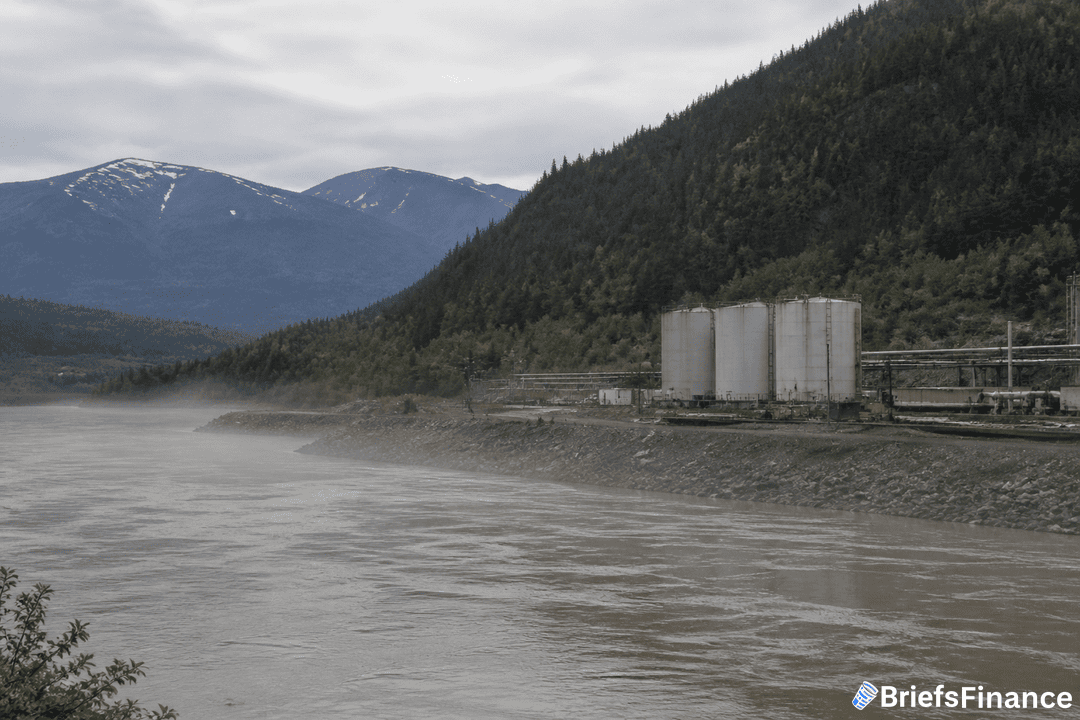
Thailand intends to prohibit the export and transit of chemicals used in rare-earth mining after arsenic levels spiked in northern rivers.
Thai officials will meet representatives from China and Myanmar on Nov. 24, then hold a Thai-Myanmar working group on Nov. 25-26, and the government plans to designate part of the Kok River a pollution control zone starting Dec. 2.
A Suan Dusit University poll found 89.2% were worried about river contamination, while 85.9% reported lacking confidence in the government's ability to resolve it.
What happened and the first response
Arsenic levels spiked in the Kok and Sai rivers that run across the border, prompting Bangkok to act on chemicals linked to rare-earth mining. Deputy Prime Minister Yodchanan Wongsawat said authorities plan to prohibit exports and transit shipments of those chemicals and will coordinate with China and Myanmar.
Talks begin Nov. 24 with representatives from both countries, followed by a Thai-Myanmar working group on Nov. 25-26. The government further intends to name part of the Kok River a pollution control zone starting Dec. 2, covering more than 150 kilometers (93 miles) inside Thailand.
Monitoring, clean water, and public sentiment
Natural Resources and Environment Minister Suchart Chomklin said Thailand will seek approval to set up four water monitoring stations in Myanmar and install four more on the Thai side to align readings. Authorities also intend to install roughly 20 monitoring locations on impacted rivers and tributaries, along with labs in Chiang Mai and Chiang Rai to accelerate testing. Regulators are reviewing shipment rules for chemicals to avoid unintended spillovers to other industries.
Authorities identified 10 groundwater sites in Chiang Rai, and they are preparing 14 village water systems to supply safe water to nearly 20,000 residents. Earlier this month, Foreign Minister Sihasak Phuangketkeow said arsenic concentrations rose to up to 30 times the Thai standard, posing risks to public health and farmland in the north.
When policy and environmental issues touch people's lives, staying informed helps; sign up for the free Market Briefs
Diplomacy and what to watch
Prime Minister Anutin Charnvirakul said he brought the matter up with Chinese President Xi Jinping on Nov. 20, and that Beijing pledged to work together and offer technical assistance to enhance water-quality monitoring. He added that Thailand would also bring it to the Ayeyawady-Chao Phraya-Mekong Economic Cooperation Strategy meeting on Nov. 28, as well as to a gathering of Mekong-Lancang leaders in China in late December.
Why does that matter? Any curbs on rare-earth related chemicals, tighter monitoring, and cross-border coordination can shape operating costs and timelines for regional miners and suppliers. For portfolios with exposure to Thailand's industrials, utilities, or agribusiness, water quality headlines and regulatory shifts may become a recurring risk factor to track.
For a clear, concise take on economic and market implications, get our free Market Briefs newsletter delivered daily
Anthropic has gone public at a valuation of about $1.5 trillion, while Amazon went public in 1997 at around $440 million. Anthropic has about $33 billion in revenue this year and no profit, and investors are paying more than 40 times its sales, against about 3 times for Amazon. Briefs Finance CEO Jaspreet Singh says nobody knows what comes next, and that long-term investors use downturns to buy instead of panic selling.
Tech stocks are selling off because investors don't know who will lead Nvidia, the company that has been funding the AI industry and selling it chips.
Inflation has the Federal Reserve planning to raise interest rates, with a hike expected in December, and that puts pressure on homebuyers, private equity and the $40 trillion national debt.
Briefs Finance CEO Jaspreet Singh says nobody has a crystal ball, so his rules are to buy when markets are low, hold long term and invest only what you're willing to lose.
The national debt is above $40 trillion, and the Federal Reserve has gone from sending Washington its profits to losing money.
President Trump's four-part plan leans on shorter-term debt, stablecoin companies buying Treasuries, a bigger balance sheet and government stakes in private companies.
The goal is to outgrow the debt, not pay it off, so Jaspreet Singh points investors to the seven industries where Washington wants growth.
The Fed makes its next rate decision on December 9 and is now talking about jumbo interest rate hikes of 0.5%, though one in December looks unlikely.
Washington will pay a record $1.05 trillion in interest this year on $40 trillion of debt, and that debt resets at higher rates as the Fed hikes.
Jaspreet Singh's five moves are to pay down variable-rate debt, earn interest on your savings, know which stocks feel the pressure, look at value and hedge.
Margin debt, the money investors borrow to buy stocks, is at a record of around 4.6% of GDP, up from 3.9% in 2021.
ETF money has more than tripled in five years to 7% of GDP, while corporate buybacks and 401(k) money sit below their earlier peaks.
Margin calls and panic selling can make the next downturn deeper, so Jaspreet Singh keeps buying broad market funds and says most investors should skip margin debt.
Jensen Huang is out at Nvidia over affairs with multiple people, and the company he founded has been the bank of American AI, with about $30 billion into OpenAI and $10 billion into Anthropic.
A hotter-than-expected inflation report has Fed officials talking about a possible 0.5% hike in December, and gold, silver, and bitcoin fell on the news.
President Trump said the US may not need a deal with Iran, keeping oil prices and inflation risk high. Jaspreet Singh breaks down what it all means for AI stocks and your portfolio.
Stocks are booming at the fastest pace in years, jobless claims just hit a 57-year low, and most investors still feel like nobody is hiring.
The Fed is protecting the dollar over the economy, oil swings on every Iran headline, and a few AI companies are carrying an S&P 500 where four of five stocks sit in a correction.
Jaspreet Singh explains why circular financing between Nvidia, OpenAI, Anthropic, and SpaceX rhymes with 2008's house of cards, and how his three investing pillars handle a stock market bubble.
The Fed has raised rates, cut them, then raised them again only twice in the last 60 years, and both times the economy fell into a recession and stocks crashed.
The same stop-and-go cycle is playing out now, with one big difference: US debt is 125% of GDP today versus about 30% in 1980.
In the 1970s gold rose roughly 24x, real estate 157%, stocks lagged, and cash lost half its value. Jaspreet Singh lays out five assets to consider before the next flip.
The IRS 2027 tax plan keeps the same seven rates but widens every bracket and lifts the married-filing-jointly standard deduction to $33,200.
The 0% long-term capital gains bracket rises to $102,100, so a household living on $135,300 of investment income could owe $0 in federal income tax.
C corporations still pay 21%, small businesses keep the 20% QBI deduction, and the 401(k) limit climbs to $25,500 with an $8,500 catch-up for investors over 50.
Make sure to check your inbox for the first email.
Before you go
We’re hosting our first ever livestream on how investors can use ChatGPT & Claude to invest like a pro. It’s on 11/17 and is hosted by our CEO Jaspreet Singh.