Free NewsletterPro Login

Warning: Undefined variable $stocks in /var/www/briefs.co/htdocs/wp-content/plugins/oxygen/component-framework/components/classes/code-block.class.php(133) : eval()'d code on line 448

Warning: foreach() argument must be of type array|object, null given in /var/www/briefs.co/htdocs/wp-content/plugins/oxygen/component-framework/components/classes/code-block.class.php(133) : eval()'d code on line 448

Warning: Undefined variable $funds in /var/www/briefs.co/htdocs/wp-content/plugins/oxygen/component-framework/components/classes/code-block.class.php(133) : eval()'d code on line 472

Warning: foreach() argument must be of type array|object, null given in /var/www/briefs.co/htdocs/wp-content/plugins/oxygen/component-framework/components/classes/code-block.class.php(133) : eval()'d code on line 472
/* the link was here */

Ken Griffin's $1.1 Billion Wynwood Buy Sets the Stage for a Carnegie Mellon Miami Campus

Published Oct 8, 2026
Share:
Summary:
  • Developer Moishe Mana said Citadel founder Ken Griffin paid $1.1 billion for Wynwood land tied to Carnegie Mellon's planned Miami campus.
  • Starting in 2009, Mana spent about $70 million assembling Wynwood parcels, and today his portfolio in downtown Miami totals roughly 80 holdings.
  • Wynwood's creative energy is intact, but office vacancies reached 22% in Q2 versus 15% citywide.

The deal and the site

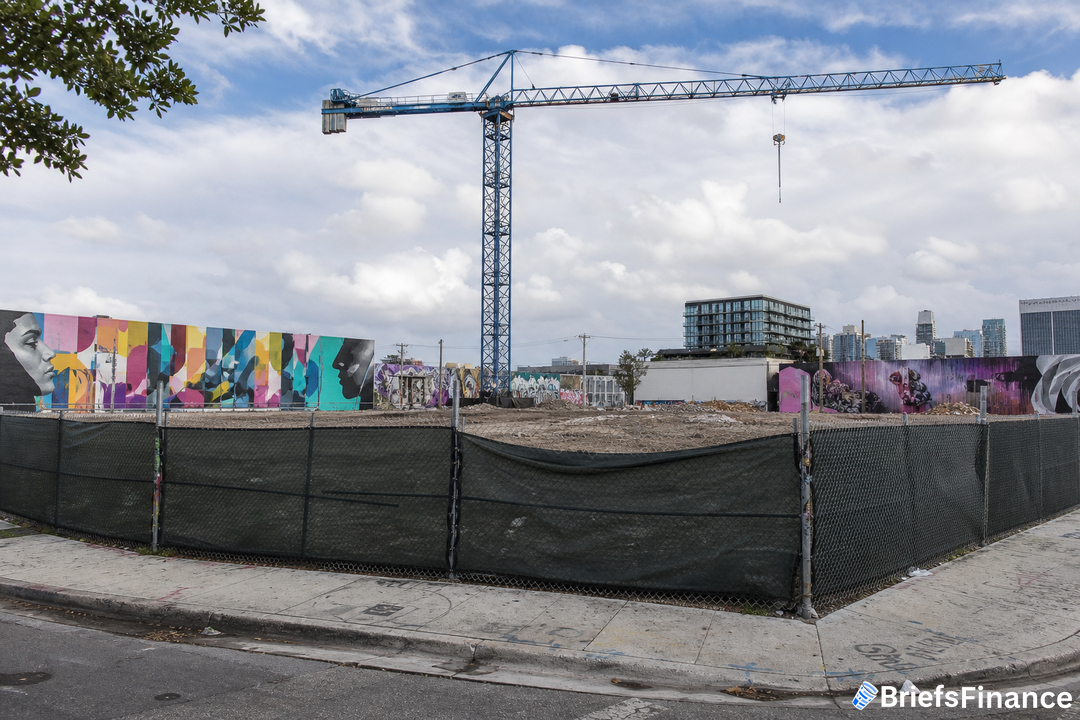
Last week, Moishe Mana said billionaire Ken Griffin had paid $1.1 billion for Wynwood parcels he assembled, the location slated for a Miami campus that Carnegie Mellon University intends to launch. Griffin has cast that campus as a way to turn Miami into a hub for education and innovation. Mana said he believed the land could fetch even more, and that he sold because he buys into Griffin's blueprint, not because he was chasing a payout. "The whole transaction with Ken, it was not really about the money," he said. "I just passed on the torch."

Mana started scooping up Wynwood real estate in 2009, when the neighborhood was a sprawl of empty lots and warehouse walls covered in graffiti, with underground raves shaking the streets at night. He spent about $70 million acquiring the site he ultimately sold. Prior to the transaction, he floated sweeping redevelopment concepts, and in 2015 proposed building as much as 10 million square feet across what is now Griffin's site, though none of those plans came to fruition.

Mana's path and imprint on Miami

Mana emigrated from Israel in the 1980s, built a moving company in New York, and evolved into a major force in Miami real estate. He is known as an unconventional player in the city's business circles. He says he once stood up to John Gotti after being threatened for stepping into Mafia-dominated lines of work, and he has ordered enormous renditions of iconic works such as the Mona Lisa and Girl With a Pearl Earring to adorn his downtown buildings. He frequently speaks about unifying the Americas into one economic bloc.

From the beginning, Mana saw echoes of New York's SoHo in Wynwood - a gritty industrial pocket reborn by artists that later drew upscale shops and restaurants. Beyond Wynwood, he has plowed money into the Flagler District and is helping lead a beautification push there. Among his assets have been a convention center, a concert hall, parking facilities and undeveloped parcels, and he said he did not want to see Wynwood turn into a forest of residential towers.

He praised Griffin's effort to refashion Miami, likening him to patrons credited with financing the Italian Renaissance. "Ken is a Medici," Mana said. In downtown Miami, his portfolio encompasses roughly 80 properties.

A single large purchase can reset land values across a whole district. Market Briefs covers commercial property free every morning.

Wynwood's culture, landlords and tenants

Wynwood still morphs into a wild nightlife scene after dark, with outdoor dance clubs booking famous DJs most days of the week. The visual arts are central to the neighborhood's identity and to Miami's Art Basel festivities. Even with new apartments, offices and restaurants, it largely keeps the feel of its past - low-rise industrial buildings wrapped in murals and graffiti, and a landscape with more concrete than trees.

Tony Goldman is often credited with sparking Wynwood's turnaround after he started purchasing real estate there in the 2000s, at a time when the area was packed with derelict factories and warehouses. He retained much of the street art and brought in well known creators such as Shepard Fairey, Kenny Scharf and Brazilian duo Os Gemeos to paint vivid murals for Wynwood Walls, which has since become a ticketed open-air museum. Goldman Properties, founded by Tony Goldman and co-chaired by his daughter Jessica Goldman Srebnick, holds a large share of the blocks near the planned Carnegie Mellon Miami campus, and it also purchased an office building with Griffin this year. "We're grateful that Moishe Mana chose to sell and chose to sell to a group that is going to have monumental impact on the neighborhood," Goldman Srebnick said.

Wynwood's office market competes with Brickell, Miami's financial hub, the site of Citadel's forthcoming flagship tower. According to Blanca Commercial Real Estate, Wynwood's office vacancy hit 22% in the second quarter, versus 15% for Miami overall. Even so, tech and finance names are in the mix.

Amazon.com Inc. operates a satellite office there, and Founders Fund, backed by Peter Thiel, is headquartered in the neighborhood. A glass tower near I-95 owned by Griffin and Goldman counts PricewaterhouseCoopers and Gemini, the Winkelvoss twins' crypto exchange, among its tenants, and it is home to MIAX, an options bourse that launched Miami's first trading floor last year. Architect Kobi Karp, whose practice crafts hotels, offices and retail developments in the district, called the former Mana site "the 50-yard line" and said, "What has been built thus far in Wynwood is not sufficient to supply this coming demand."

What this means for your money

A $1.1 billion land purchase tied to a new Carnegie Mellon campus signals Wynwood's next chapter is moving from talk to action. Big owners control key blocks, vacancies are higher than citywide, and blue chip tenants are already planted, which points to more building and leasing rather than quick flips. If you follow Miami property, the tell will be how fast projects and corporate leases stack up in Wynwood compared with Brickell. For locals with skin in the game - whether you own a condo nearby or run a shop - this shift could shape foot traffic, rents and how fast the neighborhood upgrades over the next few years.

Where the biggest buyers go, development capital follows. Get the free Market Briefs daily newsletter and follow it.

Disclosure

Recent News

1 2 3 … 96

Get Market Briefs delivered to your inbox every morning for free!

No fluff. No noise. No politics. Just finance news you can read in 5 minutes.

Blogs

October 5, 2026
What Is the Briefs Connector? A Simple Guide
  • The Briefs Connector lets your favorite AI read Briefs research, like Pro reports and the Briefs Score.
  • Without it, an AI asked about investing can give answers that sound right but aren't backed by that research.
  • It explains the research, but it won't tell you what to buy or sell.
Read More
October 5, 2026
Is a Recession Coming? What the Last Five Rate Hiking Cycles Say
  • The Fed has started raising rates again, and in the last five hiking cycles going back to 1994, a recession never started while the hikes were underway.
  • The pain showed up where there was a bubble to pop - housing in 2008, dot-coms in 2000, the pandemic money-printing boom in 2022 - and usually after the hikes ended.
  • Private equity and private credit are feeling this cycle first, and how far the pain spreads depends on how high rates go and how long they stay there.
Read More
October 2, 2026
Fed Interest Rates May Rise Again in 2026 - and the Newest Culprit Is AI
  • Fed Governor Barr told a meeting our head of investing research attended that higher rates are likely in 2026, lower inflation may not come soon, and AI is now pushing prices up.
  • The same week, President Trump asked the biggest AI companies to police themselves under an accord that's morally but not legally binding, because the White House sees AI as a race with China.
  • Higher rates put downward pressure on asset prices and squeeze borrowers, but the way through hasn't changed: own investments, buy on a schedule, and treat downturns as discounts.
Read More
October 1, 2026
Housing Market 2026: Why Office Buildings Are Cracking Before Houses Do
  • Office buildings are selling for 80% to 95% off because their five-year loans are resetting at much higher rates while half-empty floors have gutted the income those buildings are valued on.
  • Housing is under pressure, not cracking: a $400,000 mortgage costs $975 more a month than at 3%, but six of every seven mortgages are still under 6% and those owners are staying put.
  • Whether pressure turns into cracks is a race between unaffordability and the economy, and either way Jaspreet's rule is to treat your house as a liability and buy only what you can afford.
Read More
September 30, 2026
Dividend Investing vs. Growth Investing: Why the Slower Portfolio Can End Up Bigger
  • "What stock should I buy?" is the wrong first question. Growth, income, or wealth preservation comes first, and the goal changes which stocks even make sense.
  • At $500 a month for 30 years, 13% growth builds about $1.75 million. 10% growth plus a reinvested 4% dividend builds a little more than $2.2 million and pays a little more than $80,000 a year.
  • Income investors have US dividend ETFs, REITs, and international dividend funds to study. Growth investors have the Nasdaq 100, AI and chip funds, and small caps. None of it is a recommendation.
Read More
September 29, 2026
Why Is Gold Going Down? A 5.2% Treasury Yield Just Took Its Job
  • President Trump rejected Iran's deal to reopen the Strait of Hormuz, oil prices jumped back up, and gold fell instead of rising.
  • Treasury yields hit their highest level in more than 20 years, so investors sold gold and bought Treasuries that pay interest.
  • Higher Treasury yields make the national debt, mortgages, car loans, and credit cards more expensive, with the Fed's next rate decision due October 28.
Read More
September 28, 2026
The Strategic Bitcoin Reserve: Why the Government Wants Bitcoin to Explode
  • The US government holds about 328,000 Bitcoin, worth roughly $25 billion, and since a 2025 executive order it keeps seized coins instead of selling them.
  • Washington wants a bigger pile of assets so its $40 trillion national debt looks smaller next to them, which lets it keep borrowing and spending.
  • Bitcoin's wild price swings, and a government holding a coin built to escape governments, are the two risks investors need to watch.
Read More
September 25, 2026
BRIEFS EXCLUSIVE: 43% Of Respondents Say Bills Outran Their Income Over Past Two Years
  • 43% of the 494 Market Briefs readers surveyed said their bills grew faster than their income over the past two years, even though 79% could cover a surprise $5,000 expense tomorrow.
  • Half of readers own gold or crypto, the two classic bets against a weaker dollar, and only 13% bought nothing at all in the last 12 months.
  • The median reader says it takes $150,000 a year to feel financially secure, about $62,000 above the U.S. median household income.
Read More
September 25, 2026
The Economy Is Booming. So Why Did Stocks and Bonds Fall Together?
  • S&P Global says the US economy is growing at its fastest rate since 2021, with corporate profits up 28.9% in a year, almost four times the historical average.
  • Stocks and bonds fell at the same time, which is not how the two markets normally behave, because Treasury yields above 5% now compete with stocks for investors' money.
  • Jaspreet Singh lays out three ways to invest through a shift like this: always be buying, buy the crash, or follow the money before it hits the headlines.
Read More
September 24, 2026
The 2026 Economic Reset Is Starting: Are We in a Recession, or Is the Pain Still Ahead?
  • The Federal Reserve has flipped from stimulating the economy to fighting inflation with higher interest rates, while the White House still wants growth at almost any cost.
  • The national debt tops $40 trillion, has outgrown the entire U.S. economy, and its interest payments are now the government's fastest-growing expense.
  • Higher rates bring pain for private equity, private credit, and speculative assets, but they open opportunities for investors holding cash, treasuries, and value assets.
Read More
1 2 3 … 28
Share via
Copy link










