On July 3, Prime Minister Mark Carney unveiled a plan to build a new oil pipeline to the West Coast. The market responded within hours.
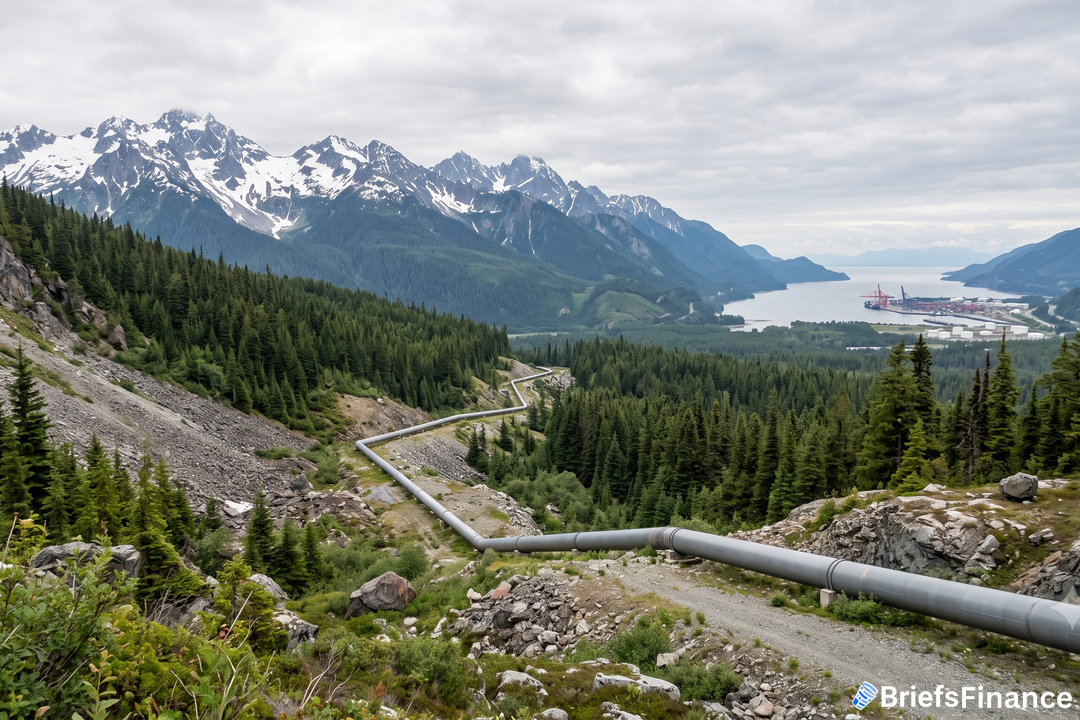
Carney selected Trans Mountain Corp., a firm under federal ownership, to construct the new pipeline. It will connect Alberta's oil sands to a port near Vancouver. The capacity is set at 1 million barrels per day. The government said it will consider fast-tracked regulatory approval for the project.
In a Friday note, Scotia's head of capital markets economics, Derek Holt, remarked, "This is fast, for Canada!" He added, "By comparison to Canada's past, it's feasible that the country is moving from a dithering, glacial pace of securing new investments toward something more in keeping with the needs of our times."
This push for accelerated approval contrasts sharply with the drawn-out process seen under previous governments. For instance, the original Trans Mountain expansion project took over a decade to receive final approval and faced numerous court challenges. Carney's plan signals a deliberate attempt to avoid such delays and capitalize on global energy demand.
Get your free investing masterclass bonus when you join Market Briefs, our free daily newsletter
U.S. cash markets were closed on Friday because of the Independence Day holiday. The gains were widespread.
All 11 market sectors rose. Seven stocks went up for every one that fell.
This new pipeline proposal represents a significant acceleration in Canada's energy infrastructure development.
The widespread market uptick suggests investors see the pipeline initiative as beneficial for more than just oil companies, boosting confidence across the whole economy.
Not all the gains came from the pipeline alone. GFL Environmental Inc. was the top-performing stock in the index. GFL Environmental is reportedly evaluating a transaction that would take the company private. Aecon Group also rose after Raymond James upgraded its stock rating, citing a data-center contract.
The proposed pipeline addresses a long-standing bottleneck for Canadian oil producers, who have often been forced to sell crude at a discount due to insufficient export capacity. By offering a direct route to Pacific markets, the project could help close that price gap and attract further investment in the energy sector.
The history of Canadian pipeline development is marked by regulatory gridlock and legal battles. The earlier Trans Mountain expansion, first proposed in 2012, faced years of environmental reviews, court challenges from Indigenous groups and provinces, and multiple ownership changes before finally being completed in 2024. That experience left Canadian oil producers heavily reliant on the U.S. market, where they routinely sold their product at a discount of $10 to $20 per barrel below benchmark prices. Carney's plan aims to bypass those historical obstacles by fast-tracking approvals and using a federal Crown corporation that already has construction expertise and existing right-of-way agreements.
Subscribe to Market Briefs, our free daily newsletter, and claim your bonus investing masterclass