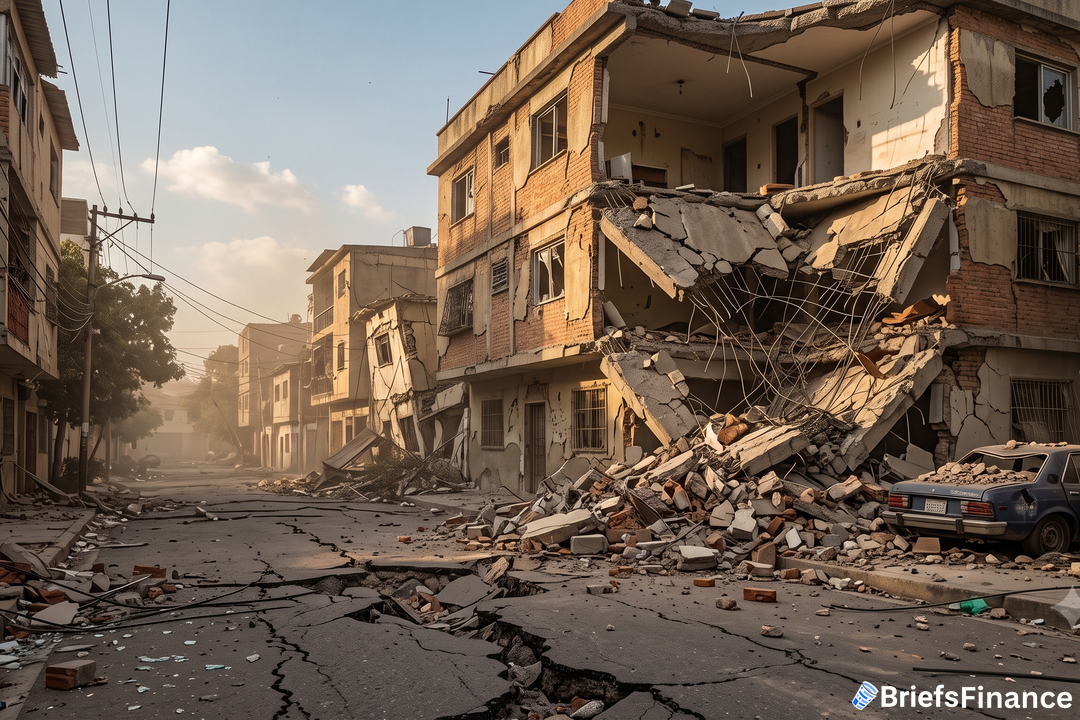
Within seconds, two major tremors struck Caracas and the coastal state of La Guaira - described by seismologists as "the strongest to hit Venezuela since 1900."
The earthquakes struck a region already grappling with political instability. The extensive destruction at Simón Bolívar International Airport hindered early rescue operations, necessitating that aid be delivered through other pathways. In La Guaira, the death of nearly all local officials created a leadership vacuum that complicated emergency coordination.
The political turmoil predated the disaster. Venezuela had been under intense international pressure, with the U.S. imposing sanctions and ultimately launching a military operation that captured Maduro in early January. Acting President Rodríguez, previously the vice president, inherited a fractured government and a humanitarian crisis. The earthquakes struck just weeks into her tenure, testing the capacity of an already strained emergency response system.
Communication networks and roads in the affected areas were destroyed, adding further strain to the already fragile emergency response system. Many hospitals were damaged, and the loss of key officials in La Guaira meant that local coordination was nearly impossible, forcing the national government to rely on military support and international assistance.
The country's political instability had been escalating for months. U.S. sanctions had severely weakened the economy, and the capture of former President Maduro left a power vacuum. Rodríguez's government now faced the dual challenge of coordinating a massive relief effort while trying to restore public confidence in a fractured administration.
Get your free investing masterclass bonus when you join Market Briefs, our free daily newsletter
The Disaster in Numbers
Roughly 800 structures fell, with 189 of them totally leveled. An initial satellite assessment from NASA and Oregon State University, revised on Monday, calculated that approximately 58,870 buildings had probably been harmed or demolished.
Economic Damage
Direct physical damage was estimated at $6.7 billion by the United Nations Development Programme, which is roughly 6% of the country's GDP. Total economic losses exceeded $10 billion according to risk modeler Verisk. Officials stated that the earthquakes led to only slight disruptions at oil terminals, and export levels remained mostly stable afterward. Additionally, inspectors examined the state-owned PDVSA fuel terminal at Catia La Mar, which sits in one of the most affected zones, for any structural harm.
International Response
Under United Nations coordination, nations such as Brazil, Mexico, Canada, Cuba, and Switzerland have offered aid in response to the catastrophe.
Criticism Over Response Speed
Authorities in Venezuela dismissed claims that they were slow to respond to the devastation from the earthquakes. At the press conference, Rodríguez said, "We enacted an emergency decree to mobilize civil protection and emergency procedures just hours after the shaking began."
Subscribe to Market Briefs, our free daily newsletter, and claim your bonus investing masterclass