Food price inflation in 2025 was 3.1%, according to a new report from Purdue University's Center for Commercial Agriculture. That is down sharply from the 11.8% peak in 2022, but up from 1.8% in 2024.
But the average masks two different trends: grocery prices rose 2.3% while restaurant prices jumped 4.0%. According to the report's authors, "beef prices are a particular concern."
The Beef Factor
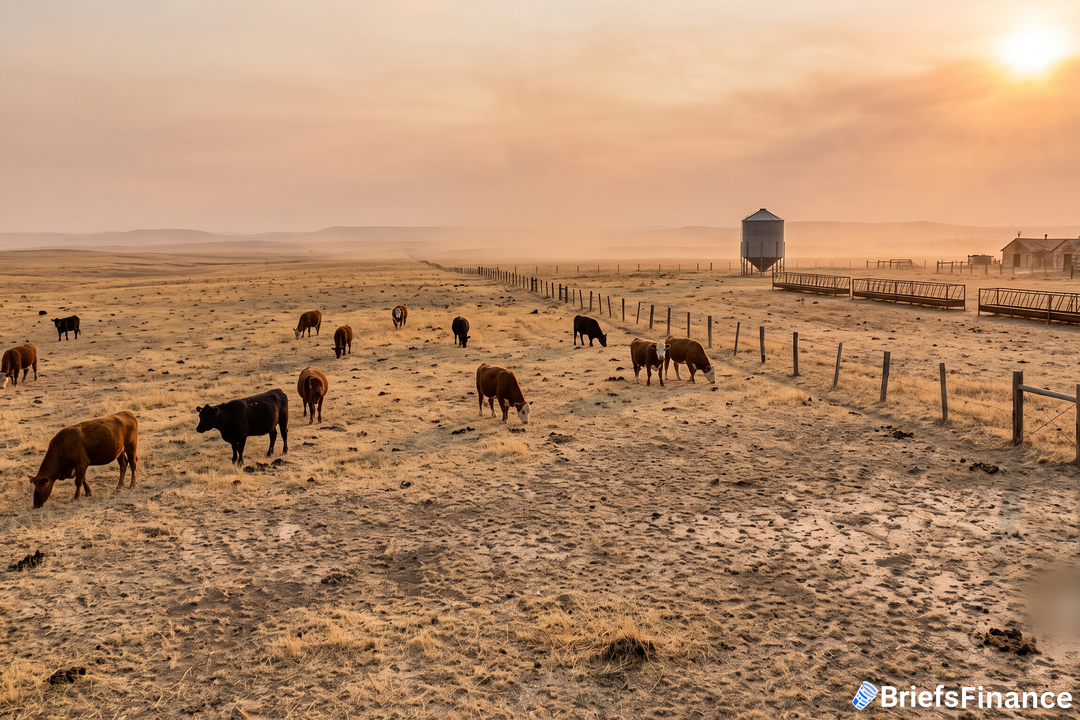
Beef prices rose 16% from September 2024 to September 2025. The reason: the U.S. cattle herd is shrinking. The projected inventory for 2025 is 86 million head, the lowest since 1951.
This shortage pushed up restaurant menus faster than grocery store shelves. The report, authored by Caitlinn Hubbell and Joe Balagtas, relies on livestock outlooks from the USDA and Consumer Price Index data from the Bureau of Labor Statistics.
This cattle shortage did not happen overnight. Years of severe drought across the Great Plains reduced grazing land, while high corn and soybean costs made feed expensive for ranchers. Many producers responded by culling herds, sending more animals to slaughter than they replaced.
Get your free investing masterclass bonus when you join Market Briefs, our free daily newsletter
Rebuilding a herd is a slow process - it takes two to three years for a heifer to reach breeding age and produce a calf for market. As a result, the USDA projects that beef prices will remain elevated through at least 2028, even if weather and feed costs improve.
Beef alone accounted for a large share of the grocery price increase. According to the USDA's livestock outlook, a shortage of cattle is expected to drive prices to record levels in 2026, and the high cost of beef at grocery stores could last several years as ranchers gradually rebuild herds.
Food Insecurity Grows
In 2025, 13.3% of Americans experienced food insecurity, and 46% of SNAP participants reported the same. That is a 10 percentage point jump from recent years.
The report points to "the cumulative effect of years of elevated food prices," according to the authors. It also notes uncertainty around federal government funding for nutrition assistance programs and recent changes to SNAP. The data comes from the Consumer Food Insights Survey at Purdue, which tracks these trends monthly.
Low-income households feel the pressure most. The rising food insecurity rate underscores the persistent strain on American households, particularly those already grappling with higher costs for housing and energy. Combined with potential cuts to SNAP benefits, the situation could worsen in 2026, according to the report's authors.
What to Watch
The USDA forecasts some relief. Egg prices are predicted to fall 22.2% in 2026. But beef prices are expected to keep rising to record highs as the cattle cycle hits its peak.
The eventual path of food prices depends on the broader economy. Interest rates, trade policies, and weather events will all play a role. Investors should watch USDA livestock production outlooks and Consumer Price Index data.
The authors caution that "food price uncertainty is not over yet."
Subscribe to Market Briefs, our free daily newsletter, and claim your bonus investing masterclass