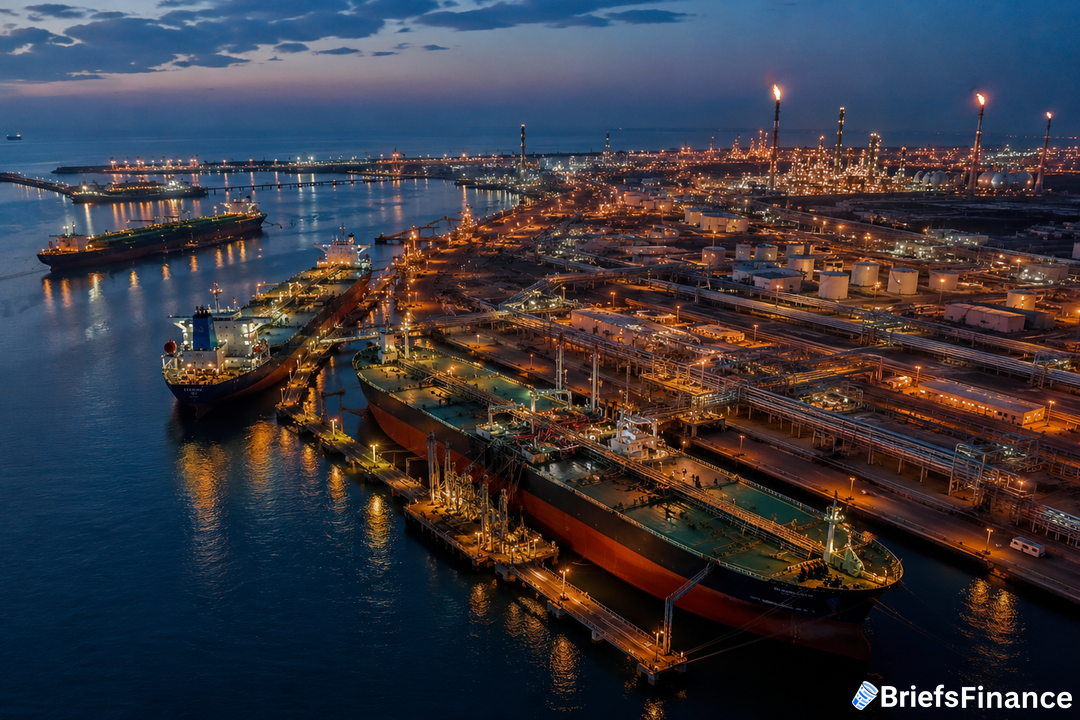
A peace deal between the US and Iran unlocked oil flows through the Strait of Hormuz that had been blocked for months. OPEC pumped 2.34 million more barrels per day in June. But the group's total output is still 28% below where it stood in February, before the conflict escalated.
The June Production Surge
OPEC's total crude output rose to 18.75 million barrels per day in June, according to a Bloomberg survey that used estimates from Rystad Energy, Kpler, Rapidan Energy Group, and FGE NexantECA.
Why the Bottleneck Broke
The agreement between Washington and Tehran permitted Gulf nations to restart broader crude shipments via the Strait of Hormuz. Prior to the accord, a limited number of shipments were covertly moved through the strait, but the deal allowed for a significant increase in legal transports. Saudi shipments through the Strait of Hormuz have now reached 90% of typical shipping rates.
Get your free investing masterclass bonus when you join Market Briefs, our free daily newsletter
That still leaves a gap, but it represents a huge improvement from the conflict period when Kuwait's production was cut by 80%. The resumption of flows also boosted Iran's output. Meanwhile, Russia - an OPEC+ member - has been increasing its crude exports to record levels, adding more supply to the market.
The Broader Context
A vital conduit for global oil trade, the Strait of Hormuz handles about a fifth of daily petroleum shipments worldwide. The US-Iran conflict had severely restricted flows, causing a sharp drop in OPEC output and spiking oil prices earlier this year. While the peace deal has alleviated those supply fears, the market now faces a different challenge: a growing surplus amid weakening demand.
The fierce conflict had sent crude prices soaring, with Brent briefly exceeding $100 per barrel, before settling back. The peace accord's resolution of the strait blockade has reversed much of the supply loss, but the market now must digest an unexpected flood of barrels just as economic headwinds curb consumption.
What Comes Next
Major OPEC+ members are scheduled to hold a video conference on Sunday, the day after this article's publication date, to discuss production limits for August. Two delegates said, "We expect a small quota increase of 188,000 barrels per day."
But the rise in supply comes at a time when demand is weak. China, the world's top oil consumer, has subdued fuel demand. The combination of more supply and softer demand is creating a market surplus. That could force OPEC nations to compete for customers, pushing prices lower.
Brent crude oil futures - contracts to buy oil at a set price in the future - traded at about $72 per barrel on the Friday before this article was published. The UAE's exit from OPEC and Iraq's threat to leave also raise questions about the group's unity.
Subscribe to Market Briefs, our free daily newsletter, and claim your bonus investing masterclass