The Great Profit‑Taking
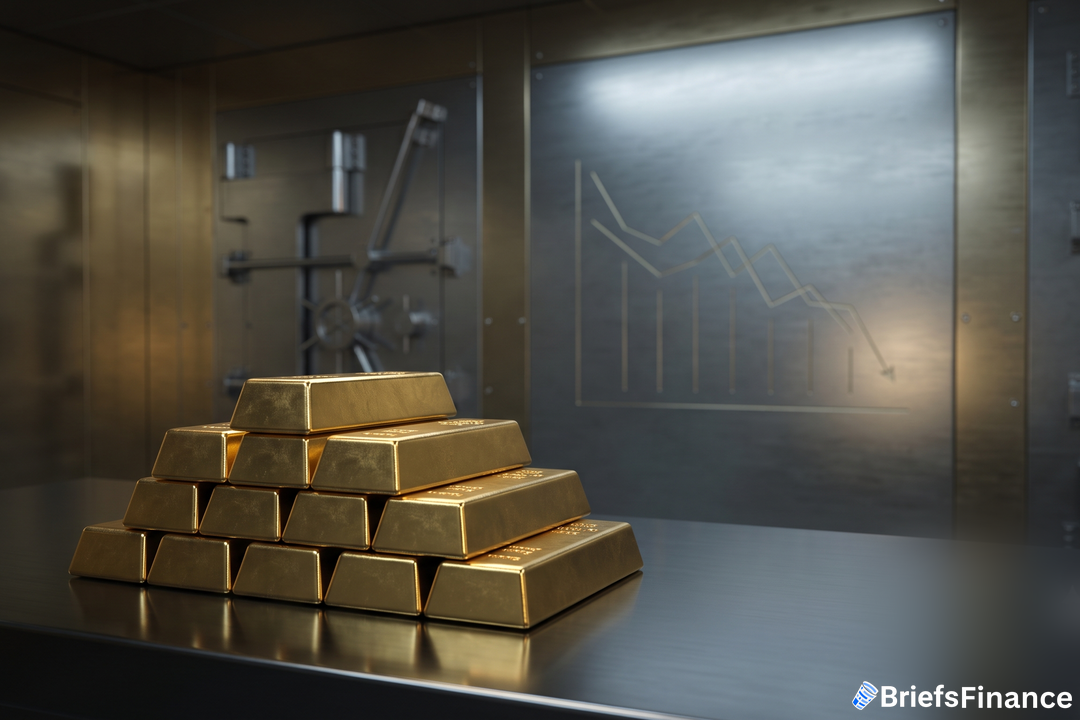
Since reaching the January peak, investors have withdrawn nearly $18 billion from exchange-traded funds tracked by Bloomberg. Greg Shearer and his JPMorgan team currently forecast global gold ETF outflows of roughly 50 tons this year, a sharp drop from the roughly 400 tons of inflows they previously projected.
The selling is mainly due to investors taking profits, according to Bart Melek, who serves as TD Securities' head of commodity strategy. "Most of gold's correction seems to be long liquidations as opposed to people taking on short exposure," he explained. "At this point, we just don't have a lot of shorts in there. So there's a lot of room to expand, and still a lot of room to cut long exposure."
Central Banks Keep Buying
While ETF investors are selling, central banks are buying. In the first quarter, central banks as a whole upped their pace of buying. Sovereigns bought more than 240 tons of gold in the first quarter. Notably, the People's Bank of China has kept purchasing gold during the entire decline, reaching its fastest acquisition pace since 2023 in June.
Get your free investing masterclass bonus when you join Market Briefs, our free daily newsletter
Chris Louney, who works as a commodities strategist at Royal Bank of Canada, stated: "I generally see consistency in how central banks are thinking about gold reserves. If you're trying to de‑dollarize and diversify, gold stands out as that long term reserve asset that's already a part of the global monetary system."
What the Analysts Say
Banks have turned more cautious. In recent weeks, a number of banks - UBS, Goldman Sachs, and Deutsche Bank among them - have lowered their gold price projections. Nicky Shiels, who oversees metals strategy at MKS Pamp SA, said the market has shifted "from euphoria to reckoning."
The macro outlook is a headwind. Oil prices have surged due to the Iran conflict, prompting investors to expect rate increases that would reduce gold's attractiveness compared to yield-bearing assets. JPMorgan's Greg Shearer expects the pressure to continue: "the macro/rates setup will likely continue to cap gold in a lower range over the coming quarters."
Some investors are waiting for better timing. Alexandre Carrier, from DNCA Invest Strategic Resource Fund, commented: "With more clarity on rates and when the US dollar stops strengthening, we will probably reinforce our positions."
What to Watch
Quantitative funds that trade rapidly, along with other speculators, still have potential to increase short positions if the macroeconomic environment deteriorates, especially if the dollar and yields remain high or inflation maintains the Fed's hawkish stance, according to Bart Melek. Central bank buying provides a floor, but many analysts expect gold to trade in a lower range for the coming quarters. The metal breached $4,000 an ounce on multiple occasions during the sell‑off.
Subscribe to Market Briefs, our free daily newsletter, and claim your bonus investing masterclass