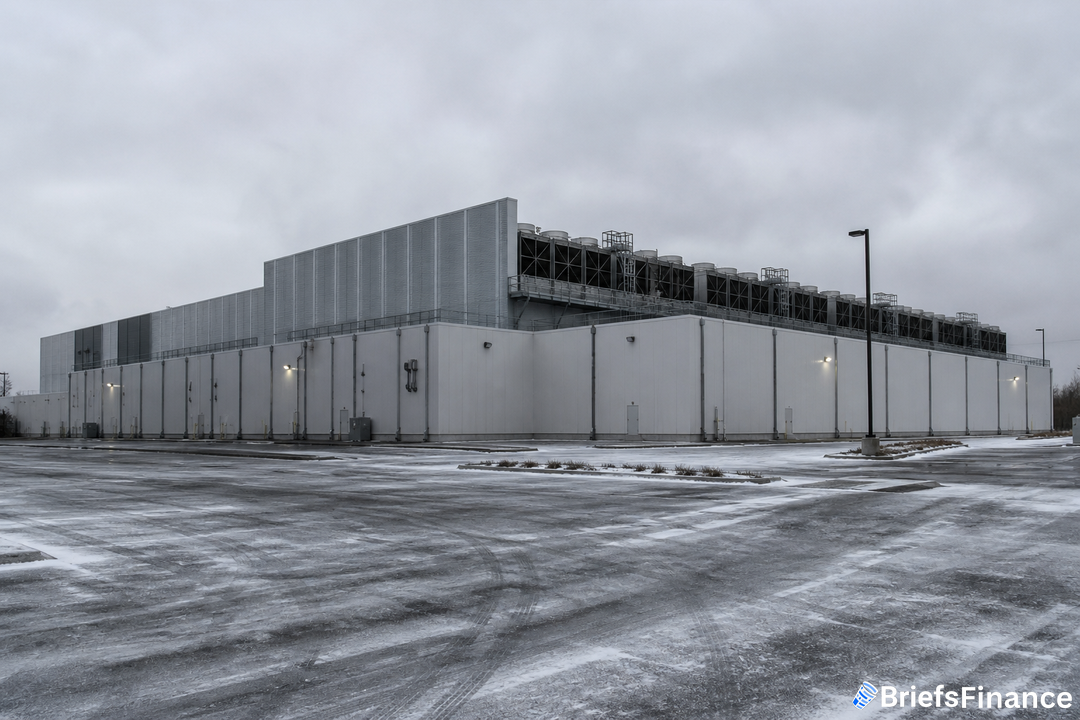
A sudden shift in appetite for neoclouds
After a wide-open AI buying spree, investors are turning picky. Elice Inc., a South Korean AI-compute provider little known abroad until this week, dropped 32% on its first day of trading in Seoul. That selloff hit even though Elice already has government contracts, operating data centers and profitable results.
CoreWeave Inc. - the most prominent neocloud, based in Livingston, New Jersey - also came under pressure with a roughly 20% slide in the past week, while its bonds slipped into distressed territory on worries over heavy borrowing. CoreWeave helped define the playbook of taking on sizable debt to stock up on Nvidia Corp. GPUs, then leasing that capacity out on multiyear deals. In its 18 months as a public company, investor confidence has swung wildly: the valuation was nearly $90 billion at one point last year, before the shares fell more than 60% from that high.
Nvidia is both an investor in and vocal supporter of CoreWeave. Chief Executive Officer Jensen Huang attempted to bolster sentiment and briefly buoyed the stock, but the decline returned the following day. Bloomberg data also show a sharp October cooldown across some neocloud names closely tied to Nvidia.
IPOs, valuations and capacity shortfalls
The retreat is rippling through dealmaking. Weeks before Elice listed, Australia's Firmus Grid Ltd. pulled its IPO plans. Earlier this month it appeared close to staging one of Australia's biggest-ever listings, potentially raising up to $5.5 billion in a deal valuing the company at $30 billion, but scrutiny from US fund managers ultimately derailed the effort.
In the UK, Nscale Ltd. is meeting resistance on its targeted IPO valuation. Some backers have argued a range of $16 billion to $19 billion would better land with buyers, Bloomberg reported Monday. Both Firmus and Nscale are wrestling with the gap between signed demand and real-world buildouts, having activated only a sliver of their intended data-center footprint. In Nscale's case, it had built or leased under 1% of the "potential" capacity in its S-1, measured in megawatts as of August 2026.
SoftBank Group Corp.'s US AI-infrastructure vehicle, SB Energy, has seen its IPO talks slow significantly, with regulatory sign-offs also taking longer than hoped. And AirTrunk - the Australia-based data center developer backed by Blackstone Inc. - postponed to next year a planned Singapore REIT of about $1.5 billion that aimed to deliver roughly a 6% yield, after US rates moved higher in September.
When uncertainty surrounds a sector, stay informed with the free Market Briefs newsletter that explains economy and markets in five minutes
The strain is not just an AI story. In September, Smart-ring maker Oura Inc. halted its IPO plans amid rising borrowing costs, while a protracted war against Iran continued.
Debt, demand and market signals
The market is now pricing balance sheets, build risks and whether customer usage will really fill racks. As Vantage Global's Hebe Chen put it, "The era of 'buy everything AI,' is over." In credit, appetite is thinning: JPMorgan Chase & Co. and Goldman Sachs Group Inc. increased pricing on a $5 billion leveraged loan package for Volta Infrastructure Holdings Ltd. as buyers asked for more yield to hold AI-linked risk.
There is still strength in the upstream hardware winners. ASML Holding NV and Taiwan Semiconductor Manufacturing Co. have posted robust AI-fueled results. Even so, TSMC shares fell last week, and chip stocks are in their longest losing stretch since the global financial crisis.
Why investors should pay attention
Neoclouds rent compute access to big AI customers like Microsoft Corp., Meta Platforms Inc., Anthropic PBC and OpenAI, so their fortunes sit close to those buyers' capex cycles. At Yorkville Ives & Co., senior managing director Dan Ives cautioned, "Any negative data point or hint of nervousness causes panic for the tech sector as this multitrillion-dollar AI foundation buildout is tied to a handful of major tech players."
The scale at stake is huge. Anthropic, eyeing a potential listing as soon as next month, has already locked in AI infrastructure contracts worth hundreds of billions of dollars and, per Bloomberg, is discussing $45 billion of additional capacity with Nscale. The AI trade has also minted blockbusters, including SpaceX's record-setting IPO earlier this year.
The bottom line: enthusiasm has cooled for highly levered, build-first neocloud models. That is pressuring share prices and bonds, complicating IPOs and pushing up financing costs. For portfolios exposed to AI infrastructure, track the boring stuff - live capacity, contract terms and cash flow conversion - not just the headline demand narrative. Homin Lee at Lombard Odier summed up the spillover to smaller Asian players and reiterated a focus on large-cap tech in North America and Asia.
Even when headlines highlight one sector, get broader context by subscribing to the free Market Briefs for daily five-minute updates