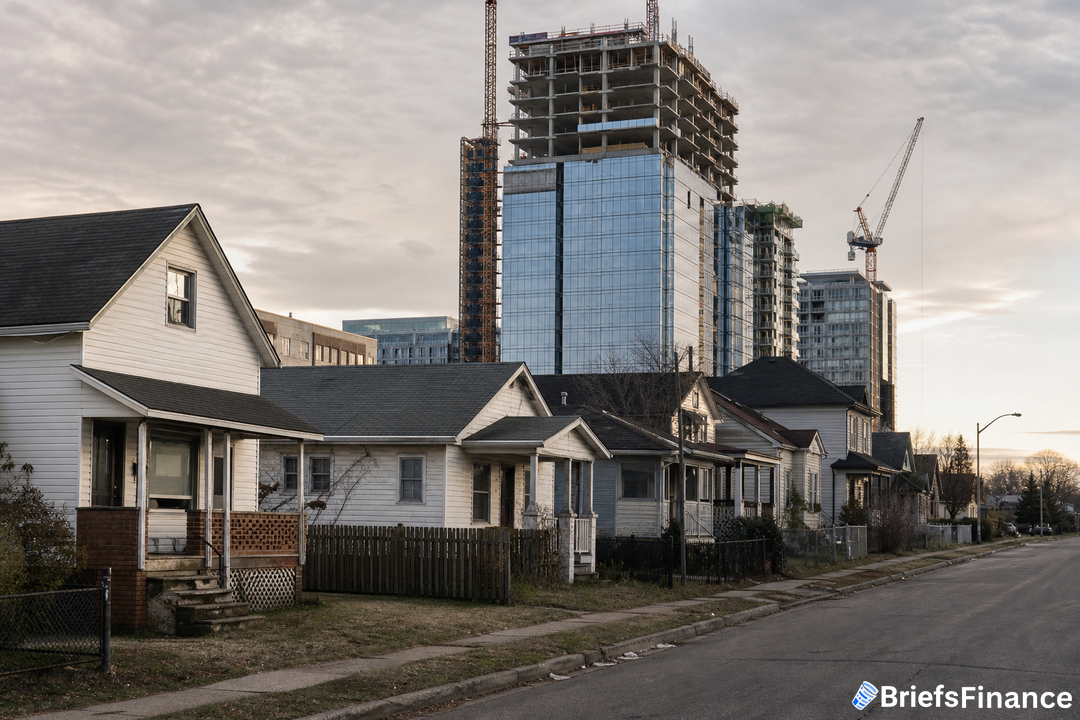
One market, two very different experiences
Rates topping 7% landed on top of already lofty home prices, sidelining many would-be buyers and leaving sales flat in a lot of cities. Sellers at the lower end have resorted to price cuts to bring back interest.
Meanwhile, the upper tier keeps moving. With many affluent buyers using large down payments or paying all cash to sidestep borrowing costs, national prices have climbed in excess of 4% in the last two years. First American Data and Analytics says this split shows up in most big metros, with 33 of the top 50 seeing luxury outperform starter homes.
Where the gap is widest - and where it is not
Greater San Francisco is a case study. The AI boom has minted new wealth for tech workers, and nearly all the price momentum is at the high end. Luxury is up 4.6% year over year, while the starter tier is down 1.7% and the middle tier is off 0.6%, according to First American.
Tampa tells a different story but the same divide. Postpandemic building swelled supply, and in August the bottom third - below $305,000 - fell 4.1%. The luxury bracket - above $471,833 - still managed 0.4% growth.
Not every city splits the same way, though. In more affordable markets drawing first-time buyers, entry-level prices are leading: Cleveland's starter tier rose 5.5% in August versus 4.3% for luxury, and Pittsburgh's starter prices climbed 5% against 2.6% at the top end. By contrast, entry-level prices in Austin and Dallas are down at least 5% from a year earlier.
Builders and buyers adjust to the new math
The same dynamics are remaking new construction. Builders are tilting toward luxury, where profits run fatter than on starter homes. Many have struggled to clear backlogs of entry-level units and are dangling sizable incentives, including mortgage rate buydowns, to move them.
Recent results underline the tilt. Entry-focused Lennar posted a third quarter average selling price of $372,000, down from $383,000 a year earlier. Luxury specialist Toll Brothers reported $996,000 for the quarter, up from $974,000.
When housing trends feel like separate stories, stay informed with the free Market Briefs newsletter that simplifies it all
On its August call, Toll said 25% of buyers are paying cash. "Demand from luxury buyers remained relatively resilient," Executive Chairman Douglas Yearley said.
What it looks like on the ground
A Tampa-area couple, Travis and Kate Glenn-Rhodes, pressed pause as rates neared 7.5%. Travis, who is employed at the Port of Tampa Bay, and Kate, who boards dogs, are in their mid 30s and had been hunting for roughly 2,000 square feet with a $350,000 to $400,000 budget. "We stopped looking right at that point," he said.
"We said, 'We can't do this.'" To keep their expected monthly payment after the rate jump, they would need to add $40,000 to their down payment, which would drain savings they want to keep for emergencies. "So either the price of the house has to come down or we have to wait another year," he said.
For some, softer entry-level demand is opening doors. Alan Feruglio, a 34 year old procurement and compliance manager who moved to Tampa four years ago, had kept his search casual during the run-up. With local prices easing, he is now actively looking, targeting homes at a maximum of around $350,000. "Prices overall are starting to become a little more reasonable," he said, noting listings with "deep cuts" such as $20,000 off the ask.
Move-up buyers with big equity cushions are also on the move. Marten Sjoquist bought in Oak Island, N.C., in 2021, a home that he says has nearly doubled in value over the past five years. They sold this summer for $1.55 million and are using the proceeds to buy in Maine for about $725,000, paying cash.
"With the rates, we felt like it was a good setup to be able to buy something with cash," he said. On the brokerage side, Greenville, S.C., agent Don Wessel said higher rates have frozen activity in a place that is usually "an extremely popular area," with first-time buyers most deterred while cash buyers keep going, alongside those forced to move by job or family shifts.
Why it matters for investors
Housing is moving in two lanes. Cash-rich and equity-rich buyers are keeping the high end buoyant in many metros, while rate sensitive entry-level demand fades, prompting price cuts and incentives. Builders are following the money with more upscale product and financial sweeteners to clear lower-priced stock.
For portfolios tied to housing, watch where the resilience sits. The upper tier looks sturdier in a majority of large metros, while starter tiers swing with mortgage costs and affordability. That split is showing up in price spreads, builder mix, and who is still transacting.
If you want a quick, clear read on what matters in housing and markets, sign up for Market Briefs