What changed and why it matters
The Trump administration moved to remove South Africa from the African Growth and Opportunity Act, a shift business leaders say will nick specific sectors more than the broader economy. On Tuesday, Raymond Parsons of North West University's Business School said, "While only about 10% of South Africa's exports to the US are currently subject to AGOA, South Africa's exit still puts thousands of jobs at risk in these sectors."
Given that only a small slice of trade is directly affected, Pretoria played down the impact, and local financial markets reacted calmly to the announcement.
How markets read it
He added, "It could well be that markets are rationally assigning some residual probability to further negotiation."
Higher US trade levies since President Donald Trump returned to power last year have already stripped away much of AGOA's edge. As the Bureau for Economic Research put it, "Much of the benefit of preferential access has already been eroded by existing US tariffs." Still, it cautioned that for certain manufacturers and suppliers the hit "may be substantial even if the aggregate impact on the economy is relatively limited."
Global policy shifts remind investors that new tools can reveal subtle risks and opportunities. We're hosting our first ever investor livestream on 11/17 to show you how to use ChatGPT and Claude to invest like a pro, hosted by Briefs Finance CEO Jaspreet Singh. Save your seat.
Where the pressure will show up
Without AGOA preferences, US duties will apply to South African citrus, with rates "generally between 1.5 and 2.5 US cents per kilogram," said Boitshoko Ntshabele, CEO of the Citrus Growers' Association of Southern Africa. He added that some citrus types will be at "a severe disadvantage to competitors like Peru and Chile, who benefit from trade agreements as well as shorter transit times." Business Unity South Africa expects firms to see "weaker US demand, especially in key agricultural goods," but noted that "we see the loss of preferential access in the new year as having no bearing on underlying ties."
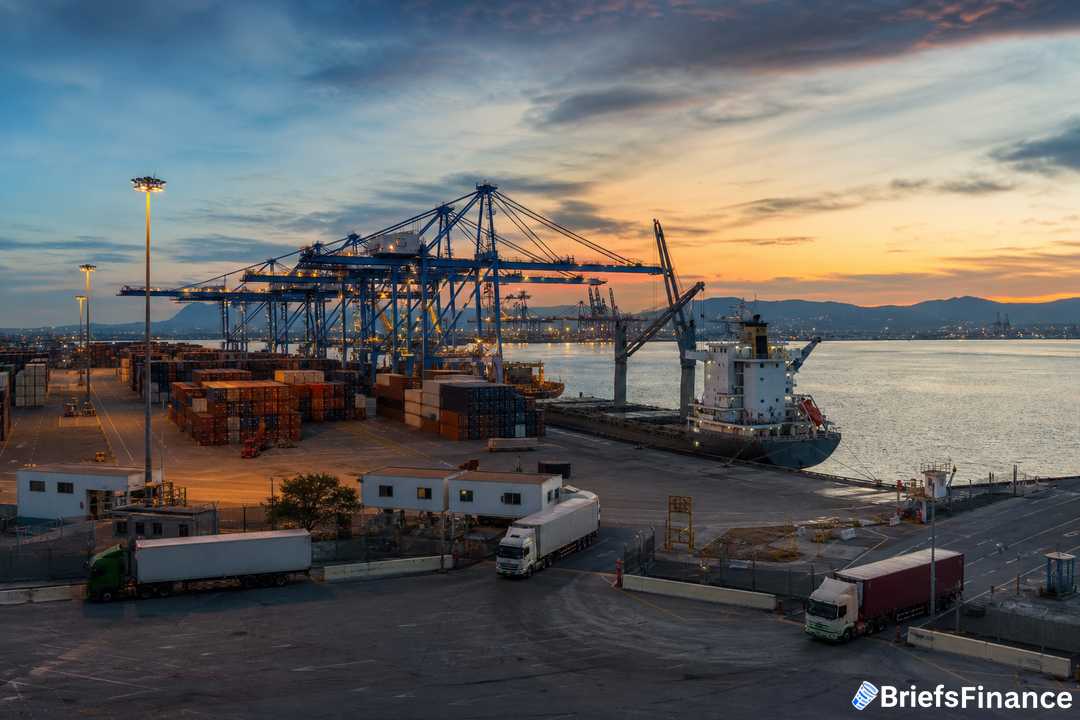
Autos are already feeling it. For Mercedes-Benz Group AG, the administration's 2025 tariff actions hit sooner, and the company has been exporting the low-margin C-Class from its Eastern Cape factory since 1997. BMW AG, which previously exported the Pretoria-built 3-Series sedan to the US, switched in 2018 to producing the X3 SUV for other markets.
BUSA added that "Jobs will be lost - the last thing South Africa needs in the midst of an employment crisis," but put the likely scale "in the range of a few thousand." It also highlighted diversification already underway: "In the year to August, farm and food exports to the US fell by 22%, but sales to other markets rose by 9% to $15.7 billion - an increase nearly ten times the US loss." A bigger worry, it said, is that "relations between our two governments deteriorate further."
What this means for your portfolio
The headline effect looks limited, but the pain concentrates in agriculture and autos. Citrus will face applicable US duties once the preference ends in the new year, and the auto supply chain around the Eastern Cape remains exposed as US tariff applications weigh on export volumes. Broader ties spanning commerce, the economy and investment remain intact, but keep an eye on demand shifts, margins under new duties, and any signs of policy repair or further strain.
Learning ways to blend insight and technology helps investors adapt with greater confidence. On 11/17, our CEO Jaspreet Singh goes live for our first ever investor livestream on how to use ChatGPT and Claude to invest like a pro. Register to join him.