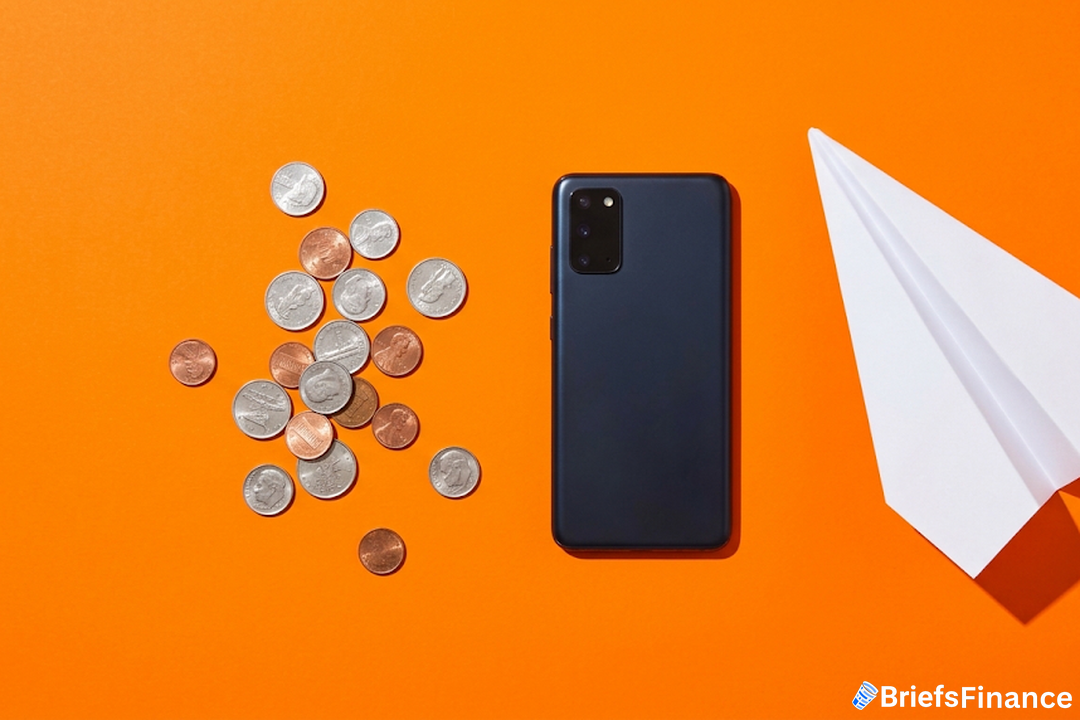
How do you save $200 a month when your whole paycheck is $2,000?
Saving on a low income is hard because rent, groceries and the phone bill can take almost all of your pay. But even $200 a month adds up: it becomes your first $2,000 in 10 months, and $2,000 in savings can cover a car repair without a credit card.
The way to make that $200 happen is to move it first, before you spend anything. A transfer set for the day your pay lands sends the money to savings before it can get spent.
The five steps below show how to set up that transfer and find the $200 in your statements, your biggest bills and help programs you may qualify for. And once your savings is set, join our free investor livestream on November 17, where CEO Jaspreet Singh shows how to use ChatGPT and Claude to research stocks like a pro.
Step 1: See Where Your Money Goes
You can't find $200 until you know where the $2,000 goes. Experian suggests going through your bank and card statements for the past three months or so and sorting what you spent into essentials and nonessentials.
Then circle anything on the nonessentials list you'd be OK skipping next month. Those circled amounts are where your $200 can come from, and the same list is the start of your budget.
Step 2: Set Your Savings Amount With 75/15/10
Once you know where the $2,000 goes, set how much you'll save each month. The Climb to Wealth class teaches the 75/15/10 split: at most 75 percent of take-home pay on lifestyle, at least 15 percent invested and at least 10 percent saved.
Here's what that looks like on $2,000 a month, as an example:
| Part | Share of take-home pay | On $2,000 a month |
|---|---|---|
| Lifestyle (rent, food, bills, fun) | At most 75% | $1,500 |
| Invested | At least 15% | $300 |
| Saved | At least 10% | $200 |
Investing involves risk including loss, and past performance does not indicate future results.
At $200 a month, a first $2,000 takes 10 months. If a lower bill frees up another $30 and that goes to savings too, it takes 9.
If you can't free up $200 yet, Steps 4 and 5 show where to find it.
Step 3: Make It Automatic on Payday
Once you have an amount, make it automatic, so you don't have to remember to save. Set a transfer to savings for the day your pay lands, so the money moves before you can spend it. Automatic transfers to savings are one of Experian's tips for saving on a low income.
If you're paid on the 1st and the 15th, that can be two $100 transfers, one on each payday.
Keep the $200 in a separate savings account, not the checking account you spend from. If the $200 moves before you see it in checking, it isn't there to spend, and this payday transfer is the "automate it" step the class teaches.
Step 4: Cut Your Biggest Costs First
Next, lower your costs so the $200 transfer is easier to afford. Start with the bills that cost the most each month, and use our guide on how to lower your monthly bills for a call script for phone, internet and insurance.
Then cancel subscriptions you don't use. Experian suggests listing every recurring charge from your statements, and unused subscriptions are one of the ways people waste money.
After bills and subscriptions, look at costs that change week to week. For groceries, Experian suggests planning meals around what's on sale each week, and for getting around, it suggests walking, biking, carpooling or public transportation when you can.
Step 5: Claim Help You May Qualify For
Lower bills aren't the only way to make room for savings. There are also programs built to help people on smaller paychecks, and you may qualify for some of them:
- Lifeline: Lifeline, a federal program, cuts what you pay for phone or internet service by up to $9.25 a month for people who qualify, based on income or through a program like SNAP or Medicaid. At the full discount, that's $111 a year.
- Earned Income Tax Credit: The IRS says the EITC helps low- to moderate-income workers and families get a tax break, and it can lower the tax you owe and may increase your refund.
- USAGov benefit finder: USAGov's benefit finder helps you see which government benefits you might be eligible for and how to apply.
Check each program's own page to see whether you qualify. And when a tax refund, bonus or cash gift comes in, Experian suggests putting it toward savings or paying down debt.
When There's Nothing Left to Save
Sometimes the must-pay bills take the whole paycheck, and there's nothing to move. If that's where you are, the first job is getting your costs below your pay, either by lowering them or by bringing in more income.
Our guide on how to stop living paycheck to paycheck walks through how to lower costs and earn more, step by step.
Questions People Ask About Saving on a Low Income
How much should I save on a low income?
The Climb to Wealth class teaches at least 10 percent of take-home pay. On $2,000 a month, that's $200, and a first $2,000 takes 10 months.
If a lower phone or internet bill frees up $30 a month and that goes to savings too, $230 a month gets you there in 9 months. Eight deposits reach $1,840, and the ninth passes $2,000.
Where should I keep my savings?
Keep your savings in a separate account you can reach in a day or two if the car needs a repair or a bill comes in higher than usual. Our guide to whether a high-yield savings account is worth it compares one with a regular savings account and a CD.
That first $2,000 is your emergency cushion. After that, the class order moves on to paying off credit card debt in the right order.
Your Low-Income Savings Plan in Three Lines
- Pick an amount, aiming for 10 percent of take-home pay, and move it to a separate account on payday.
- Free up money by cutting your biggest bills and unused subscriptions first.
- Check programs you may qualify for, and send any extra money that comes in to savings.
Set the $200 transfer for your next payday, then call about your phone or internet bill. A $30 cut moves your first emergency fund from 10 months away to 9.
To keep learning how to manage your money on any budget, join our free investor livestream on November 17, where CEO Jaspreet Singh will research stocks live with ChatGPT and Claude.