Say you grab takeout on Monday for $46, see a movie on Friday for $32, and pick up four coffees and a birthday gift somewhere in between. By Sunday, those small buys add up to $140.
Every one of those purchases is spending, and the only way to see how they add up is to write them down. That's what tracking your spending means: writing down what you buy and adding it up, so you know where your paycheck goes.
Tracking matters because a $140 week, repeated every week, adds up to about $600 a month. You won't see that total unless you add it up.
Tracking takes three things: last month's statements, a few spending groups and about 15 minutes a week to add new purchases. If you already have a budget, tracking shows whether you're sticking to it, and if you don't, your first month of tracking gives you the real numbers you need to make a budget.
Below are four steps to start tracking your spending, plus a sample tracking table from a $4,000-a-month budget that you can copy. And if you want to keep learning about money beyond your budget, join our free investor livestream on November 17, where CEO Jaspreet Singh shows how to use ChatGPT and Claude to research stocks like a pro.
Why Track Your Spending Before You Cut Anything
Once you see a number like $600 a month, you might want to start cutting right away, like canceling a streaming service or skipping coffee. But until you track, you don't know which cut would save the most.
The CFPB spending tracker says people who follow their spending for a full month often find small purchases adding up, plus spending that doesn't match their own priorities. Once they see where the money goes, the CFPB says, many people find money for emergencies, surprise costs and goals.
The CFPB doesn't promise an amount. What you find depends on what's in your own statements.
Step 1: Gather Last Month's Records
Start with the month that already happened, since the records are already sitting in your bank app. Pull your bank and card statements for last month, any receipts you kept and a note of anything you paid in cash.
The CFPB tracker suggests keeping receipts in one envelope and writing down any purchase that came without one. The tracker also says to count bills you share, so if you split the internet with a roommate, your half goes on the list.
Step 2: Pick One Place to Track It
Once you have last month's records, you need one place to write them down. A notebook, a spreadsheet, your bank's app or a budgeting app all work for tracking.
Pick the one you'll open every week.
One option is the Briefs money tracker, which tracks your income, your expenses and the 75/15/10 split in one place, and it projects years ahead to show the month you go green.
Step 3: Sort Purchases Into a Few Groups
With your records in one place, put each purchase into a group so you can see what you spent on each kind of thing. The CFPB tracker uses twelve groups:
- Cell phone
- Debt payments
- Eating out
- Education and childcare
- Entertainment and personal care
- Groceries and other supplies
- Health
- Helping others
- Housing and utilities
- Pets
- Transport
- Other
You can use fewer groups, as long as they match the lines in your budget. Then circle the costs that are the same amount every month, like rent, a car payment or a phone bill.
The CFPB says those repeat costs tend to be needs and obligations, while the costs you could cut back on, like eating out, are generally wants.
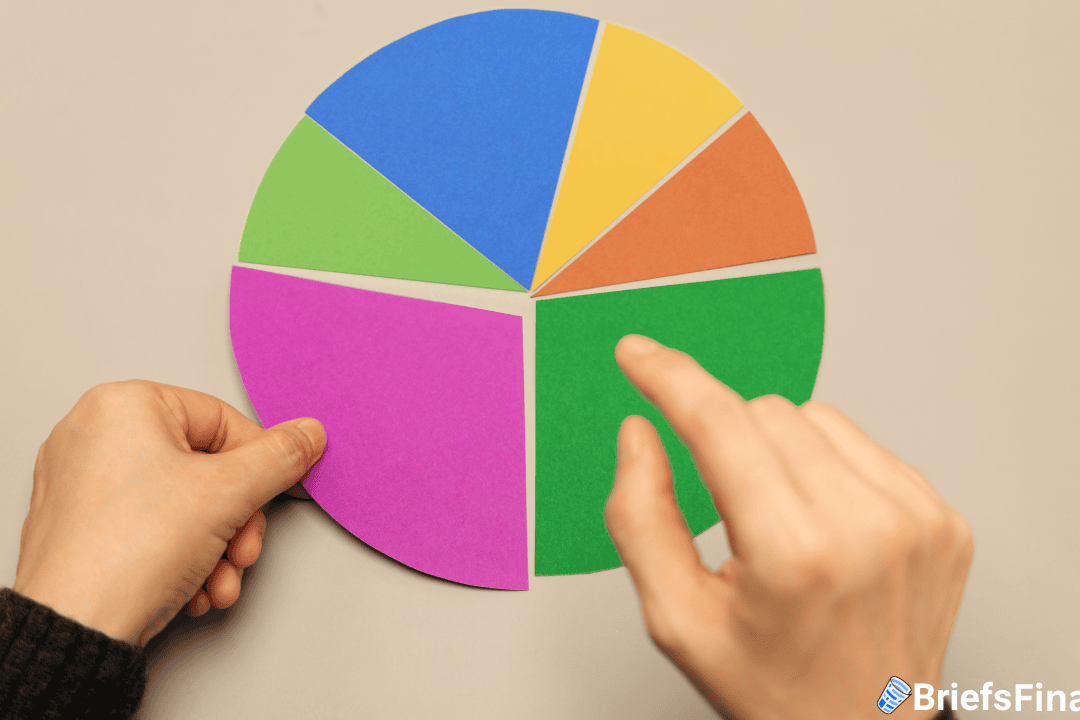
Sorting takes less time each week if you use the 75/15/10 split from the Climb to Wealth class. The split puts at most 75 percent of take-home pay toward lifestyle, at least 15 percent invested and at least 10 percent saved.
When the invested and saved parts move automatically on payday, which is the "automate it" step the class teaches, you only have to track the 75 percent you spend on lifestyle. Investing involves risk including loss, and past performance does not indicate future results.
Step 4: Your 15-Minute Weekly Check
Once last month is sorted, keeping it up takes about 15 minutes a week. Pick one weekday and one time, like Sunday at 7 p.m., and stick with it.
Consumer.gov suggests a monthly check: write down what you spend, then check when the month ends whether you spent what you planned. Checking weekly means you find out in week two instead of week four.
Here's what to do in each 5-minute part of your weekly check:
- Add the week (about 5 minutes): Enter the past seven days of purchases into their groups.
- Total the month so far (about 5 minutes): Add each group's weeks together and compare the total with that group's monthly plan.
- Pick one change (about 5 minutes): If a group is running over, choose one small fix for the week ahead.
These times are estimates, and your first few weekly checks may take longer. The CFPB tracker is laid out by week too, with a column for each week of the month.
A Tracking Example You Can Copy
Here's what a week-two check looks like in a sample month: the "everything else" group is closest to its limit, with $110 left for the rest of the month.
This sample uses take-home pay of $4,000 a month, the same numbers as our budget guide. The lifestyle part is $3,000: rent $1,300, utilities and phone $250, groceries $500, car and gas $400, insurance $150 and everything else (eating out, fun, gifts) $400.
Rent, utilities and phone, and insurance stay the same each month, so once they're paid, you don't need to check them again. That leaves groceries, car and gas, and everything else for the weekly check. Here are groceries and everything else after week two:
| Group | Week 1 | Week 2 | Month so far | Monthly plan | Left this month |
|---|---|---|---|---|---|
| Groceries | $142 | $118 | $260 | $500 | $240 |
| Everything else | $150 | $140 | $290 | $400 | $110 |
Remember the $140 week from the start? That week's $140 came from takeout ($46), movie tickets ($32), four coffees ($22) and a birthday gift ($40).
Groceries still have $240 left with two weeks to go, while "everything else" has $110. That's about $55 a week for that group, so one change like one fewer takeout night is a place to start, and every number here is an example, not a target.
What to Do With What You Find
Once you've done a few weekly checks, here's what to do with three things they might show you:
- A bill that looks too high: Phone, internet and insurance bills can often come down, so see how to lower your monthly bills.
- Wants that run over: Make one small change, like the takeout swap above, instead of rebuilding your whole plan.
- Money you free up: Send it to your first $2,000, the first goal the Climb to Wealth class teaches.
Questions People Ask About Tracking Spending
How long should you track your spending?
The CFPB says a full month lets you see all your income and spending in one place. If a month feels like too much, the CFPB says one or two weeks is a good start.
Do you need to track every purchase?
Yes, including cash and small purchases. In the sample month above, four coffees came to $22 in one week, and those are the small purchases the CFPB says add up.
Your Weekly Money Check, Recapped
- Gather last month's statements and receipts, including shared bills and cash.
- Sort every purchase into a few groups that match your budget.
- Spend about 15 minutes each week adding purchases, checking each group and picking one change.
This Sunday, set a 15-minute reminder, open last month's card statement and start with the groceries line.
To learn how to research the stock market and find more ways to manage your money, join our free investor livestream on November 17, where CEO Jaspreet Singh will show how to use ChatGPT and Claude to research stocks like a pro.